Anti-N-ethylmaleimide-sensitive fusion protein antibody [EPR25190-1]
- BOND RX™ Validated
- 20ul selling size
- RabMAb
- Recombinant
- What is this?
Be the first to review this product! Submit a review
|
(0 Publication)
- IHC
Supplier Data
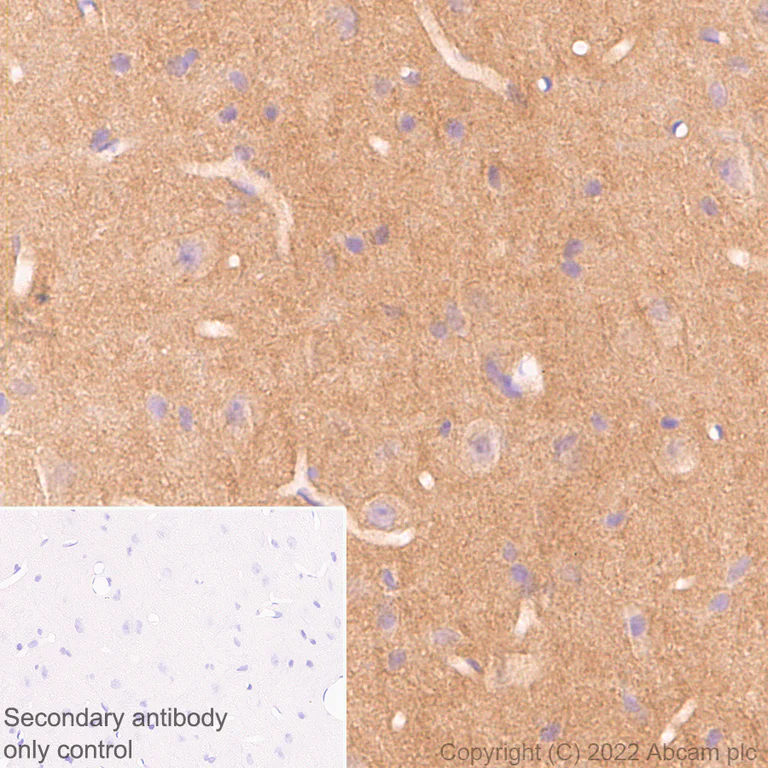
Immunohistochemistry - Anti-N-ethylmaleimide-sensitive fusion protein antibody [EPR25190-1] (AB302788)
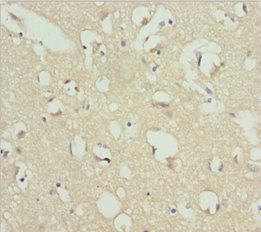
Immunohistochemical analysis of paraffin-embedded Rat cerebrum tissue labeling N-ethylmaleimide-sensitive fusion protein with ab302788 at 1/500 (0.944 ug/ml) followed by a LeicaDS9800 (Bond Polymer Refine Detection) was used at Ready to use dilution. Cytoplasmic staining on rat cerebrum. The section was incubated with ab302788 for 30 mins at room temperature. The immunostaining was performed on a Leica Biosystems BOND® RX instrument Counterstained with Hematoxylin. Secondary antibody only control : Secondary antibody is LeicaDS9800 (Bond Polymer Refine Detection) was used at Ready to use dilution. Heat mediated antigen retrieval with Tris-EDTA buffer (pH 9.0, epitope retrieval solution2) for 20 mins
- IHC
Supplier Data
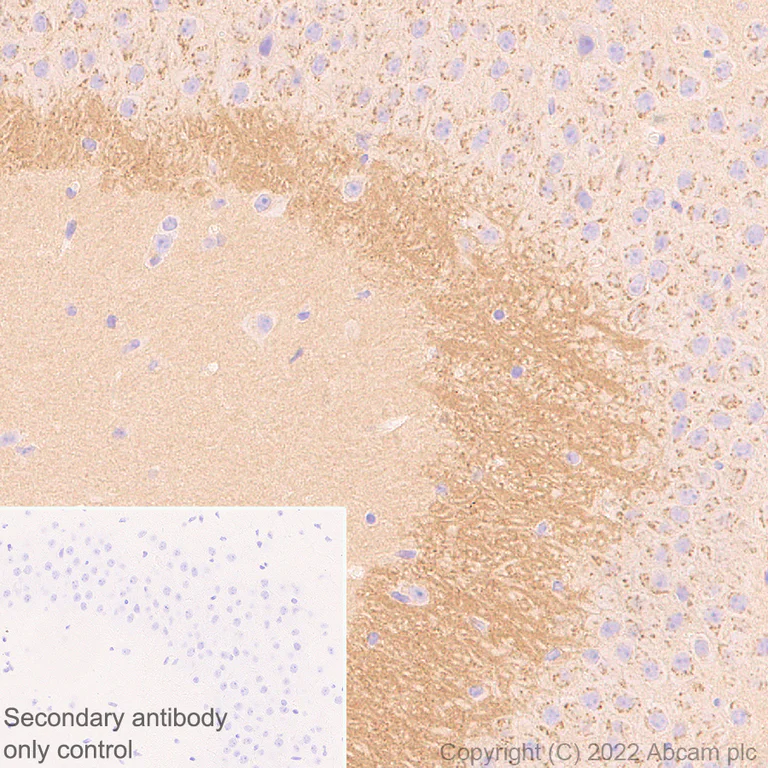
Immunohistochemistry - Anti-N-ethylmaleimide-sensitive fusion protein antibody [EPR25190-1] (AB302788)
Immunohistochemical analysis of paraffin-embedded Mouse hippocampus tissue labeling N-ethylmaleimide-sensitive fusion protein with ab302788 at 1/500 (0.944 ug/ml) followed by a LeicaDS9800 (Bond Polymer Refine Detection) was used at Ready to use dilution. Cytoplasmic staining on mouse hippocampus. The section was incubated with ab302788 for 30 mins at room temperature. The immunostaining was performed on a Leica Biosystems BOND® RX instrument Counterstained with Hematoxylin. Secondary antibody only control : Secondary antibody is LeicaDS9800 (Bond Polymer Refine Detection) was used at Ready to use dilution. Heat mediated antigen retrieval with Tris-EDTA buffer (pH 9.0, epitope retrieval solution2) for 20 mins
- IHC
Supplier Data
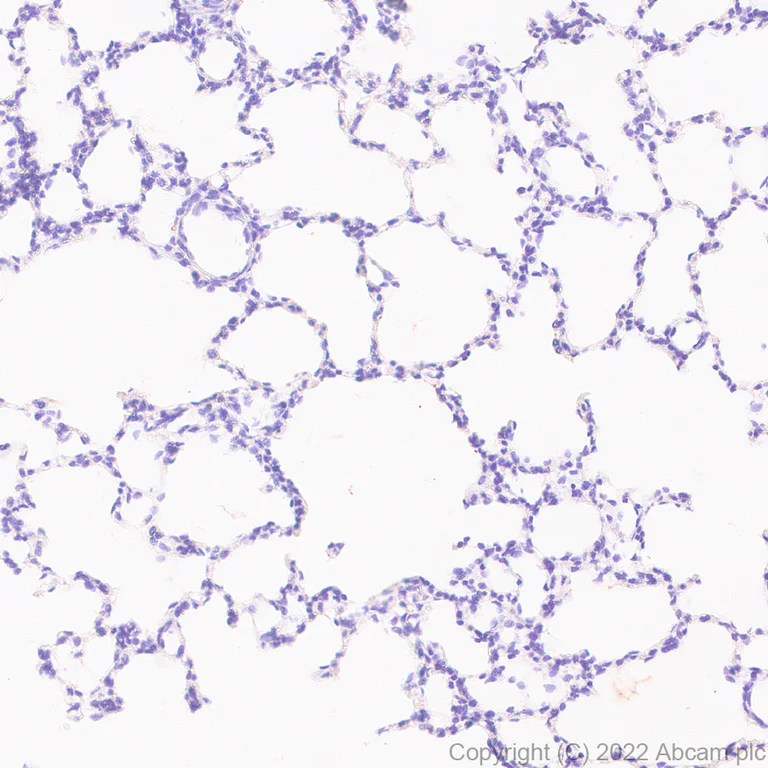
Immunohistochemistry - Anti-N-ethylmaleimide-sensitive fusion protein antibody [EPR25190-1] (AB302788)
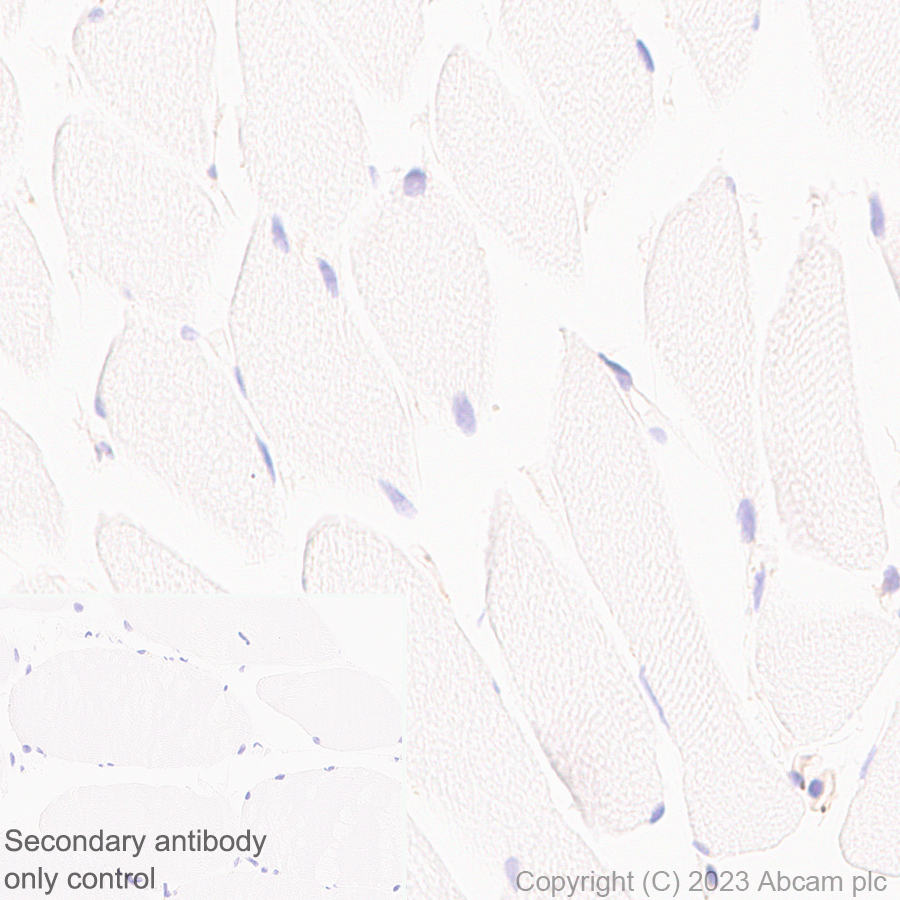
Immunohistochemical analysis of paraffin-embedded Rat lung tissue labeling N-ethylmaleimide-sensitive fusion protein with ab302788 at 1/500 (0.944 ug/ml) followed by a LeicaDS9800 (Bond Polymer Refine Detection) was used at Ready to use dilution. Negative control : No staining on rat lung. The section was incubated with ab302788 for 30 mins at room temperature. The immunostaining was performed on a Leica Biosystems BOND® RX instrument Counterstained with Hematoxylin. Secondary antibody only control : Secondary antibody is LeicaDS9800 (Bond Polymer Refine Detection) was used at Ready to use dilution. Heat mediated antigen retrieval with Tris-EDTA buffer (pH 9.0, epitope retrieval solution2) for 20 mins
- WB
Lab
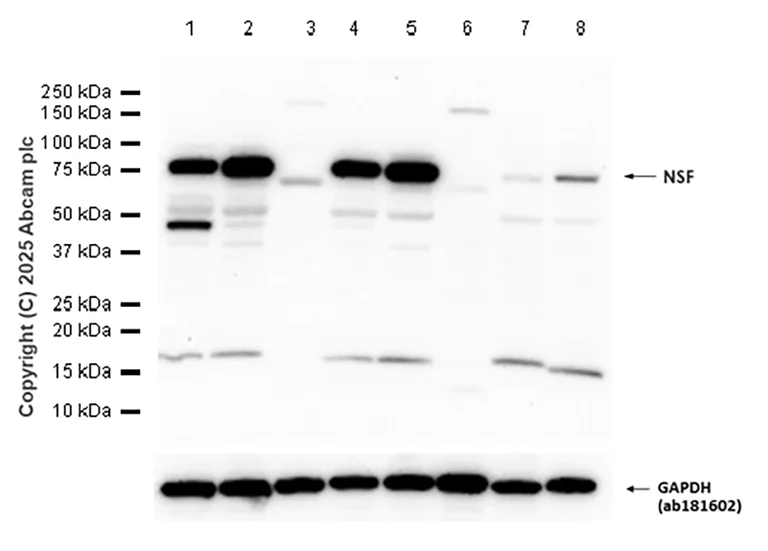
Western blot - Anti-N-ethylmaleimide-sensitive fusion protein antibody [EPR25190-1] (AB302788)
In Western blot, Anti-GAPDH antibody [EPR16891] - Loading Control (ab181602) staining at 1/1000000.
All lanes:
Western blot - Anti-N-ethylmaleimide-sensitive fusion protein antibody [EPR25190-1] (ab302788) at 1/1000 dilution
Lane 1:
Mouse brain tissue lysate at 20 µg
Lane 2:
Mouse hippocampus tissue lysate at 20 µg
Lane 3:
Mouse heart tissue lysate at 20 µg
Lane 4:
Rat brain tissue lysate at 20 µg
Lane 5:
Rat hippocampus tissue lysate at 20 µg
Lane 6:
Rat heart tissue lysate at 20 µg
Lane 7:
Neuro-2a (mouse neuroblastoma neuroblast) whole cell lysate at 20 µg
Lane 8:
PC-12 (rat adrenal gland pheochromocytoma) whole cell lysate at 20 µg
Secondary
All lanes:
Western blot - Goat Anti-Rabbit IgG H&L (HRP) (<a href='/en-us/products/secondary-antibodies/goat-rabbit-igg-h-l-hrp-ab97051'>ab97051</a>) at 1/20000 dilution
Observed band size: 80 kDa
false
Exposure time: 40s
Related conjugates and formulations (1)
-
Anti-N-ethylmaleimide-sensitive fusion protein antibody [EPR25190-1] - BSA and Azide free
Complementary Products
Primary Antibodies
AB315452
Anti-CerS2 antibody [EPR28098-1]
BOND RX™ Validated|20ul selling size|RabMAb|Recombinant
- 0
- 0
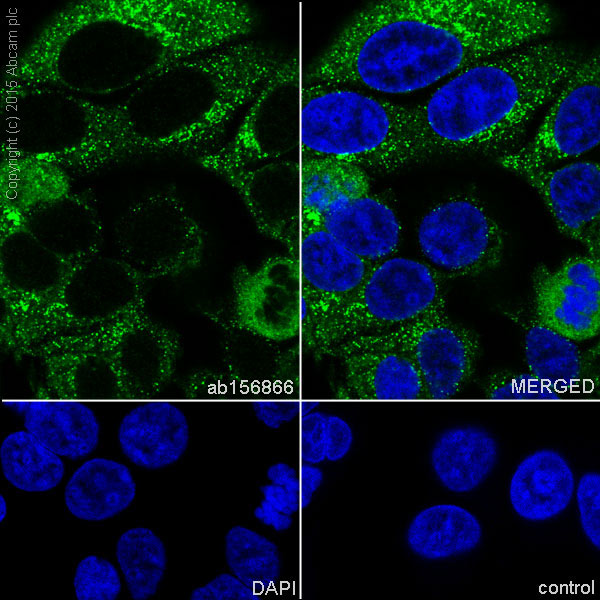
Primary Antibodies
AB156866
Anti-TRK fused gene antibody [EPR8766]
RabMAb|Recombinant|KO Validated
- 0
- 0
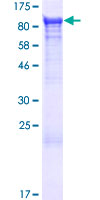
Proteins & Peptides
AB132100
Recombinant Human N-ethylmaleimide-sensitive fusion protein (GST tag N-Terminus)
- 0
- 0
Reactivity data
Product details
Patented technology
Our RabMAb® technology is a patented hybridoma-based technology for making rabbit monoclonal antibodies. For details on our patents, please refer to RabMAb® patents.
What are the advantages of a recombinant monoclonal antibody?
This product is a recombinant monoclonal antibody, which offers several advantages including:
- - High batch-to-batch consistency and reproducibility
- - Improved sensitivity and specificity
- - Long-term security of supply
- - Animal-free batch production
For more information, read more on recombinant antibodies.
Properties and storage information
Form
Purification technique
Storage buffer
Shipped at conditions
Appropriate short-term storage duration
Appropriate short-term storage conditions
Appropriate long-term storage conditions
Aliquoting information
Storage information
Supplementary information
This supplementary information is collated from multiple sources and compiled automatically.
Biological function summary
NSF plays a central role in ensuring proper vesicular transport. It is part of the SNARE complex which facilitates the fusion of vesicles with their target membranes. Interaction with small regulatory proteins like SNAPs (Soluble NSF Attachment Proteins) ensures NSF activity in recycling SNARE proteins after vesicle fusion. This process is critical for neurotransmitter release in neuronal synapses and for enzymatic secretion in glandular tissues.
Pathways
NSF contributes significantly to intracellular vesicle trafficking and neurotransmitter release pathways. In these pathways proteins like VAMP synaptobrevin and SNAP-25 interact with NSF to maintain the continuity of vesicle-mediated transport. NSF activity modulates SNARE-mediated vesicle fusion thereby allowing efficient cargo transfer between cellular compartments.
Product protocols
- Visit the General protocols
- Visit the Troubleshooting
Target data
Alternative Names
Product promise
Please note: All products are 'FOR RESEARCH USE ONLY. NOT FOR USE IN DIAGNOSTIC OR THERAPEUTIC PROCEDURES'.
For licensing inquiries, please contact partnerships@abcam.com