Anti-Neuropeptide Y antibody [EPR23483-18] - BSA and Azide free (Capture)
- BOND RX™ Validated
- RabMAb
- Recombinant
- What is this?
Be the first to review this product! Submit a review
|
(0 Publication)
- IHC-P
Lab
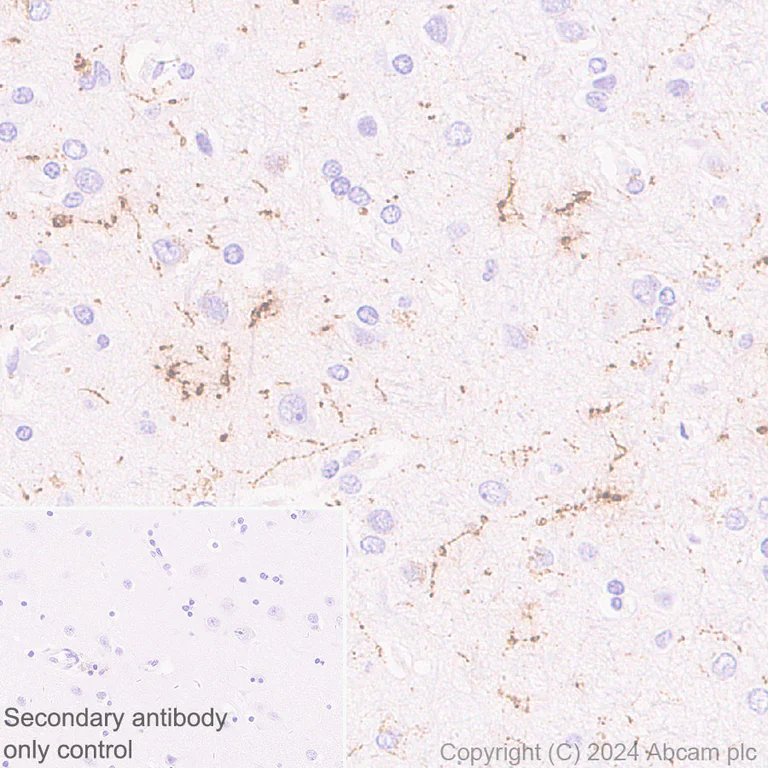
Immunohistochemistry (Formalin/PFA-fixed paraffin-embedded sections) - Anti-Neuropeptide Y antibody [EPR23483-18] - BSA and Azide free (Capture) (AB281152)
Immunohistochemical analysis of paraffin-embedded Human cerebrum tissue labeling Neuropeptide Y with ab281152 at 1/2000 (0.521 µg/ml) dilution, followed by a ready to use LeicaDS9800 (Bond™ Polymer Refine Detection).
Positive staining on human cerebrum. The section was incubated with ab281152 for 30 mins at room temperature.
The immunostaining was performed on a Leica Biosystems BOND® RX instrument
Counterstained with hematoxylin.
Secondary antibody only control : Secondary antibody is a ready to use a ready to use LeicaDS9800 (Bond™ Polymer Refine Detection).
Heat mediated antigen retrieval was performed with Citrate buffer (pH 6.0, Epitope Retrieval Solution 1) for 20 mins
- ICC/IF
Lab
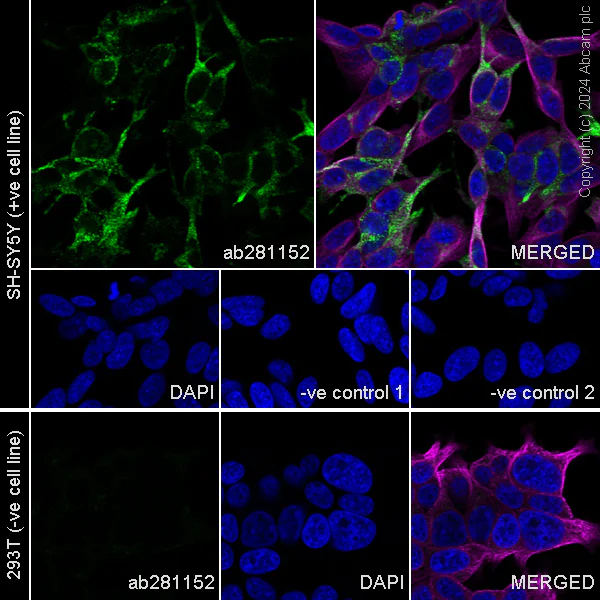
Immunocytochemistry/ Immunofluorescence - Anti-Neuropeptide Y antibody [EPR23483-18] - BSA and Azide free (Capture) (AB281152)
Immunofluorescent analysis of 4% Paraformaldehyde-fixed, 0.1% TritonX-100 permeabilized SH-SY5Y (human neuroblastoma epithelial cell) cells labelling Neuropeptide Y with ab281152 at 1/2000 (0.5 µg/ml) dilution, followed by ab150081 Goat Anti-Rabbit IgG H&L (Alexa Fluor® 488) preadsorbed antibody at 1/1000 (2 µg/ml) dilution (Green).
Confocal image showing cytoplasmic staining in SH-SY5Y cell line (shown in green). The counterstain was observed in magenta. Nuclear DNA was labeled with DAPI (shown in blue).
Negative control : 293T.
Image was taken with a confocal microscope (Leica-Microsystems, TCS SP8).
ab7291 Anti-alpha Tubulin mouse monoclonal antibody was used to counterstain tubulin at 1/1000 (1.0 µg/ml) dilution followed by ab150120 Goat Anti-Mouse IgG H&L (Alexa Fluor® 594) at a 1/1000 (2 µg/ml) dilution (Magenta).
Secondary antibody only control : Secondary antibody is ab150081 Goat Anti-Rabbit IgG H&L (Alexa Fluor® 488) preadsorbed at 1/1000 (2 µg/ml) dilution.
- IHC-P
Lab
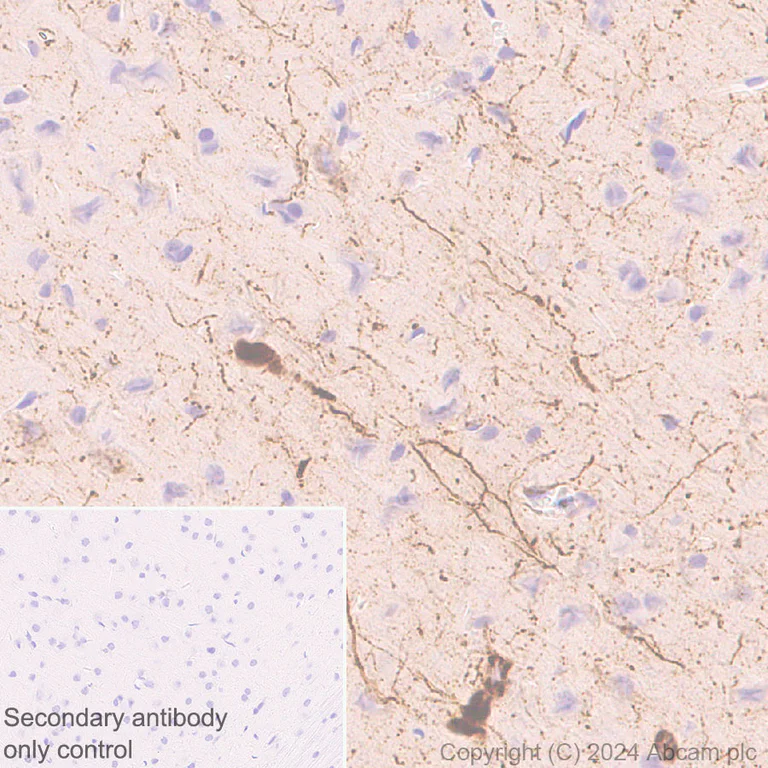
Immunohistochemistry (Formalin/PFA-fixed paraffin-embedded sections) - Anti-Neuropeptide Y antibody [EPR23483-18] - BSA and Azide free (Capture) (AB281152)
Immunohistochemical analysis of paraffin-embedded Rat cerebrum tissue labeling Neuropeptide Y with ab281152 at 1/1000 (1.042 µg/ml) dilution, followed by a ready to use LeicaDS9800 (Bond™ Polymer Refine Detection).
Positive staining on rat cerebrum. The section was incubated with ab281152 for 30 mins at room temperature.
The immunostaining was performed on a Leica Biosystems BOND® RX instrument
Counterstained with hematoxylin.
Secondary antibody only control : Secondary antibody is a ready to use a ready to use LeicaDS9800 (Bond™ Polymer Refine Detection).
Heat mediated antigen retrieval was performed with Citrate buffer (pH 6.0, Epitope Retrieval Solution 1) for 20 mins
- IHC-P
Lab
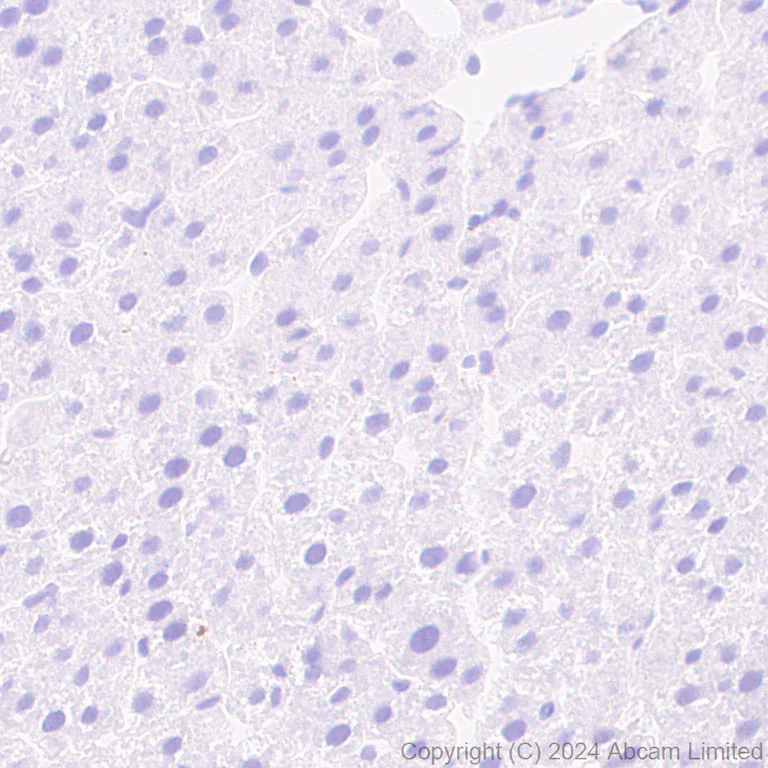
Immunohistochemistry (Formalin/PFA-fixed paraffin-embedded sections) - Anti-Neuropeptide Y antibody [EPR23483-18] - BSA and Azide free (Capture) (AB281152)
Immunohistochemical analysis of paraffin-embedded Rat liver tissue labeling Neuropeptide Y with ab281152 at 1/1000 (1.042 µg/ml) dilution, followed by a ready to use Rabbit specific IHC polymer detection kit HRP/DAB (ab209101).
Low expression : no staining on rat liver. The section was incubated with ab281152 for 30 mins at room temperature.
The immunostaining was performed on a Leica Biosystems BOND® RX instrument
Counterstained with hematoxylin.
Secondary antibody only control : Secondary antibody is a ready to use a ready to use Rabbit specific IHC polymer detection kit HRP/DAB (ab209101).
Heat mediated antigen retrieval was performed with Tris-EDTA buffer (pH 9.0, Epitope Retrieval Solution2) for 20 mins
- IHC-P
Lab
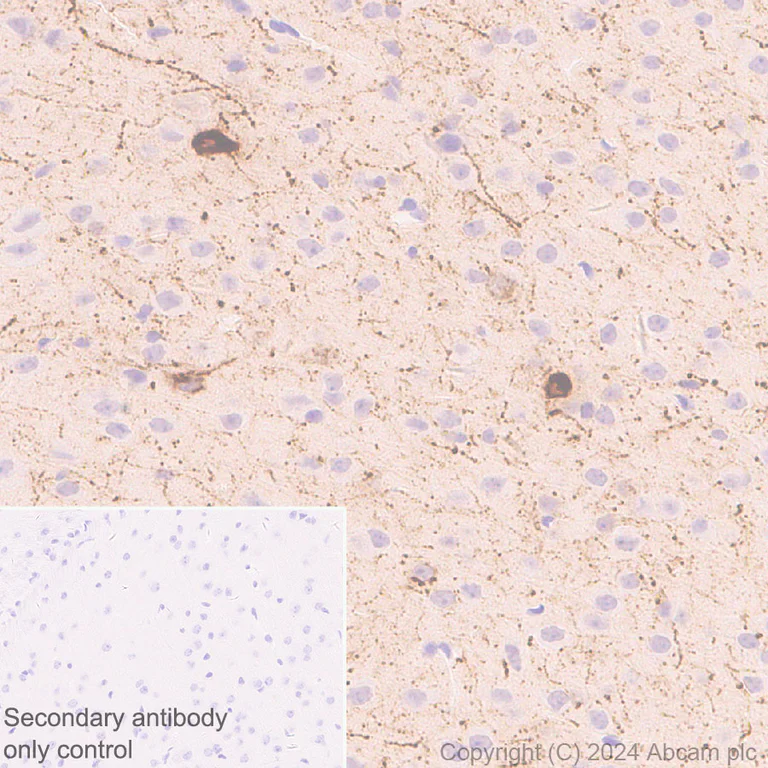
Immunohistochemistry (Formalin/PFA-fixed paraffin-embedded sections) - Anti-Neuropeptide Y antibody [EPR23483-18] - BSA and Azide free (Capture) (AB281152)
Immunohistochemical analysis of paraffin-embedded Mouse cerebrum tissue labeling Neuropeptide Y with ab281152 at 1/1000 (1.042 µg/ml) dilution, followed by a ready to use LeicaDS9800 (Bond™ Polymer Refine Detection).
Positive staining on mouse cerebrum. The section was incubated with ab281152 for 30 mins at room temperature.
The immunostaining was performed on a Leica Biosystems BOND® RX instrument
Counterstained with hematoxylin.
Secondary antibody only control : Secondary antibody is a ready to use a ready to use LeicaDS9800 (Bond™ Polymer Refine Detection).
Heat mediated antigen retrieval was performed with Citrate buffer (pH 6.0, Epitope Retrieval Solution 1) for 20 mins
- IHC-P
Lab
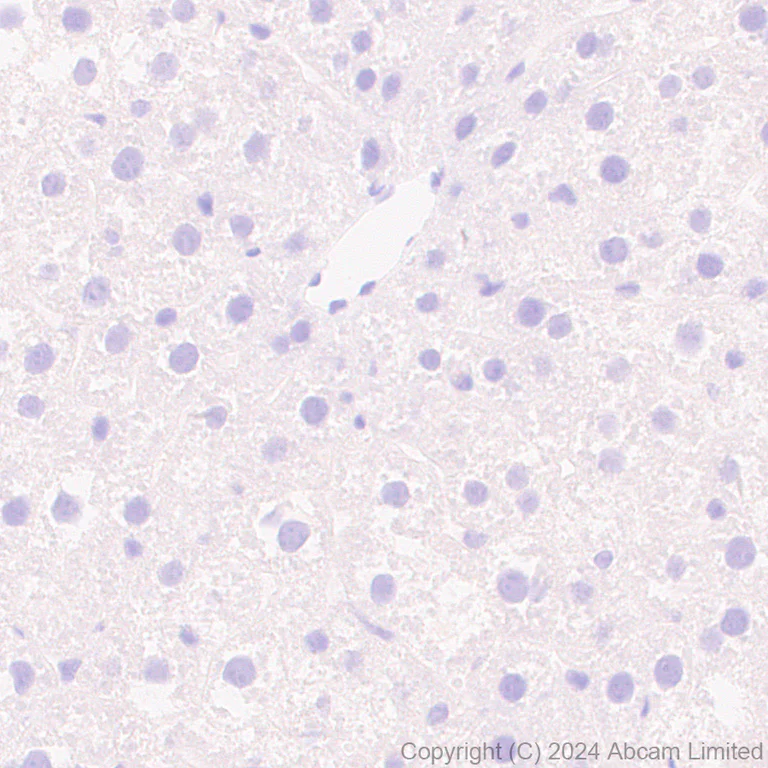
Immunohistochemistry (Formalin/PFA-fixed paraffin-embedded sections) - Anti-Neuropeptide Y antibody [EPR23483-18] - BSA and Azide free (Capture) (AB281152)
Immunohistochemical analysis of paraffin-embedded Mouse liver tissue labeling Neuropeptide Y with ab281152 at 1/1000 (1.042 µg/ml) dilution, followed by a ready to use LeicaDS9800 (Bond™ Polymer Refine Detection).
Low expression : no staining on mouse liver. The section was incubated with ab281152 for 30 mins at room temperature.
The immunostaining was performed on a Leica Biosystems BOND® RX instrument
Counterstained with hematoxylin.
Secondary antibody only control : Secondary antibody is a ready to use a ready to use LeicaDS9800 (Bond™ Polymer Refine Detection).
Heat mediated antigen retrieval was performed with Citrate buffer (pH 6.0, Epitope Retrieval Solution 1) for 20 mins
Complementary Products


Primary Antibodies
AB177487
Anti-NeuN antibody [EPR12763] - Neuronal Marker
BOND RX™ Validated|RabMAb|Recombinant|Lab Essentials|20ul selling size|Advanced Validation

- 5
- 76
Primary Antibodies
AB254558
Anti-AGRP antibody [EPR18155-110]
BOND RX™ Validated|RabMAb|Recombinant

- 0
- 0
Primary Antibodies
AB254257
Anti-POMC antibody [EPR22534-165]
20ul selling size|BOND RX™ Validated|RabMAb|Recombinant

- 4
- 1
Primary Antibodies
AB302667
BOND RX™ Validated|Recombinant|Lab Essentials|KO Validated

- 0
- 0
Reactivity data
Product details
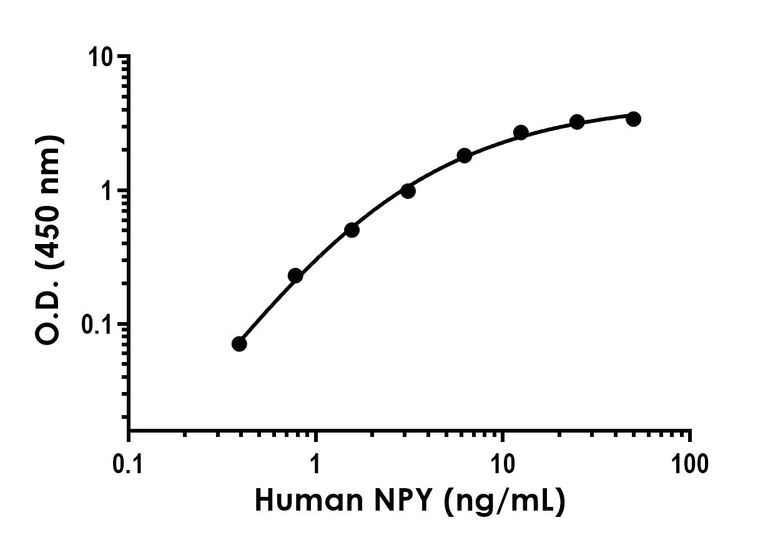
ab281152 is a BSA and Azide Free antibody supplied in an unconjugated format and it is suitable for sandwich ELISAs to quantify Human NPY. The recommended pair for sandwich ELISA is:
Capture: ab281152, Human NPY Capture Antibody (unconjugated)
Detector: ab281002, Human NPY Detector Antibody (unconjugated)
The reference range value is 0.39-50 ng/mL.
Patented technology
Our RabMAb® technology is a patented hybridoma-based technology for making rabbit monoclonal antibodies. For details on our patents, please refer to RabMAb® patents.
What are the advantages of a recombinant monoclonal antibody?
This product is a recombinant monoclonal antibody, which offers several advantages including:
- - High batch-to-batch consistency and reproducibility
- - Improved sensitivity and specificity
- - Long-term security of supply
- - Animal-free batch production
For more information, read more on recombinant antibodies.
Conjugation ready
Our carrier-free antibodies are typically supplied in a PBS-only formulation, purified and free of BSA, sodium azide and glycerol. This conjugation-ready format is designed for use with fluorochromes, metal isotopes, oligonucleotides, and enzymes, which makes them ideal for antibody labelling, functional and cell-based assays, flow-based assays (e.g. mass cytometry) and Multiplex Imaging applications.
Use our conjugation kits for antibody conjugates that are ready-to-use in as little as 20 minutes with 1 minute hands-on-time and 100% antibody recovery: available for fluorescent dyes, HRP, biotin and gold.
Sandwich ELISA
The recommended antibody orientation is based on internal optimization for ELISA-based assays. Antibody orientation is assay dependent and needs to be optimized for each assay type. Please note that the range provided for this antibody is only an estimation based on the performance of the product using the recommended antibody pair. Performance of the antibody pair will depend on the specific characteristics of your assay. We guarantee the product works in sandwich ELISA, but we do not guarantee the sensitivity or dynamic range of the antibody in your assay.
Properties and storage information
Form
Purification technique
Storage buffer
Shipped at conditions
Appropriate short-term storage conditions
Appropriate long-term storage conditions
Supplementary information
This supplementary information is collated from multiple sources and compiled automatically.
Biological function summary
Neuropeptide Y plays an important role in regulating various physiological processes. It is not typically part of a complex but acts directly on specific receptors mainly Y1 Y2 Y4 and Y5. Neuropeptide Y affects food intake behavior stress response circadian rhythm and cardiovascular regulation. It does so by modulating the release of other neurotransmitters or hormones having a significant impact on energy balance and homeostasis.
Pathways
Neuropeptide Y plays a pivotal role in neurobiological signaling pathways especially those involving stress and energy homeostasis. In the hypothalamus NPY influences energy balance by interacting with the melanocortin pathway an important modulator of appetite and energy expenditure. It also interacts with proteins such as pro-opiomelanocortin (POMC) in these signaling pathways highlighting its integration into complex physiological processes that maintain homeostasis.
Product protocols
- Visit the General protocols
- Visit the Troubleshooting
Target data
Alternative Names
Product promise
Please note: All products are 'FOR RESEARCH USE ONLY. NOT FOR USE IN DIAGNOSTIC OR THERAPEUTIC PROCEDURES'.
For licensing inquiries, please contact partnerships@abcam.com