Anti-NPTX2 antibody [EPR27176-81] - BSA and Azide free
- RabMAb
- Recombinant
- What is this?
Be the first to review this product! Submit a review
|
(0 Publication)
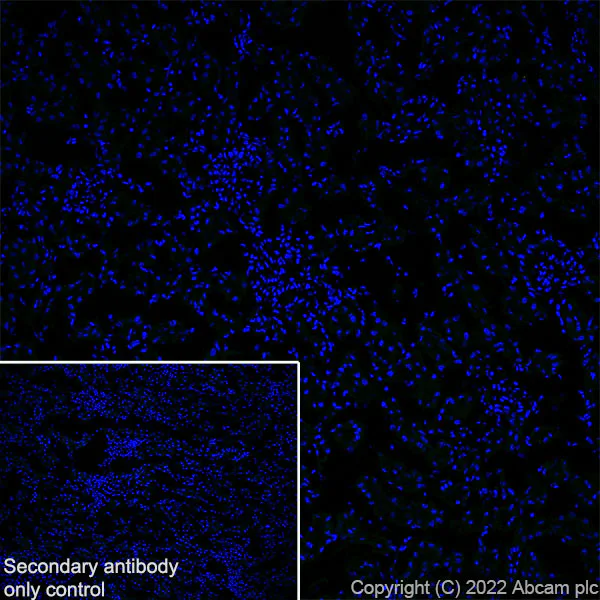
- IHC-Fr
Supplier Data
Immunohistochemistry (Frozen sections) - Anti-NPTX2 antibody [EPR27176-81] - BSA and Azide free (AB305258)
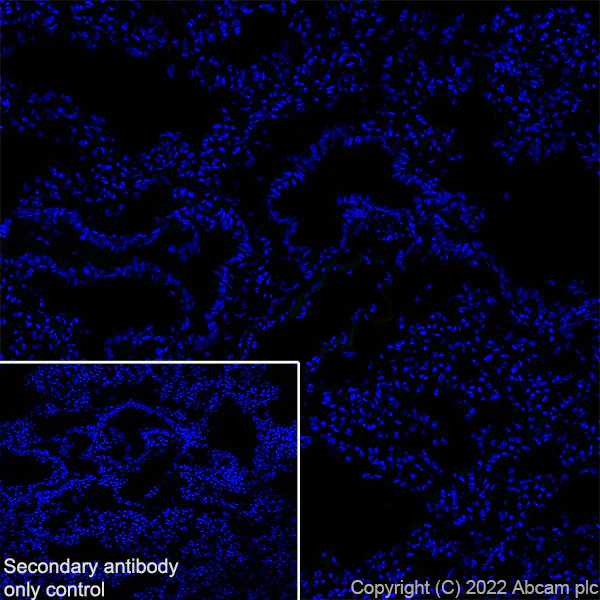
- IHC-Fr
Supplier Data
Immunohistochemistry (Frozen sections) - Anti-NPTX2 antibody [EPR27176-81] - BSA and Azide free (AB305258)
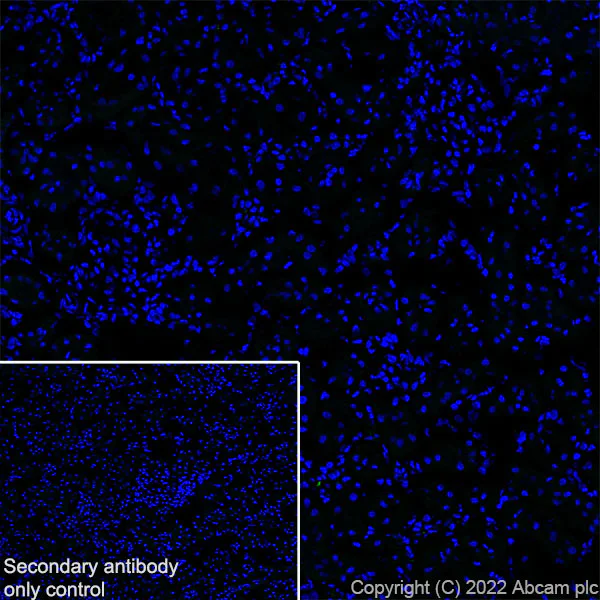
- IHC-Fr
Supplier Data
Immunohistochemistry (Frozen sections) - Anti-NPTX2 antibody [EPR27176-81] - BSA and Azide free (AB305258)
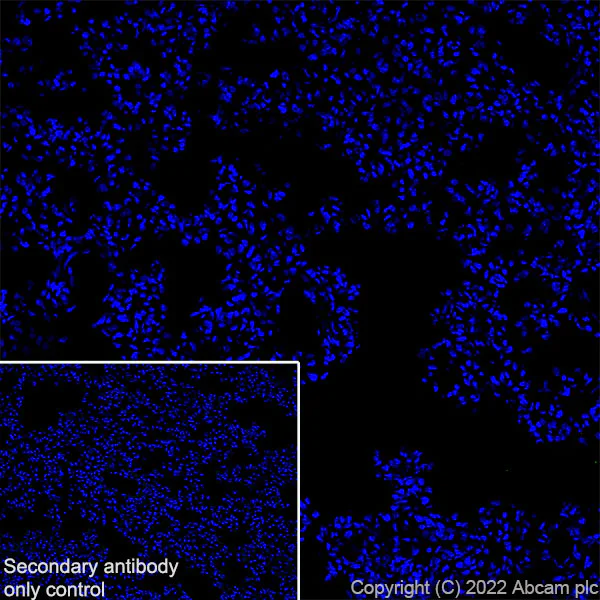
- IHC-Fr
Supplier Data
Immunohistochemistry (Frozen sections) - Anti-NPTX2 antibody [EPR27176-81] - BSA and Azide free (AB305258)
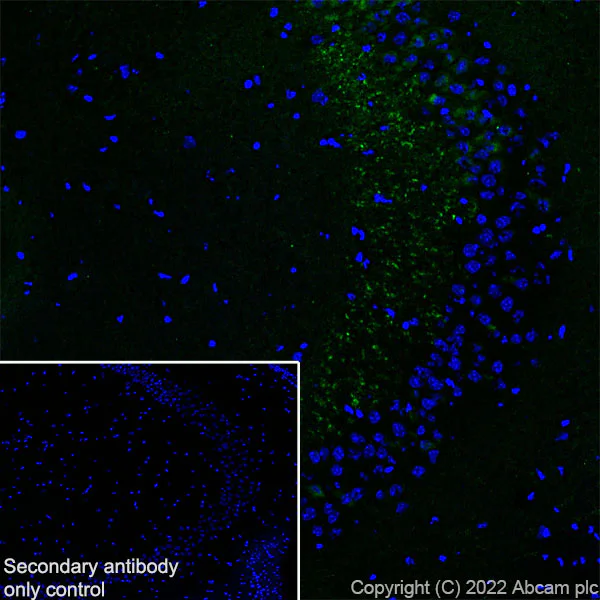
- IHC-Fr
Supplier Data
Immunohistochemistry (Frozen sections) - Anti-NPTX2 antibody [EPR27176-81] - BSA and Azide free (AB305258)
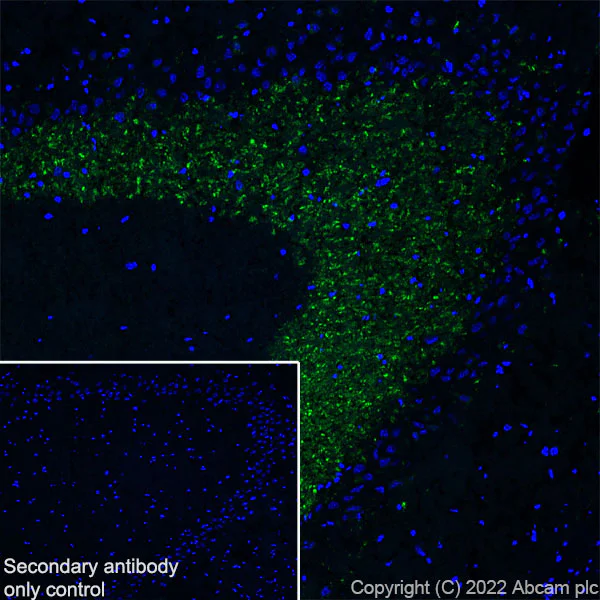
- IHC-Fr
Supplier Data
Immunohistochemistry (Frozen sections) - Anti-NPTX2 antibody [EPR27176-81] - BSA and Azide free (AB305258)
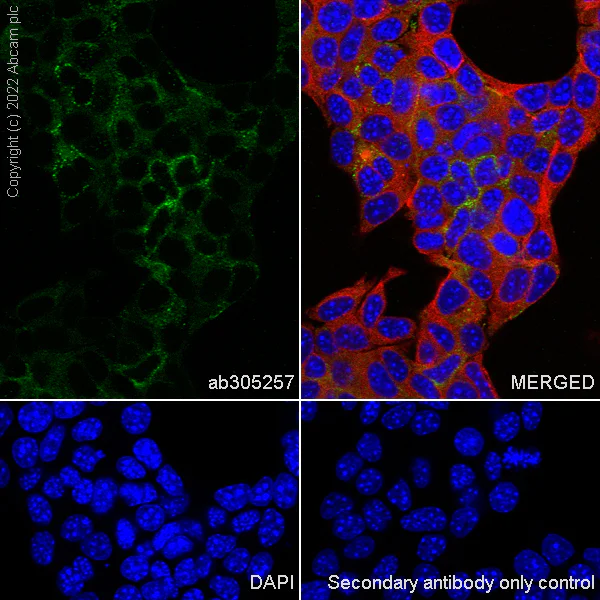
- ICC/IF
Supplier Data
Immunocytochemistry/ Immunofluorescence - Anti-NPTX2 antibody [EPR27176-81] - BSA and Azide free (AB305258)
This data was developed using ab305257, the same antibody clone in a different buffer formulation. Immunofluorescent analysis of 4% Paraformaldehyde-fixed, 0.1% TritonX-100 permeabilized Beta-TC-6 (mouse pancreas insulinoma beta cell) cells labelling NPTX2 with ab305257 at 1/50 dilution, followed by ab150081 Goat Anti-Rabbit IgG H&L (Alexa Fluor® 488) preadsorbed antibody at 1/1000 dilution (Green). Confocal image showing cytoplasmic staining in Beta-TC-6 cell line. The image was taken with a confocal microscope (Leica-Microsystems, TCS SP8). ab195889 Anti-alpha Tubulin mouse monoclonal antibody - Microtubule Marker (Alexa Fluor® 594) was used to counterstain tubulin at 1/200 dilution (Red). The Nuclear counterstain was DAPI (Blue). Secondary antibody only control : Secondary antibody is ab150081 Goat Anti-Rabbit IgG H&L (Alexa Fluor® 488) preadsorbed at 1/1000 dilution.
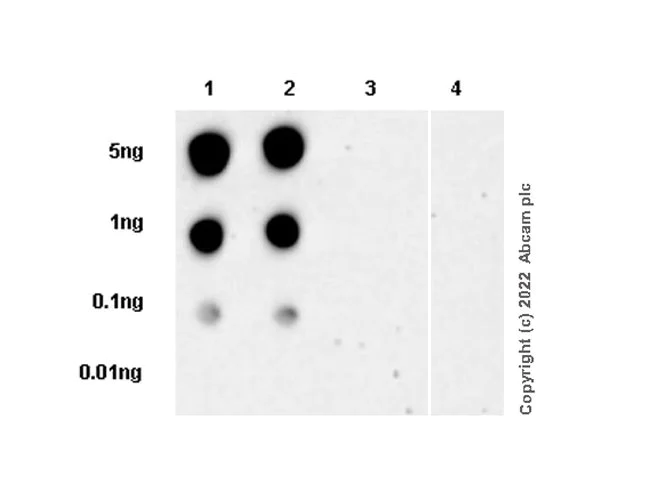
- Dot
Supplier Data
Dot Blot - Anti-NPTX2 antibody [EPR27176-81] - BSA and Azide free (AB305258)
This data was developed using ab305257, the same antibody clone in a different buffer formulation. Dot blot analysis of NPTX2 using ab305257 at 1 : 1000 (0.466 μg/ml) followed by a Goat Anti-Rabbit IgG, (H+L), Peroxidase conjugated (ab97051) at 1 : 100,000 dilution. Lane 1 : Mouse NPTX2 recombinant protein fragment Lane 2 : Human NPTX2 recombinant protein fragment Lane 3 : Human NPTX1 recombinant protein fragment Lane 4 : Human NPTXR recombinant protein fragment Exposure time : 180 seconds Blocking and diluting buffer and concentration : 5% NFDM/TBST
Related conjugates and formulations (1)
-
Anti-NPTX2 antibody [EPR27176-81]
Complementary Products


Primary Antibodies
AB209538
Anti-Alpha-synuclein aggregate antibody [MJFR-14-6-4-2] - Conformation-Specific
20ul selling size|RabMAb|Recombinant

- 4
- 6

Reactivity data
Product details
Patented technology
Our RabMAb® technology is a patented hybridoma-based technology for making rabbit monoclonal antibodies. For details on our patents, please refer to RabMAb® patents.
Conjugation ready
Our carrier-free antibodies are typically supplied in a PBS-only formulation, purified and free of BSA, sodium azide and glycerol. This conjugation-ready format is designed for use with fluorochromes, metal isotopes, oligonucleotides, and enzymes, which makes them ideal for antibody labelling, functional and cell-based assays, flow-based assays (e.g. mass cytometry) and Multiplex Imaging applications.
Use our conjugation kits for antibody conjugates that are ready-to-use in as little as 20 minutes with 1 minute hands-on-time and 100% antibody recovery: available for fluorescent dyes, HRP, biotin and gold.
Compatibility
This product is compatible with the Maxpar® Antibody Labeling Kit from Fluidigm, without the need for antibody preparation. Maxpar® is a trademark of Fluidigm Canada Inc.
What are the advantages of a recombinant monoclonal antibody?
This product is a recombinant monoclonal antibody, which offers several advantages including:
- - High batch-to-batch consistency and reproducibility
- - Improved sensitivity and specificity
- - Long-term security of supply
- - Animal-free batch production
For more information, read more on recombinant antibodies.
Properties and storage information
Form
Purification technique
Storage buffer
Shipped at conditions
Appropriate short-term storage conditions
Appropriate long-term storage conditions
Supplementary information
This supplementary information is collated from multiple sources and compiled automatically.
Biological function summary
NPTX2 affects synaptic stabilization by participating in the formation and maintenance of synaptic connections. It forms complexes with AMPA receptor subunits promoting synapses that are more active and facilitating synaptic communication. NPTX2's involvement is essential for normal synaptic function reflecting its significance in neural signaling.
Pathways
NPTX2 plays a role in the glutamatergic signaling pathway an important pathway for synaptic transmission involving excitatory neurotransmitters. NPTX2 works alongside other proteins like GluR1 subunit in this pathway mediating synaptic responses. Through its actions in these pathways NPTX2 contributes to long-term potentiation a process related to learning and memory.
Product protocols
- Visit the General protocols
- Visit the Troubleshooting
Target data
Alternative Names
Product promise
Please note: All products are 'FOR RESEARCH USE ONLY. NOT FOR USE IN DIAGNOSTIC OR THERAPEUTIC PROCEDURES'.
For licensing inquiries, please contact partnerships@abcam.com