JavaScript is disabled in your browser. Please enable JavaScript to view this website.
AB129760

Anti-OB Cadherin antibody

Be the first to review this product! Submit a review

|

(1 Publication)

Rabbit Polyclonal OB Cadherin antibody. Suitable for WB and reacts with Human samples. Cited in 1 publication. Immunogen corresponding to Synthetic Peptide within Human CDH11.
1 Images
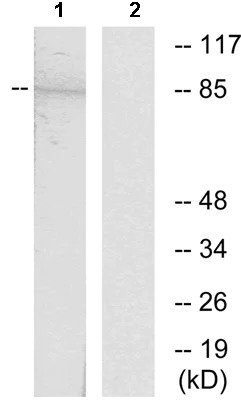
Western blot - Anti-OB Cadherin antibody (AB129760)
  • WB

Unknown

Western blot - Anti-OB Cadherin antibody (AB129760)

All lanes:

Western blot - Anti-OB Cadherin antibody (ab129760) at 1/500 dilution

Lane 1:

Jurkat cell extract

Lane 2:

Jurkat cell extract with synthesized peptide

Predicted band size: 23 kDa,87 kDa

false

Key facts

Host species

Rabbit

Clonality

Polyclonal

Isotype

IgG

Carrier free

No

Reacts with

Human

Applications

WB

applications

Immunogen

Synthetic Peptide within Human CDH11. The exact immunogen used to generate this antibody is proprietary information.

P55287

Reactivity data

{ "title": "Reactivity Data", "filters": { "stats": ["", "Species", "Dilution Info", "Notes"], "tabs": { "all-applications": {"fullname" : "All Applications", "shortname": "All Applications"}, "WB" : {"fullname" : "Western blot", "shortname":"WB"} }, "product-promise": { "all": "all", "testedAndGuaranteed": "tested", "guaranteed": "expected", "predicted": "predicted", "notRecommended": "not-recommended" } }, "values": { "Human": { "WB-species-checked": "testedAndGuaranteed", "WB-species-dilution-info": "1/500 - 1/1000", "WB-species-notes": "<p></p>" }, "Mouse": { "WB-species-checked": "predicted", "WB-species-dilution-info": "", "WB-species-notes": "" } } }

Properties and storage information

Form
Liquid
Purification technique
Affinity purification Immunogen
Purification notes
ab129760 was affinity-purified from Rabbit antiserum by affinity-chromatography using epitope-specific immunogen.
Storage buffer
pH: 7.4 Preservative: 0.02% Sodium azide Constituents: PBS, 50% Glycerol (glycerin, glycerine), 1% BSA, 0.88% Sodium chloride
Shipped at conditions
Blue Ice
Appropriate short-term storage conditions
+4°C
Appropriate long-term storage conditions
-20°C
Storage information
Stable for 12 months at -20°C

Supplementary information

This supplementary information is collated from multiple sources and compiled automatically.

OB Cadherin is a calcium-dependent cell adhesion molecule also known as Cadherin-11. It has a mass of about 120 kDa. OB Cadherin is expressed widely in mesenchymal tissues including osteoblasts fibroblasts and synovial tissues. This cadherin plays a role in the regulation of cell-cell adhesion influencing the mechanical structure and integrity of tissues. Its expression in differentiated cells indicates its involvement in tissue maintenance and repair. OB Cadherin is also contributing to the segregation of different cell types during developmental processes.
Biological function summary

OB Cadherin plays an important role in tissue morphogenesis and remodeling. It is a part of the adherens junction complex which also includes catenins. This complex mediates cell contact and communication essential for structural integrity and signaling. OB Cadherin supports the proper organization and separation of cells within tissues impacting processes like bone development and wound healing. It acts as a mediator in mechanical signaling influencing cellular responses to mechanical stress.

Pathways

OB Cadherin participates in signaling pathways involved in cell adhesion and migration notably in the Wnt and BMP pathways. These pathways are essential for developmental processes and maintain tissue homeostasis. OB Cadherin interacts closely with proteins like beta-catenin playing a role in transcriptional regulation that influences cell fate decisions. Its function in these pathways demonstrates its critical role in regulating cellular activities tied to growth and differentiation.

OB Cadherin is linked to conditions like rheumatoid arthritis and cancer metastasis. In rheumatoid arthritis overexpression of OB Cadherin in synovial tissues can contribute to joint inflammation and tissue destruction associated with interactions with fibroblast-like synoviocytes. In cancer metastasis OB Cadherin's role in cell adhesion and migration highlights its potential influence in the spread of cancer cells often in relation to altered interactions with proteins like N-cadherin. These associations make OB Cadherin an important target for research into disease mechanisms and therapies.

Product protocols

For this product, it's our understanding that no specific protocols are required. You can visit:

Target data

Cadherins are calcium-dependent cell adhesion proteins. They preferentially interact with themselves in a homophilic manner in connecting cells; cadherins may thus contribute to the sorting of heterogeneous cell types. Required for proper focal adhesion assembly (PubMed : 33811546). Involved in the regulation of cell migration (PubMed : 33811546).
See full target information CDH11

Alternative Names

Cadherin-11, OSF-4, Osteoblast cadherin, OB-cadherin, CDH11

Publications (1)

Recent publications for all applications. Explore the full listand refine your search

American journal of translational research 16:3922-3937 PubMed39262709

2024

The Cdc42/Rac1 pathway: a molecular mechanism behind iron-deficiency-driven aortic medial degeneration.

Applications

Unspecified application

Species

Unspecified reactive species

Su Wang,Hengjuan Liu,Junxia Hu,Ting Li,Bowen Li
View all publications

Product promise

We are committed to supporting your work with high-quality reagents, and we're here for you every step of the way. In the unlikely event that one of our products does not perform as expected, you're protected by our Product Promise.
For full details, please see our Terms & Conditions

Please note: All products are 'FOR RESEARCH USE ONLY. NOT FOR USE IN DIAGNOSTIC OR THERAPEUTIC PROCEDURES'.

For licensing inquiries, please contact partnerships@abcam.com