JavaScript is disabled in your browser. Please enable JavaScript to view this website.
AB237545

Anti-PFKM antibody

Be the first to review this product! Submit a review

|

(2 Publications )

Rabbit Polyclonal PFKM antibody. Suitable for WB, IHC-P, ICC/IF and reacts with Human, Mouse samples. Cited in 2 publications. Immunogen corresponding to Recombinant Fragment Protein within Human PFKM aa 150 to C-terminus.

View Alternative Names

PFKX, PFKM, ATP-PFK, PFK-M, 6-phosphofructokinase type A, Phosphofructo-1-kinase isozyme A, Phosphohexokinase, PFK-A
2 Images
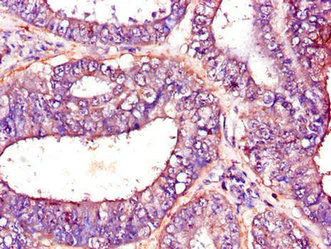
Immunohistochemistry (Formalin/PFA-fixed paraffin-embedded sections) - Anti-PFKM antibody (AB237545)
  • IHC-P

Supplier Data

Immunohistochemistry (Formalin/PFA-fixed paraffin-embedded sections) - Anti-PFKM antibody (AB237545)

Paraffin-embedded human endometrial cancer tissue stained for PFKM using ab237545 at 1/100 dilution in immunohistochemical analysis.
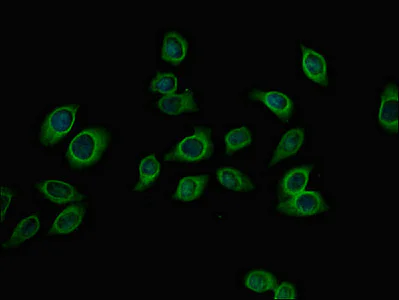
Immunocytochemistry/ Immunofluorescence - Anti-PFKM antibody (AB237545)
  • ICC/IF

Supplier Data

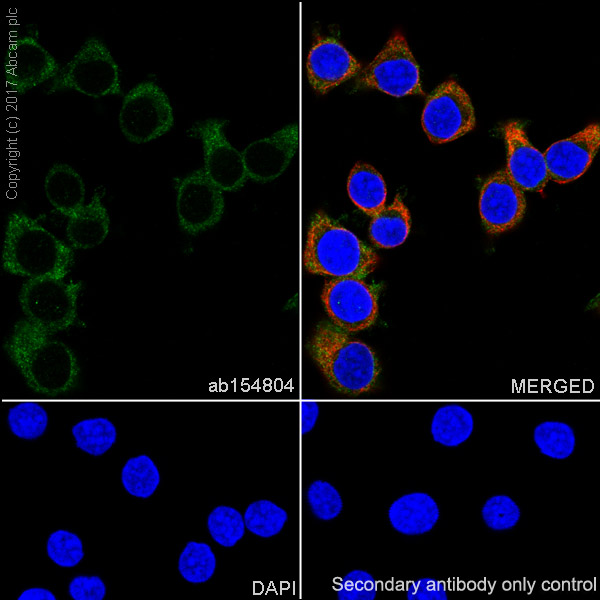
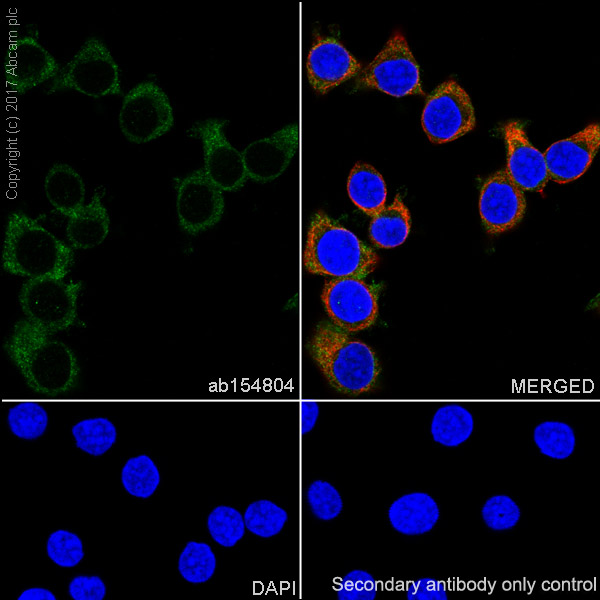
Immunocytochemistry/ Immunofluorescence - Anti-PFKM antibody (AB237545)

A549 (human lung carcinoma cell line) cells stained for PFKM (green) using ab237545 at 1/100 dilution in ICC/IF, followed by Alexa Fluor® 488-congugated Goat Anti-Rabbit IgG (H+L) secondary antibody.

Key facts

Host species

Rabbit

Clonality

Polyclonal

Isotype

IgG

Carrier free

No

Reacts with

Mouse, Human

Applications

IHC-P, ICC/IF, WB

applications

Immunogen

Recombinant Fragment Protein within Human PFKM aa 150 to C-terminus. The exact immunogen used to generate this antibody is proprietary information.

P08237

Reactivity data

{ "title": "Reactivity Data", "filters": { "stats": ["", "Species", "Dilution Info", "Notes"], "tabs": { "all-applications": {"fullname" : "All Applications", "shortname": "All Applications"}, "WB" : {"fullname" : "Western blot", "shortname":"WB"}, "IHCP" : {"fullname" : "Immunohistochemistry (Formalin/PFA-fixed paraffin-embedded sections)", "shortname":"IHC-P"}, "ICCIF" : {"fullname" : "Immunocytochemistry/ Immunofluorescence", "shortname":"ICC/IF"} }, "product-promise": { "all": "all", "testedAndGuaranteed": "tested", "guaranteed": "expected", "predicted": "predicted", "notRecommended": "not-recommended" } }, "values": { "Human": { "WB-species-checked": "testedAndGuaranteed", "WB-species-dilution-info": "1/1000 - 1/5000", "WB-species-notes": "<p></p>", "IHCP-species-checked": "testedAndGuaranteed", "IHCP-species-dilution-info": "1/20 - 1/200", "IHCP-species-notes": "<p></p>", "ICCIF-species-checked": "testedAndGuaranteed", "ICCIF-species-dilution-info": "1/50 - 1/200", "ICCIF-species-notes": "<p></p>" }, "Mouse": { "WB-species-checked": "testedAndGuaranteed", "WB-species-dilution-info": "1/1000 - 1/5000", "WB-species-notes": "<p></p>", "IHCP-species-checked": "guaranteed", "IHCP-species-dilution-info": "", "IHCP-species-notes": "", "ICCIF-species-checked": "guaranteed", "ICCIF-species-dilution-info": "", "ICCIF-species-notes": "" } } }

Properties and storage information

Form
Liquid
Purification technique
Affinity purification Protein G
Purification notes
Purity >95%
Storage buffer
pH: 7.4 Preservative: 0.03% Proclin 300 Constituents: PBS, 50% Glycerol (glycerin, glycerine)
Shipped at conditions
Blue Ice
Appropriate short-term storage duration
1-2 weeks
Appropriate short-term storage conditions
+4°C
Appropriate long-term storage conditions
-20°C
Aliquoting information
Upon delivery aliquot
Storage information
Avoid freeze / thaw cycle

Supplementary information

This supplementary information is collated from multiple sources and compiled automatically.

PFKM also known as phosphofructokinase muscle type is a protein involved in glycolysis. It functions as an enzyme that catalyzes the phosphorylation of fructose 6-phosphate to fructose 16-bisphosphate. This reaction is important for the regulation of glucose metabolism. The PFKM protein has an approximate mass of 85 kDa and is mainly expressed in muscle tissues. Alternate names for PFKM include 6-phosphofructokinase type M and PFK-1 highlighting its critical role in glycolytic processes.
Biological function summary

PFKM acts as an important regulatory component in glycolysis because it controls the rate-limiting step of this metabolic pathway. It forms a homo-tetramer complex which can vary in its exact subunit composition to modulate activity based on cellular energy requirements. The presence of allosteric sites on PFKM allows it to respond to different metabolic signals such as ATP and AMP levels highlighting its role in energy homeostasis. The ability to alter its conformation and enzymatic activity enables PFKM to efficiently regulate energy production and consumption at the cellular level.

Pathways

PFKM plays a pivotal role in the glycolytic pathway facilitating the breakdown of glucose for energy production. This enzyme not only relates to the glycolysis pathway but also interacts with other key proteins such as hexokinase and pyruvate kinase forming a tightly controlled network for efficient metabolic flow. PFKM's activity influences downstream processes including the citric acid cycle and oxidative phosphorylation through its provision of pyruvate.

Defects in PFKM are associated with glycogen storage disease type VII also known as Tarui's disease. This disorder results from a deficiency in PFKM activity leading to the accumulation of glycogen in muscle tissues and resulting in exercise intolerance. Additionally PFKM dysfunction has connections to cancer given that many cancer cells exhibit increased glycolytic activity. Considering its role in disease studying PFKM can provide insights into potential therapeutic targets for conditions characterized by metabolic abnormalities.

Product protocols

For this product, it's our understanding that no specific protocols are required. You can visit:

Target data

Catalyzes the phosphorylation of D-fructose 6-phosphate to fructose 1,6-bisphosphate by ATP, the first committing step of glycolysis.
See full target information PFKM

Publications (2)

Recent publications for all applications. Explore the full list and refine your search

International journal of stem cells 18:146-157 PubMed40059075

2025

PML Regulated HIF1AN Ubiquitination and Activated PI3K/AKT Pathway to Promote Bone Marrow Mesenchymal Stem Cells Osteogenic Differentiation.

Applications

Unspecified application

Species

Unspecified reactive species

Xian-Pei Zhou,Qi-Wei Li,Zi-Zhen Shu,Yang Liu

Journal of assisted reproduction and genetics 40:343-359 PubMed36593322

2023

Granulosa cells from immature follicles exhibit restricted glycolysis and reduced energy production: a dominant problem in polycystic ovary syndrome.

Applications

Unspecified application

Species

Unspecified reactive species

Sahar Mazloomi,Marzieh Sanoee Farimani,Heidar Tavilani,Jamshid Karimi,Iraj Amiri,Ebrahim Abbasi,Iraj Khodadadi
View all publications

Product promise

We are committed to supporting your work with high-quality reagents, and we're here for you every step of the way. In the unlikely event that one of our products does not perform as expected, you're protected by our Product Promise.
For full details, please see our Terms & Conditions

Please note: All products are 'FOR RESEARCH USE ONLY. NOT FOR USE IN DIAGNOSTIC OR THERAPEUTIC PROCEDURES'.

For licensing inquiries, please contact partnerships@abcam.com