JavaScript is disabled in your browser. Please enable JavaScript to view this website.
AB262880

Anti-PGP antibody

Be the first to review this product! Submit a review

|

(4 Publications )

Rabbit Polyclonal PGP antibody. Suitable for IHC-P, WB and reacts with Human samples. Cited in 4 publications. Immunogen corresponding to Recombinant Fragment Protein within Human PGP aa 150-300.

View Alternative Names

Glycerol-3-phosphate phosphatase, G3PP, Aspartate-based ubiquitous Mg(2+)-dependent phosphatase, Phosphoglycolate phosphatase, AUM, PGP
2 Images
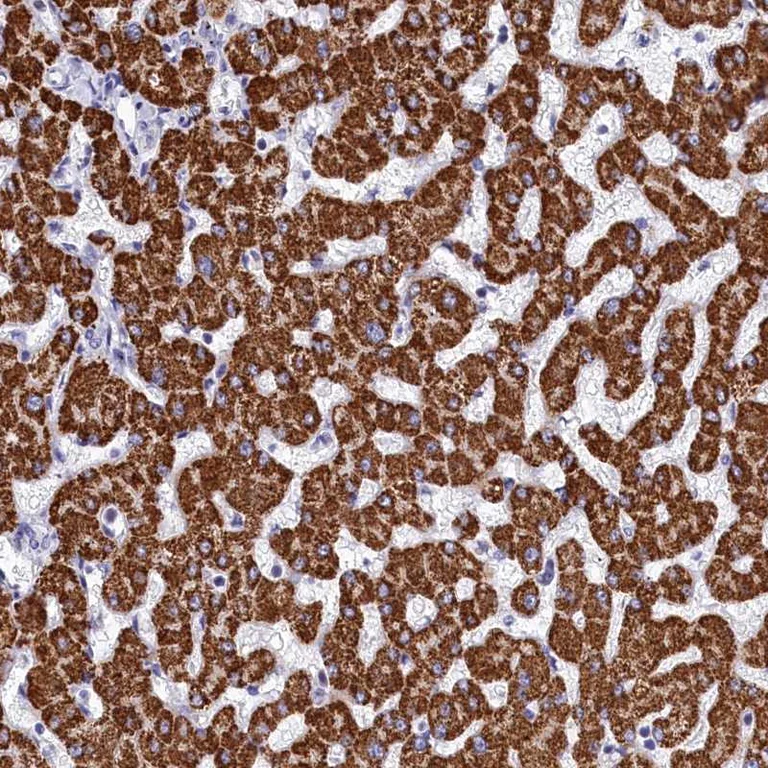
Immunohistochemistry (Formalin/PFA-fixed paraffin-embedded sections) - Anti-PGP antibody (AB262880)
  • IHC-P

Unknown

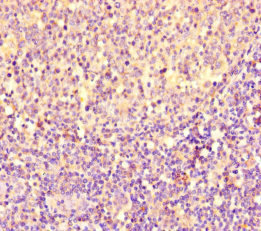
Immunohistochemistry (Formalin/PFA-fixed paraffin-embedded sections) - Anti-PGP antibody (AB262880)

Paraffin-embedded human liver tissue stained for PGP using ab262880 at 1/500 dilution in immunohistochemical analysis.
Western blot - Anti-PGP antibody (AB262880)
  • WB

Unknown

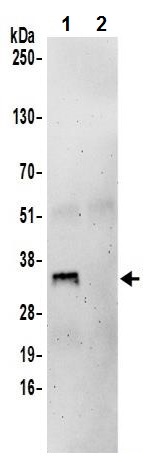
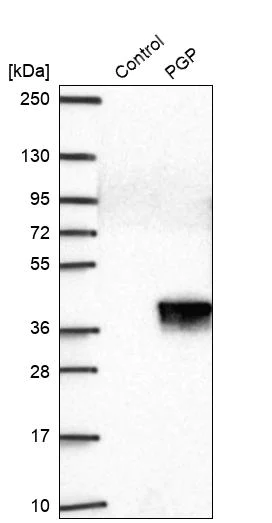
Western blot - Anti-PGP antibody (AB262880)

All lanes:

Western blot - Anti-PGP antibody (ab262880) at 0.4 µg/mL

Lane 1:

Vector only transfected HEK-293T cell lysate

Lane 2:

HEK-293T overexpressing PGP with C-terminal myc-DDK tag, cell lysate.

Predicted band size: 34 kDa

false

Key facts

Host species

Rabbit

Clonality

Polyclonal

Isotype

IgG

Carrier free

No

Reacts with

Human

Applications

WB, IHC-P

applications

Immunogen

Recombinant Fragment Protein within Human PGP aa 150-300. The exact immunogen used to generate this antibody is proprietary information.

A6NDG6

Reactivity data

{ "title": "Reactivity Data", "filters": { "stats": ["", "Species", "Dilution Info", "Notes"], "tabs": { "all-applications": {"fullname" : "All Applications", "shortname": "All Applications"}, "IHCP" : {"fullname" : "Immunohistochemistry (Formalin/PFA-fixed paraffin-embedded sections)", "shortname":"IHC-P"}, "WB" : {"fullname" : "Western blot", "shortname":"WB"} }, "product-promise": { "all": "all", "testedAndGuaranteed": "tested", "guaranteed": "expected", "predicted": "predicted", "notRecommended": "not-recommended" } }, "values": { "Human": { "IHCP-species-checked": "testedAndGuaranteed", "IHCP-species-dilution-info": "1/500 - 1/1000", "IHCP-species-notes": "<p></p> Perform heat-mediated antigen retrieval with citrate buffer pH 6 before commencing with IHC staining protocol.", "WB-species-checked": "testedAndGuaranteed", "WB-species-dilution-info": "0.4 µg/mL", "WB-species-notes": "<p></p>" }, "Mouse": { "IHCP-species-checked": "predicted", "IHCP-species-dilution-info": "", "IHCP-species-notes": "", "WB-species-checked": "predicted", "WB-species-dilution-info": "", "WB-species-notes": "" }, "Rat": { "IHCP-species-checked": "predicted", "IHCP-species-dilution-info": "", "IHCP-species-notes": "", "WB-species-checked": "predicted", "WB-species-dilution-info": "", "WB-species-notes": "" }, "Cow": { "IHCP-species-checked": "predicted", "IHCP-species-dilution-info": "", "IHCP-species-notes": "", "WB-species-checked": "predicted", "WB-species-dilution-info": "", "WB-species-notes": "" } } }

Properties and storage information

Form
Liquid
Purification technique
Affinity purification Immunogen
Storage buffer
pH: 7.2 Preservative: 0.02% Sodium azide Constituents: PBS, 40% Glycerol (glycerin, glycerine)
Shipped at conditions
Blue Ice
Appropriate short-term storage duration
1-2 weeks
Appropriate short-term storage conditions
+4°C
Appropriate long-term storage conditions
-20°C
Aliquoting information
Upon delivery aliquot
Storage information
Avoid freeze / thaw cycle

Supplementary information

This supplementary information is collated from multiple sources and compiled automatically.

PGP also known as P-glycoprotein or Pgp protein functions as an important membrane-associated ATP-dependent efflux transporter. It has a molecular weight of approximately 170 kDa. This protein is widely expressed in cells throughout the body with high levels present in the liver kidney intestine and blood-brain barrier. PGP's mechanical role involves transporting various substrates including drugs metabolic products and xenobiotics across cellular membranes which is important for protecting tissues from toxins.
Biological function summary

PGP plays an important role in the body's defense by contributing to the cellular excretion of potentially harmful substances. It is part of the ATP-binding cassette (ABC) transporters family. This protein helps maintain cellular homeostasis by regulating the intracellular concentration of substrates. PGP products influence pharmacokinetics by affecting drug absorption and excretion which can affect therapy outcomes. The study of PGP alternatives may provide insights into overcoming drug resistance in various conditions.

Pathways

PGP participates in two major biological systems: the metabolic pathway and the detoxification pathway. In these pathways PGP works closely with other proteins such as cytochrome P450 enzymes to metabolize and eliminate substances from cells. Together with multidrug resistance-associated proteins PGP contributes to the intricate network of cellular defense mechanisms. The proper functioning of these pathways is essential for protecting tissues from damage due to toxins and drug accumulation.

PGP's activity is significant in influencing the development of multidrug resistance in cancer treatment and the progression of neurodegenerative diseases like Alzheimer's disease. Altered PGP expression can lead to inefficient drug clearance in cancer making chemotherapy less effective and allowing cancer cells to survive. In Alzheimer's disease overexpression may reduce the clearance of amyloid-beta a protein linked to the condition which leads to its accumulation in the brain. Consequently research into modulating PGP expression and function is critical for improving therapeutic strategies in these disorders.

Product protocols

For this product, it's our understanding that no specific protocols are required. You can visit:

Target data

Glycerol-3-phosphate phosphatase hydrolyzing glycerol-3-phosphate into glycerol. Thereby, regulates the cellular levels of glycerol-3-phosphate a metabolic intermediate of glucose, lipid and energy metabolism. Was also shown to have a 2-phosphoglycolate phosphatase activity and a tyrosine-protein phosphatase activity. However, their physiological relevance is unclear (PubMed : 26755581). In vitro, also has a phosphatase activity toward ADP, ATP, GDP and GTP (By similarity).
See full target information PGP

Publications (4)

Recent publications for all applications. Explore the full list and refine your search

Environmental toxicology 39:1269-1282 PubMed37927237

2023

SNHG1, interacting with SND1, contributes to sorafenib resistance of liver cancer cells by increasing m6A-mediated SLC7A11 expression and promoting aerobic glycolysis.

Applications

Unspecified application

Species

Unspecified reactive species

Rong Li,Shunle Li,Lin Shen,Junhui Li,Di Zhang,Jinmin Yu,Lanxuan Huang,Na Liu,Hongwei Lu,Meng Xu

Cancers 14: PubMed36428672

2022

N6-Methyladenosine Modification of CIRCKRT17 Initiated by METTL3 Promotes Osimertinib Resistance of Lung Adenocarcinoma by EIF4A3 to Enhance YAP1 Stability.

Applications

Unspecified application

Species

Unspecified reactive species

Ying Ji,Qing Zhao,Wei Feng,Yue Peng,Bin Hu,Qirui Chen

Experimental and therapeutic medicine 22:1301 PubMed34630656

2021

Honokiol combined with curcumin sensitizes multidrug-resistant human lung adenocarcinoma A549/DDP cells to cisplatin.

Applications

Unspecified application

Species

Unspecified reactive species

Mingming Qi,Xiaojin Chen,Liqun Bian,Han Zhang,Jian Ma

Oncology reports 45: PubMed33649818

2021

LRPPRC contributes to the cisplatin resistance of lung cancer cells by regulating expression.

Applications

Unspecified application

Species

Unspecified reactive species

Yunfeng Hu,Jie Cui,Lei Jin,Yani Su,Xiaozhi Zhang
View all publications

Product promise

We are committed to supporting your work with high-quality reagents, and we're here for you every step of the way. In the unlikely event that one of our products does not perform as expected, you're protected by our Product Promise.
For full details, please see our Terms & Conditions

Please note: All products are 'FOR RESEARCH USE ONLY. NOT FOR USE IN DIAGNOSTIC OR THERAPEUTIC PROCEDURES'.

For licensing inquiries, please contact partnerships@abcam.com