Rabbit Polyclonal PLSCR4 antibody. Suitable for WB, IHC-P and reacts with Mouse, Pig, Human samples. Cited in 3 publications. Immunogen corresponding to Recombinant Fragment Protein within Human PLSCR4 aa 1-350.
View Alternative Names
GIG43, PLSCR4, Phospholipid scramblase 4, PL scramblase 4, Ca(2+)-dependent phospholipid scramblase 4, Cell growth-inhibiting gene 43 protein, TRA1
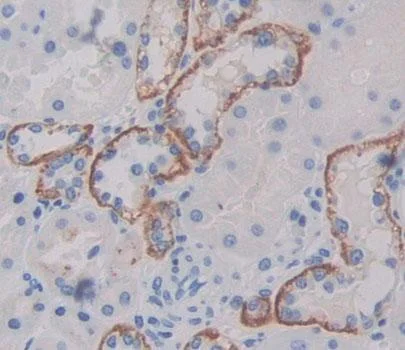
- IHC-P
Supplier Data
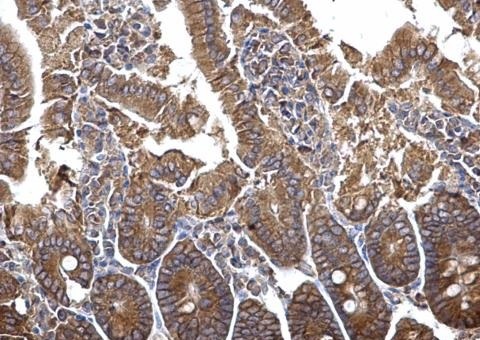
Immunohistochemistry (Formalin/PFA-fixed paraffin-embedded sections) - Anti-PLSCR4 antibody (AB233005)
Formalin-fixed, paraffin-embedded human kidney tissue stained for PLSCR4 using ab233005 at 20 μg/mL in immunohistochemical analysis. DAB staining.
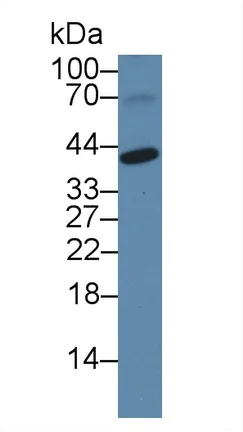
- WB
Supplier Data
Western blot - Anti-PLSCR4 antibody (AB233005)
All lanes:
Western blot - Anti-PLSCR4 antibody (ab233005) at 3 µg/mL
All lanes:
Mouse stomach lysate
Predicted band size: 37 kDa
false
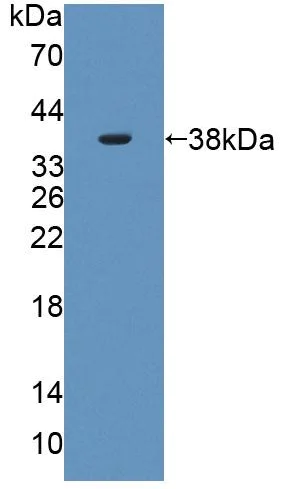
- WB
Supplier Data
Western blot - Anti-PLSCR4 antibody (AB233005)
All lanes:
Western blot - Anti-PLSCR4 antibody (ab233005) at 2 µg/mL
All lanes:
recombinant human PLSCR4 protein
Predicted band size: 37 kDa
false
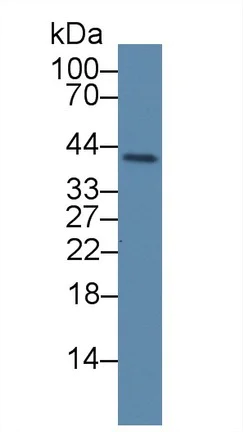
- WB
Supplier Data
Western blot - Anti-PLSCR4 antibody (AB233005)
All lanes:
Western blot - Anti-PLSCR4 antibody (ab233005) at 3 µg/mL
All lanes:
Pig lung lysate
Predicted band size: 37 kDa
false
Alternative Products
Complementary Products


Primary Antibodies
AB133497
Anti-Flotillin 1 antibody [EPR6041]
RabMAb|Recombinant|KO Validated|20ul selling size

- 5
- 6

Reactivity data
Properties and storage information
Form
Purification technique
Purification notes
Storage buffer
Shipped at conditions
Appropriate short-term storage duration
Appropriate short-term storage conditions
Appropriate long-term storage conditions
Aliquoting information
Storage information
Supplementary information
This supplementary information is collated from multiple sources and compiled automatically.
Biological function summary
PLSCR4 functions in modulating cellular membranes' lipid asymmetry which is important for maintaining cell membrane fluidity and other processes. It does not generally form part of a larger complex acting more independently in its role compared to some members of the scramblase family. Through its activity PLSCR4 also has a potential role in signal transduction and apoptosis regulation where lipid dynamics are essential.
Pathways
PLSCR4 mainly connects to apoptotic signaling and immune response pathways. It influences events where membrane lipid composition is important for signaling transduction. Proteins such as caspases may interact or function in parallel as they participate with scramblase family members during apoptosis. PLSCR4's involvement in these pathways highlights its importance in cell death regulation and immune system functionality.
Product protocols
- Visit the General protocols
- Visit the Troubleshooting
Target data
Publications (3)
Recent publications for all applications. Explore the full list and refine your search
Nature communications 16:4124 PubMed40319020
2025
Applications
Unspecified application
Species
Unspecified reactive species
Biological & pharmaceutical bulletin 47:1136-1143 PubMed38866522
2024
Applications
Unspecified application
Species
Unspecified reactive species
International journal of molecular sciences 23: PubMed36077184
2022
Applications
Unspecified application
Species
Unspecified reactive species
Product promise
Please note: All products are 'FOR RESEARCH USE ONLY. NOT FOR USE IN DIAGNOSTIC OR THERAPEUTIC PROCEDURES'.
For licensing inquiries, please contact partnerships@abcam.com