JavaScript is disabled in your browser. Please enable JavaScript to view this website.
AB197260

Anti-PSTPIP1 antibody

Be the first to review this product! Submit a review

|

(4 Publications )

Rabbit Polyclonal PSTPIP1 antibody. Suitable for WB, IHC-P and reacts with Human samples. Cited in 4 publications. Immunogen corresponding to Recombinant Fragment Protein within Human PSTPIP1 aa 50 to C-terminus.
2 Images
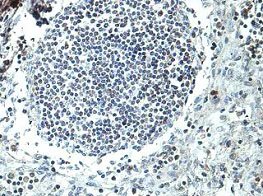
Immunohistochemistry (Formalin/PFA-fixed paraffin-embedded sections) - Anti-PSTPIP1 antibody (AB197260)
  • IHC-P

Supplier Data

Immunohistochemistry (Formalin/PFA-fixed paraffin-embedded sections) - Anti-PSTPIP1 antibody (AB197260)

Immunohistochemical analysis of formalin/PFA-fixed paraffin-embedded Human fetal lymph node tissue, labeling PSTPIP1 with ab197260 at 1/100 dilution.
Western blot - Anti-PSTPIP1 antibody (AB197260)
  • WB

Supplier Data

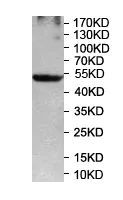
Western blot - Anti-PSTPIP1 antibody (AB197260)

All lanes:

Western blot - Anti-PSTPIP1 antibody (ab197260) at 1/1000 dilution

All lanes:

Raji cell lysates

Predicted band size: 48 kDa

false

Key facts

Host species

Rabbit

Clonality

Polyclonal

Isotype

IgG

Carrier free

No

Reacts with

Human

Applications

WB, IHC-P

applications

Immunogen

Recombinant Fragment Protein within Human PSTPIP1 aa 50 to C-terminus. The exact immunogen used to generate this antibody is proprietary information.

O43586

Reactivity data

{ "title": "Reactivity Data", "filters": { "stats": ["", "Species", "Dilution Info", "Notes"], "tabs": { "all-applications": {"fullname" : "All Applications", "shortname": "All Applications"}, "WB" : {"fullname" : "Western blot", "shortname":"WB"}, "IHCP" : {"fullname" : "Immunohistochemistry (Formalin/PFA-fixed paraffin-embedded sections)", "shortname":"IHC-P"} }, "product-promise": { "all": "all", "testedAndGuaranteed": "tested", "guaranteed": "expected", "predicted": "predicted", "notRecommended": "not-recommended" } }, "values": { "Human": { "WB-species-checked": "testedAndGuaranteed", "WB-species-dilution-info": "1/200 - 1/1000", "WB-species-notes": "<p></p>", "IHCP-species-checked": "testedAndGuaranteed", "IHCP-species-dilution-info": "1/100 - 1/500", "IHCP-species-notes": "<p></p>" } } }

Properties and storage information

Form
Lyophilized
Reconstitution
reconstitute with water at 200µL
Purification technique
Affinity purification Immunogen
Storage buffer
pH: 7.2 Preservative: 0.02% Sodium azide Constituents: PBS, 1% BSA
Shipped at conditions
Blue Ice
Appropriate short-term storage duration
1-2 weeks
Appropriate short-term storage conditions
+4°C
Appropriate long-term storage conditions
-20°C
Aliquoting information
Upon delivery aliquot
Storage information
Avoid freeze / thaw cycle

Supplementary information

This supplementary information is collated from multiple sources and compiled automatically.

PSTPIP1 also known as Proline-Serine-Threonine Phosphatase Interacting Protein 1 is a cytoplasmic adaptor protein with a molecular weight of approximately 47 kDa. It mainly functions in the regulation of the actin cytoskeleton. This protein contains an F-BAR domain and a SH3 domain allowing it to bind membranes and other proteins affecting cytoskeletal dynamics. PSTPIP1 is expressed in various tissues including hematopoietic cells where it plays significant roles in immune cell function.
Biological function summary

PSTPIP1 interacts with several proteins to regulate cellular processes including inflammation and cell movement. It is known to bind to PTP-PEST a protein tyrosine phosphatase which plays a role in cytoskeletal organization. PSTPIP1 is also found in complexes that can alter the actin cytoskeleton influencing cell adhesion and motility. This interaction impacts immune responses and signaling pathways in cells playing an important role in maintaining cellular integrity under various physiological conditions.

Pathways

PSTPIP1 contributes to the regulation of the actin cytoskeleton and inflammatory pathways. It participates in the signaling pathways that involve the Wiskott-Aldrich syndrome protein (WASP) which connects to actin polymerization processes. Additionally PSTPIP1 links with the proteins in the NF-kB pathway participating in the modulation of immune responses. This positioning in multiple pathways allows PSTPIP1 to influence cellular responses significantly.

PSTPIP1 mutations and dysregulation have been linked to conditions such as pyogenic arthritis pyoderma gangrenosum and acne (PAPA) syndrome. In these diseases PSTPIP1 interacts with proteins such as PTP-PEST and pyrin which are critical in controlling inflammation. Abnormal interactions or mutations in PSTPIP1 can lead to hyperactivation of inflammation contributing to the symptoms observed in these disorders highlighting its important role in immune regulation and pathology.

Product protocols

For this product, it's our understanding that no specific protocols are required. You can visit:

Target data

Involved in regulation of the actin cytoskeleton. May regulate WAS actin-bundling activity. Bridges the interaction between ABL1 and PTPN18 leading to ABL1 dephosphorylation. May play a role as a scaffold protein between PTPN12 and WAS and allow PTPN12 to dephosphorylate WAS. Has the potential to physically couple CD2 and CD2AP to WAS. Acts downstream of CD2 and CD2AP to recruit WAS to the T-cell : APC contact site so as to promote the actin polymerization required for synapse induction during T-cell activation (By similarity). Down-regulates CD2-stimulated adhesion through the coupling of PTPN12 to CD2. Also has a role in innate immunity and the inflammatory response. Recruited to inflammasomes by MEFV. Induces formation of pyroptosomes, large supramolecular structures composed of oligomerized PYCARD dimers which form prior to inflammatory apoptosis. Binding to MEFV allows MEFV to bind to PYCARD and facilitates pyroptosome formation. Regulates endocytosis and cell migration in neutrophils.
See full target information PSTPIP1

Alternative Names

CD2BP1, PSTPIP1, Proline-serine-threonine phosphatase-interacting protein 1, PEST phosphatase-interacting protein 1, CD2-binding protein 1, H-PIP

Publications (4)

Recent publications for all applications. Explore the full listand refine your search

Cancer research 78:6539-6548 PubMed30297534

2018

Pathologic Oxidation of PTPN12 Underlies ABL1 Phosphorylation in Hereditary Leiomyomatosis and Renal Cell Carcinoma.

Applications

Unspecified application

Species

Unspecified reactive species

Yang Xu,Paul Taylor,Joshua Andrade,Beatrix Ueberheide,Brian Shuch,Peter M Glazer,Ranjit S Bindra,Michael F Moran,W Marston Linehan,Benjamin G Neel

Molecular medicine reports 17:7973-7979 PubMed29620271

2018

miR‑152 regulates TGF‑β1‑induced epithelial‑mesenchymal transition by targeting HPIP in tubular epithelial cells.

Applications

Unspecified application

Species

Unspecified reactive species

Ya-Xian Ning,Xiao-Yuan Wang,Jian-Qin Wang,Rong Zeng,Gou-Qin Wang

OncoTargets and therapy 10:4205-4211 PubMed28894377

2017

HPIP: a predictor of lymph node metastasis and poor survival in cervical cancer.

Applications

IHC

Species

Human

Shan Cao,Jingxia Sun,Shuai Lin,Lu Zhao,Di Wu,Tian Liang,Wenji Sheng

Oncotarget 8:70262-70270 PubMed29050277

2017

The clinical significance of HPIP and the associated prognosis in cervical cancer.

Applications

WB, IHC-P

Species

Human, Human

Fanling Meng,Haixia Liu,Shuang Liu,Rong Ma
View all publications

Product promise

We are committed to supporting your work with high-quality reagents, and we're here for you every step of the way. In the unlikely event that one of our products does not perform as expected, you're protected by our Product Promise.
For full details, please see our Terms & Conditions

Please note: All products are 'FOR RESEARCH USE ONLY. NOT FOR USE IN DIAGNOSTIC OR THERAPEUTIC PROCEDURES'.

For licensing inquiries, please contact partnerships@abcam.com