Anti-RAB11B antibody [EPR12719]
- RabMAb
- Recombinant
- What is this?
Be the first to review this product! Submit a review
|
(1 Publication)
- IP
Supplier Data
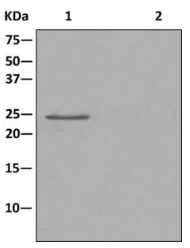
Immunoprecipitation - Anti-RAB11B antibody [EPR12719] (AB176344)
Western blot analysis on immunoprecipitation pellet from PC-12 cell lysate (lane 1) or 1XPBS (negative control, lane 2) using ab176344 and HRP-conjugated anti-rabbit IgG preferentially detecting the non-reduced form of rabbit IgG
All lanes:
Immunoprecipitation - Anti-RAB11B antibody [EPR12719] (ab176344)
Predicted band size: 24 kDa
false
- WB
Supplier Data
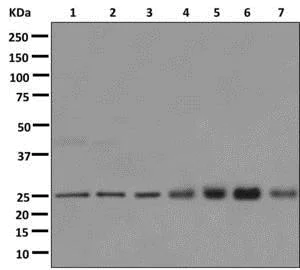
Western blot - Anti-RAB11B antibody [EPR12719] (AB176344)
All lanes:
Western blot - Anti-RAB11B antibody [EPR12719] (ab176344) at 1/1000 dilution
Lane 1:
Fetal brain lysate at 10 µg
Lane 2:
Jurkat cell lysate at 10 µg
Lane 3:
SH-SY5Y cell lysate at 10 µg
Lane 4:
C6 cell lysate at 10 µg
Lane 5:
Raw 264.7 cell lysate at 10 µg
Lane 6:
PC-12 cell lysate at 10 µg
Lane 7:
NIH/3T3 cell lysate at 10 µg
Predicted band size: 24 kDa
false
Related conjugates and formulations (1)
-
Anti-RAB11B antibody [EPR12719] - BSA and Azide free
Alternative Products
Complementary Products
Primary Antibodies
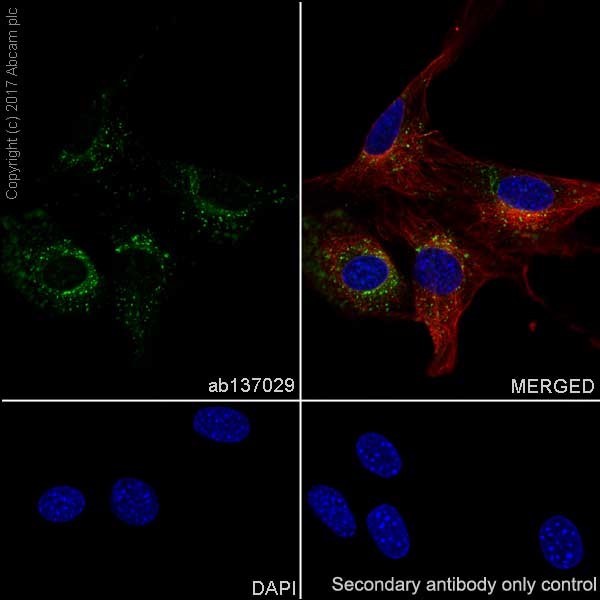
AB137029
Anti-RAB7 antibody [EPR7589] - Late Endosome Marker
20ul selling size|RabMAb|Recombinant|KO Validated
- 5
- 25
Primary Antibodies
AB218624
Anti-Rab5 antibody [EPR21801] - Early Endosome Marker
20ul selling size|KO Validated|RabMAb|Recombinant|Lab Essentials

- 4
- 3
Primary Antibodies
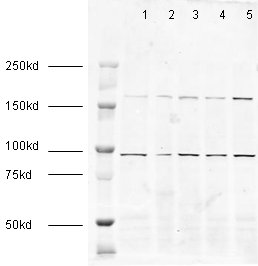
AB2900
Anti-EEA1 antibody - Early Endosome Marker
KO Validated|Lab Essentials
- 4
- 39
Primary Antibodies
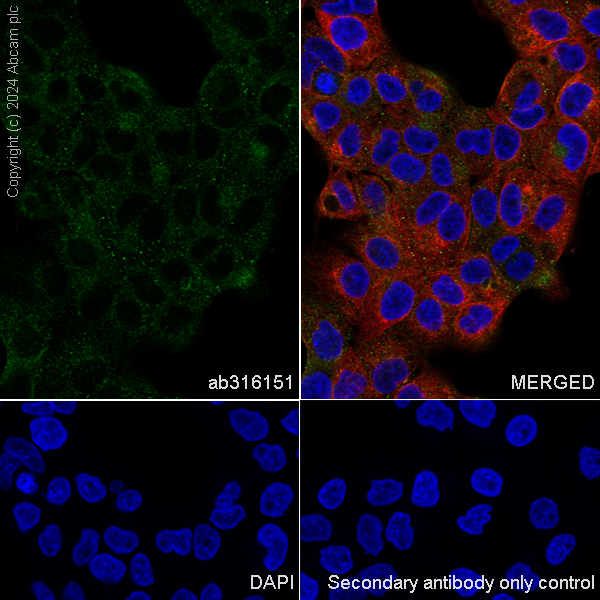
AB316151
Anti-Rab11A antibody [EPR28202-94]
KD Validated|20ul selling size|Recombinant|RabMAb|KO Validated
- 0
- 0
Reactivity data
Product details
Patented technology
Our RabMAb® technology is a patented hybridoma-based technology for making rabbit monoclonal antibodies. For details on our patents, please refer to RabMAb® patents.
What are the advantages of a recombinant monoclonal antibody?
This product is a recombinant monoclonal antibody, which offers several advantages including:
- - High batch-to-batch consistency and reproducibility
- - Improved sensitivity and specificity
- - Long-term security of supply
- - Animal-free batch production
For more information, read more on recombinant antibodies.
Properties and storage information
Form
Purification technique
Storage buffer
Shipped at conditions
Appropriate short-term storage duration
Appropriate short-term storage conditions
Appropriate long-term storage conditions
Aliquoting information
Storage information
Supplementary information
This supplementary information is collated from multiple sources and compiled automatically.
Biological function summary
Small GTPases like RAB11B govern intracellular vesicle trafficking between different organelles. It resides mainly in recycling endosomes and is important for the recycling of receptors and other cell surface proteins. RAB11B often associates with other proteins like recycling endosome coat proteins to form complexes critical for its function. It maintains the proper localization and recycling of surface proteins which is essential for maintaining cellular function.
Pathways
Regulation of vesicular transport by RAB11B integrates into several cellular pathways particularly the endocytic recycling pathway. This pathway supports the recycling of endocytosed material back to the plasma membrane. RAB11B interacts with other proteins such as RAB11A which has overlapping roles in vesicular transport to fine-tune the trafficking of molecules and maintain homeostasis.
Product protocols
- Visit the General protocols
- Visit the Troubleshooting
Target data
Alternative Names
Publications (1)
Recent publications for all applications. Explore the full list and refine your search
Molecular oncology 17:2584-2602 PubMed37746742
2023
Applications
Unspecified application
Species
Unspecified reactive species
Product promise
Please note: All products are 'FOR RESEARCH USE ONLY. NOT FOR USE IN DIAGNOSTIC OR THERAPEUTIC PROCEDURES'.
For licensing inquiries, please contact partnerships@abcam.com