Anti-SDHB antibody [HL2251]
- Recombinant
- What is this?
Be the first to review this product! Submit a review
|
(0 Publication)
- IHC-P
Supplier Data
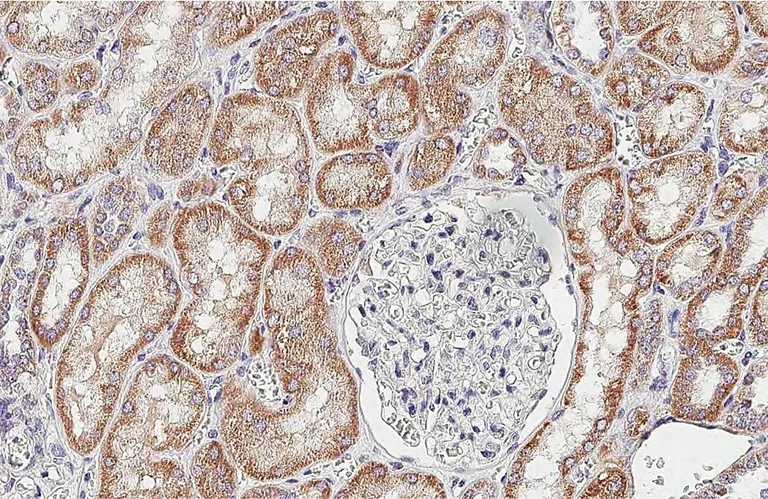
Immunohistochemistry (Formalin/PFA-fixed paraffin-embedded sections) - Anti-SDHB antibody [HL2251] (AB317178)
Immunohistochemical analysis of paraffin-embedded human kidney tissue labelling SDHB protein with ab317178 at a 1/200 dilution.
Antigen retrieval : Citrate buffer, pH 6.0, 15 min
- IHC-P
Supplier Data
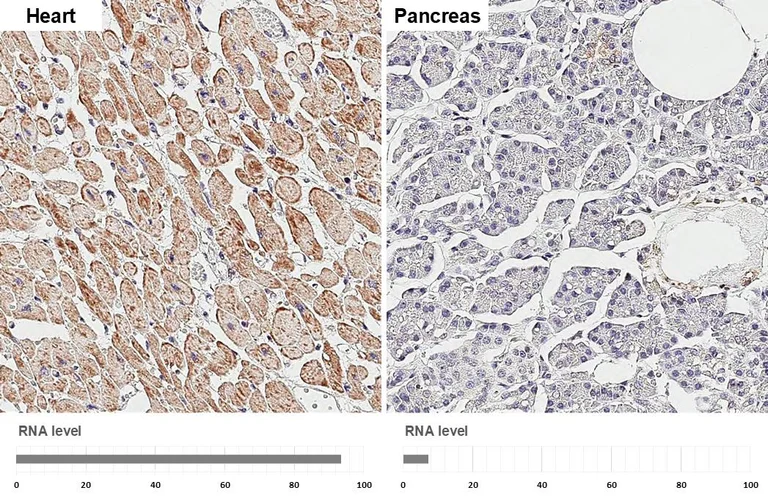
Immunohistochemistry (Formalin/PFA-fixed paraffin-embedded sections) - Anti-SDHB antibody [HL2251] (AB317178)
Immunohistochemical analysis of paraffin-embedded human heart and pancreas tissue labelling SDHB protein with ab317178 at a 1/200 dilution.
Antigen retrieval : Citrate buffer, pH 6.0, 15 min
- IHC-P
Supplier Data
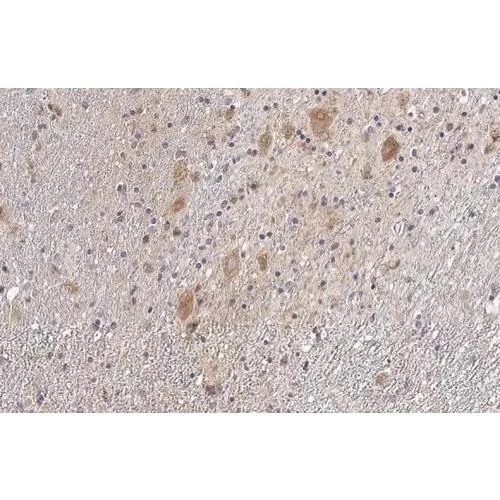
Immunohistochemistry (Formalin/PFA-fixed paraffin-embedded sections) - Anti-SDHB antibody [HL2251] (AB317178)
ab317178 detects SDHB protein at mitochondria by immunohistochemical analysis. Sample : Paraffin-embedded dog brain. SDHB stained by ab317178 diluted at 1 : 100. Antigen Retrieval : Citrate buffer pH 6.0 15 min.
Complementary Products

Primary Antibodies
AB14748
Anti-ATP5A antibody [15H4C4] - Mitochondrial Marker
BOND RX™ Validated|Lab Essentials

- 5
- 27

Primary Antibodies
AB203832
Anti-UQCRC2 antibody [EPR13051]
RabMAb|Recombinant|20ul selling size

- 5
- 1
Reactivity data
Product details
What are the advantages of a recombinant monoclonal antibody?
This product is a recombinant monoclonal antibody, which offers several advantages including:
- - High batch-to-batch consistency and reproducibility
- - Improved sensitivity and specificity
- - Long-term security of supply
- - Animal-free batch production
For more information, read more on recombinant antibodies.
Properties and storage information
Form
Storage buffer
Shipped at conditions
Appropriate short-term storage duration
Appropriate short-term storage conditions
Appropriate long-term storage conditions
Aliquoting information
Storage information
Supplementary information
This supplementary information is collated from multiple sources and compiled automatically.
Biological function summary
SDHB participates in the succinate dehydrogenase complex acting within both the TCA cycle and the electron transport chain. By transferring electrons to coenzyme Q it helps generate an electrochemical gradient important for ATP synthesis. This complex also called Complex II includes other subunits such as SDHA SDHC and SDHD. Their interactions ensure proper function of metabolic processes within mitochondria bridging the gap between foundational energy metabolism and complex cellular processes.
Pathways
SDHB plays an important role in cellular respiration and metabolic cycles. It resides in the TCA cycle and the mitochondrial electron transport chain connecting its function to energy generation pathways. Specifically SDHB relates closely to SDHA and coenzyme Q all working together to facilitate electron transfer and effective mitochondrial energy output. The transfer of electrons through this pathway highlights its essential contribution to maintaining cellular energy homeostasis.
Product protocols
- Visit the General protocols
- Visit the Troubleshooting
Target data
Alternative Names
Product promise
Please note: All products are 'FOR RESEARCH USE ONLY. NOT FOR USE IN DIAGNOSTIC OR THERAPEUTIC PROCEDURES'.
For licensing inquiries, please contact partnerships@abcam.com