JavaScript is disabled in your browser. Please enable JavaScript to view this website.
AB180865

Anti-SFTPA1 antibody

Be the first to review this product! Submit a review

|

(2 Publications )

Rabbit Polyclonal Pulmonary surfactant-associated protein A1 antibody. Suitable for WB and reacts with Mouse samples. Cited in 2 publications. Immunogen corresponding to Synthetic Peptide within Human SFTPA1.
1 Images
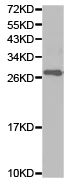
Western blot - Anti-SFTPA1 antibody (AB180865)
  • WB

Supplier Data

Western blot - Anti-SFTPA1 antibody (AB180865)

All lanes:

Western blot - Anti-SFTPA1 antibody (ab180865) at 1/500 dilution

All lanes:

Mouse lung tissue lysate

Predicted band size: 26 kDa

false

Key facts

Host species

Rabbit

Clonality

Polyclonal

Isotype

IgG

Carrier free

No

Reacts with

Mouse

Applications

WB

applications

Immunogen

Synthetic Peptide within Human SFTPA1. The exact immunogen used to generate this antibody is proprietary information.

Q8IWL2

Reactivity data

{ "title": "Reactivity Data", "filters": { "stats": ["", "Species", "Dilution Info", "Notes"], "tabs": { "all-applications": {"fullname" : "All Applications", "shortname": "All Applications"}, "WB" : {"fullname" : "Western blot", "shortname":"WB"} }, "product-promise": { "all": "all", "testedAndGuaranteed": "tested", "guaranteed": "expected", "predicted": "predicted", "notRecommended": "not-recommended" } }, "values": { "Mouse": { "WB-species-checked": "testedAndGuaranteed", "WB-species-dilution-info": "1/500 - 1/1000", "WB-species-notes": "<p></p>" } } }

Properties and storage information

Form
Liquid
Purification technique
Affinity purification Immunogen
Storage buffer
pH: 7.3 Preservative: 0.05% Proclin 300 Constituents: PBS, 50% Glycerol (glycerin, glycerine)
Shipped at conditions
Blue Ice
Appropriate short-term storage duration
1-2 weeks
Appropriate short-term storage conditions
+4°C
Appropriate long-term storage conditions
-20°C
Aliquoting information
Upon delivery aliquot
Storage information
Avoid freeze / thaw cycle

Supplementary information

This supplementary information is collated from multiple sources and compiled automatically.

Surfactant protein A1 (SFTPA1) also known as pulmonary surfactant-associated protein A1 or surfactant protein A plays an essential role in lung function. It is a member of the collectin family and weighs approximately 26-38 kDa. SFTPA1 is expressed mainly in the alveolar type II cells and Clara cells within the lungs. It generally forms a large oligomer consisting of multiple subunits which allows it to bind efficiently to pathogens as well as other molecules.
Biological function summary

Surfactant protein A1 contributes significantly to the innate immune defense of the respiratory tract. It binds to various pathogens including bacteria and viruses promoting their clearance through enhanced phagocytosis by alveolar macrophages. SFTPA1 plays a role in regulating inflammatory responses helping maintain a balance between pathogen clearance and inflammation. Often it forms a complex with surfactant protein D (SP-D) which shares similar immunological actions in the lung environment.

Pathways

Surfactant protein A1 integrates into respiratory defense pathways and the surfactant metabolism pathway. It closely interacts with molecules like SP-D enhancing the surfactant system's efficiency in reducing surface tension. The protein actively engages in Toll-like receptor pathways modulating responses to pathogens and aiding in the regulation of innate immunity. Additionally its function interconnects with Mannose-binding lectin and complement pathways which further link it to the overall immune response.

Mutations or dysregulation in SFTPA1 have been linked to respiratory distress syndrome and pulmonary alveolar proteinosis. These conditions involve impaired surfactant function and ineffective clearance of surfactant materials. In cases of lung infections SFTPA1 interacts with proteins like interleukin-8 (IL-8) and transforming growth factor beta (TGF-β) which drive inflammation and may exacerbate lung tissue damage if not controlled. Understanding how SFTPA1 connects with these diseases helps in developing therapeutic interventions targeting these pathways.

Product protocols

For this product, it's our understanding that no specific protocols are required. You can visit:

Target data

In presence of calcium ions, it binds to surfactant phospholipids and contributes to lower the surface tension at the air-liquid interface in the alveoli of the mammalian lung and is essential for normal respiration. Enhances the expression of MYO18A/SP-R210 on alveolar macrophages (By similarity).. (Microbial infection) Recognition of M.tuberculosis by dendritic cells may occur partially via this molecule (PubMed : 17158455, PubMed : 21203928). Can recognize, bind, and opsonize pathogens to enhance their elimination by alveolar macrophages (PubMed : 21123169).. (Microbial infection) Binds M.pneumoniae CARDS toxin, serves as one receptor for this pathogen (PubMed : 15845487, PubMed : 25139904). When SFTPA1 is down-regulated by siRNA, less toxin binds to human cells and less vacuolization (a symptom of M.pneumoniae infection) is seen (PubMed : 25139904).
See full target information SFTPA1

Alternative Names

COLEC4, PSAP, SFTP1, SFTPA, SFTPA1B, SFTPA1, Pulmonary surfactant-associated protein A1, PSP-A, PSPA, SP-A, SP-A1, 35 kDa pulmonary surfactant-associated protein, Alveolar proteinosis protein, Collectin-4

Publications (2)

Recent publications for all applications. Explore the full listand refine your search

Physiological reports 12:e16057 PubMed38825580

2024

Molecular distinctions of bronchoalveolar and alveolar organoids under differentiation conditions.

Applications

Unspecified application

Species

Unspecified reactive species

Yan Yu,Zexin Chen,Bin Zheng,Min Huang,Junlang Li,Gang Li

The Journal of biological chemistry 291:8414-27 PubMed26907692

2016

Impaired Lysosomal Integral Membrane Protein 2-dependent Peroxiredoxin 6 Delivery to Lamellar Bodies Accounts for Altered Alveolar Phospholipid Content in Adaptor Protein-3-deficient pearl Mice.

Applications

Unspecified application

Species

Unspecified reactive species

Seunghyi Kook,Ping Wang,Lisa R Young,Michael Schwake,Paul Saftig,Xialian Weng,Ying Meng,Dante Neculai,Michael S Marks,Linda Gonzales,Michael F Beers,Susan Guttentag
View all publications

Product promise

We are committed to supporting your work with high-quality reagents, and we're here for you every step of the way. In the unlikely event that one of our products does not perform as expected, you're protected by our Product Promise.
For full details, please see our Terms & Conditions

Please note: All products are 'FOR RESEARCH USE ONLY. NOT FOR USE IN DIAGNOSTIC OR THERAPEUTIC PROCEDURES'.

For licensing inquiries, please contact partnerships@abcam.com