JavaScript is disabled in your browser. Please enable JavaScript to view this website.
AB224491

Anti-Synaptopodin antibody

5

(3 Reviews)

|

(21 Publications )

Anti-Synaptopodin antibody (ab224491) is a rabbit polyclonal antibody detecting Synaptopodin in Western Blot, IHC-P, ICC/IF. Suitable for Human.

- Over 10 publications
6 Images
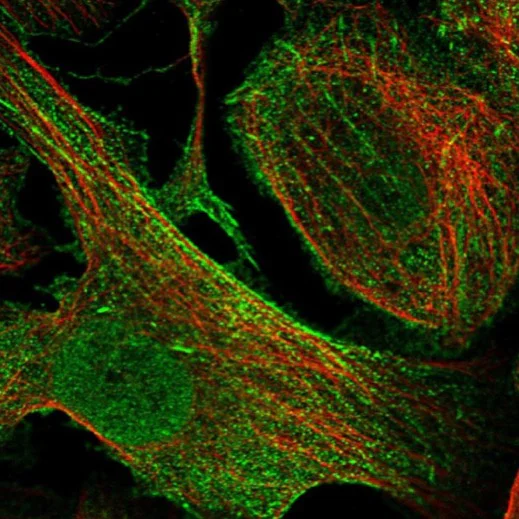
Immunocytochemistry/ Immunofluorescence - Anti-Synaptopodin antibody (AB224491)
  • ICC/IF

Supplier Data

Immunocytochemistry/ Immunofluorescence - Anti-Synaptopodin antibody (AB224491)

PFA-fixed, Triton X-100 permeabilized U-2 OS (human bone osteosarcoma epithelial cell line) cells stained for Synaptopodin (green) using ab224491 at 4 μg/ml in ICC/IF.
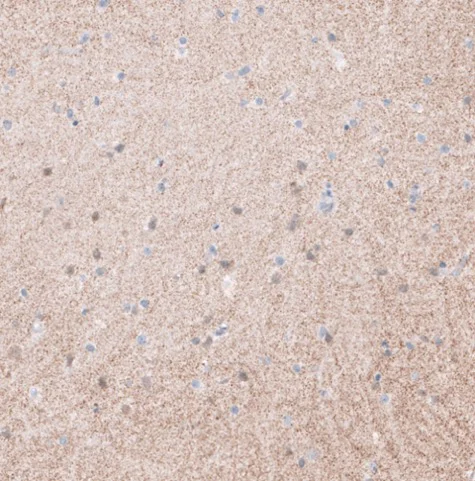
Immunohistochemistry (Formalin/PFA-fixed paraffin-embedded sections) - Anti-Synaptopodin antibody (AB224491)
  • IHC-P

Supplier Data

Immunohistochemistry (Formalin/PFA-fixed paraffin-embedded sections) - Anti-Synaptopodin antibody (AB224491)

Paraffin-embedded human cerebral cortex tissue stained for Synaptopodin using ab224491 at 1/2500 dilution in immunohistochemical analysis.
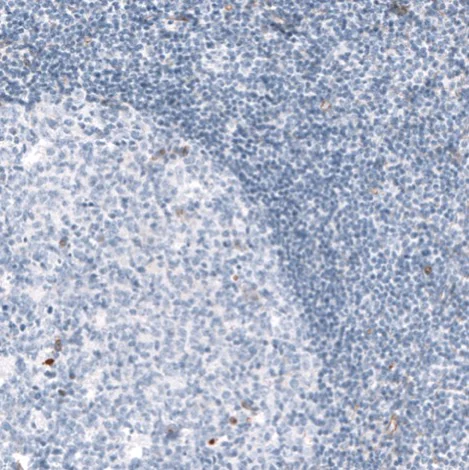
Immunohistochemistry (Formalin/PFA-fixed paraffin-embedded sections) - Anti-Synaptopodin antibody (AB224491)
  • IHC-P

Supplier Data

Immunohistochemistry (Formalin/PFA-fixed paraffin-embedded sections) - Anti-Synaptopodin antibody (AB224491)

Negative control : Paraffin-embedded human tonsil tissue stained for Synaptopodin using ab224491 at 1/2500 dilution in immunohistochemical analysis.
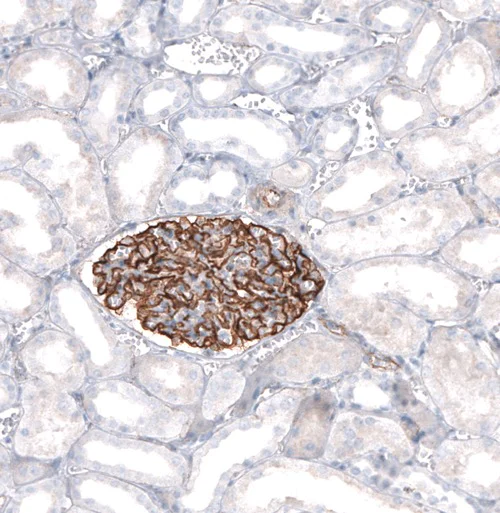
Immunohistochemistry (Formalin/PFA-fixed paraffin-embedded sections) - Anti-Synaptopodin antibody (AB224491)
  • IHC-P

Supplier Data

Immunohistochemistry (Formalin/PFA-fixed paraffin-embedded sections) - Anti-Synaptopodin antibody (AB224491)

Paraffin-embedded human kidney tissue stained for Synaptopodin using ab224491 at 1/2500 dilution in immunohistochemical analysis.
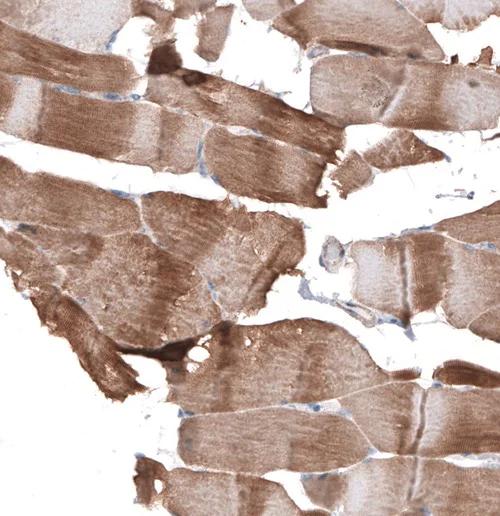
Immunohistochemistry (Formalin/PFA-fixed paraffin-embedded sections) - Anti-Synaptopodin antibody (AB224491)
  • IHC-P

Supplier Data

Immunohistochemistry (Formalin/PFA-fixed paraffin-embedded sections) - Anti-Synaptopodin antibody (AB224491)

Paraffin-embedded human skeletal muscle tissue stained for Synaptopodin using ab224491 at 1/2500 dilution in immunohistochemical analysis.
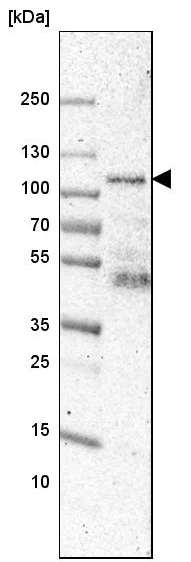
Western blot - Anti-Synaptopodin antibody (AB224491)
  • WB

Supplier Data

Western blot - Anti-Synaptopodin antibody (AB224491)

All lanes:

Western blot - Anti-Synaptopodin antibody (ab224491) at 1/100 dilution

All lanes:

Human skeletal muscle tissue lysate

Predicted band size: 99 kDa

true

Key facts

Host species

Rabbit

Clonality

Polyclonal

Isotype

IgG

Carrier free

No

Reacts with

Human

Applications

IHC-P, ICC/IF, WB

applications

Immunogen

Recombinant Fragment Protein within Human SYNPO aa 450-550. The exact immunogen used to generate this antibody is proprietary information.

Q8N3V7

Reactivity data

{ "title": "Reactivity Data", "filters": { "stats": ["", "Species", "Dilution Info", "Notes"], "tabs": { "all-applications": {"fullname" : "All Applications", "shortname": "All Applications"}, "IHCP" : {"fullname" : "Immunohistochemistry (Formalin/PFA-fixed paraffin-embedded sections)", "shortname":"IHC-P"}, "WB" : {"fullname" : "Western blot", "shortname":"WB"}, "ICCIF" : {"fullname" : "Immunocytochemistry/ Immunofluorescence", "shortname":"ICC/IF"} }, "product-promise": { "all": "all", "testedAndGuaranteed": "tested", "guaranteed": "expected", "predicted": "predicted", "notRecommended": "not-recommended" } }, "values": { "Human": { "IHCP-species-checked": "testedAndGuaranteed", "IHCP-species-dilution-info": "1/1000 - 1/2500", "IHCP-species-notes": "<p></p> Perform heat-mediated antigen retrieval with citrate buffer pH 6 before commencing with IHC staining protocol.", "WB-species-checked": "testedAndGuaranteed", "WB-species-dilution-info": "0.04-0.4 µg/mL", "WB-species-notes": "<p></p>", "ICCIF-species-checked": "testedAndGuaranteed", "ICCIF-species-dilution-info": "0.25-2 µg/mL", "ICCIF-species-notes": "<p>Fixation/Permeabilization: PFA/Triton X-100.</p>" } } }

Product details

What is this antibody validated in?
Anti-Synaptopodin antibody (ab224491) is a rabbit polyclonal antibody and is validated for use in Western Blot (WB), Immunohistochemistry (IHC-P), Immunocytochemistry/immunofluorescence (ICC/IF) in Human samples.

What is the molecular weight of Synaptopodin?
Anti-Synaptopodin (ab224491) specifically detects a band for Synaptopodin (UniProt: Q8N3V7) at a molecular weight of 99kDa.

Trusted by the scientific community
Anti-Synaptopodin (ab224491) was first used in a scientific publication in 2017 and has been cited over 10 times in peer-reviewed journals.

Properties and storage information

Form
Liquid
Purification technique
Affinity purification Immunogen
Storage buffer
pH: 7.2 Preservative: 0.02% Sodium azide Constituents: PBS, 40% Glycerol (glycerin, glycerine)
Shipped at conditions
Blue Ice
Appropriate short-term storage duration
1-2 weeks
Appropriate short-term storage conditions
+4°C
Appropriate long-term storage conditions
-20°C
Aliquoting information
Upon delivery aliquot
Storage information
Avoid freeze / thaw cycle

Supplementary information

This supplementary information is collated from multiple sources and compiled automatically.

Synaptopodin also known as SYNPO is an actin-associated protein with a molecular mass of approximately 100 kDa. It plays a mechanical role by associating and bundling actin filaments important for cytoskeletal dynamics. Synaptopodin gets expressed mainly in podocytes of the kidney as well as in certain neurons particularly found in dendritic spines and telencephalic dendrites. This protein is sensitive to calcium signaling which influences its interaction with the actin cytoskeleton.
Biological function summary

The actin-modulating effects of Synaptopodin contribute to the regulation of cell shape and motility. Synaptopodin is essential for the formation of the dendritic spine apparatus working as a part of a protein complex that stabilizes dendritic spines which are key to synaptic plasticity and signal transduction. The protein can also influence the podocyte function in the kidney maintaining the structure of foot processes that are fundamental for the kidney filtration barrier.

Pathways

Synaptopodin plays an important role in the maintenance of synaptic plasticity and the actin cytoskeleton pathway which affects both neuronal plasticity and kidney function. Within these pathways Synaptopodin interacts with proteins like alpha-actinin and myosin-Va forming linkages that stabilize actin filaments and regulate cytoskeletal organization. The protein contributes to the protection of neurons and kidney glomeruli through signaling pathways that affect actin dynamic balance.

Synaptopodin has significant implications in nephrotic syndrome and Alzheimer's disease. In nephrotic syndrome alterations in Synaptopodin expression or function can lead to podocyte injury contributing to kidney dysfunction. In Alzheimer's disease Synaptopodin modulation of spine morphology may impact synaptic connectivity and cognitive function. The protein interacts with nephrin in kidney pathology and potentially affects tau protein signaling in Alzheimer's illustrating its vital role in both neurological and renal health.

Product protocols

For this product, it's our understanding that no specific protocols are required. You can visit:

Target data

Actin-associated protein that may play a role in modulating actin-based shape and motility of dendritic spines and renal podocyte foot processes. Seems to be essential for the formation of spine apparatuses in spines of telencephalic neurons, which is involved in synaptic plasticity (By similarity).
See full target information SYNPO

Alternative Names

KIAA1029, SYNPO, Synaptopodin

Publications (21)

Recent publications for all applications. Explore the full listand refine your search

Renal failure 47:2553384 PubMed40948471

2025

A novel membrane-addressing domain mutation () in Chinese twins with FSGS: implications for podocyte injury and ion channel disruption.

Applications

Unspecified application

Species

Unspecified reactive species

Ting Peng,Dan Chang,Tingyu Chen,Sipei Chen,Li Wang,Guisen Li

Cellular and molecular life sciences : CMLS 82:240 PubMed40682672

2025

IPSC-induced podocytes from a BORS patient with EYA1 gene mutation showed glucocorticoid-resistant and cytoskeletal rearrangement.

Applications

Unspecified application

Species

Unspecified reactive species

Guanyu Li,Di Lu,Liujing Xu,Shumin Zhou,Jiayi Zhang,Lijuan Wu,Lingna Shi,Lili Wang,Xiaoqing Lin,Zhigang Ma,Ming Liu,Xia Gao

Methods in molecular biology (Clifton, N.J.) 2924:45-57 PubMed40307634

2025

One-Step Differentiation of Human-Induced Pluripotent Stem Cells into Podocytes.

Applications

Unspecified application

Species

Unspecified reactive species

Elisabeth Naderlinger,Cormac Murphy,Elisabeth Feifel,Paul Jennings,Gerhard Gstraunthaler,Anja Wilmes

Lupus science & medicine 11: PubMed39608815

2024

HNF-1β alleviates podocyte injury in lupus nephritis by maintaining endoplasmic reticulum homeostasis.

Applications

Unspecified application

Species

Unspecified reactive species

Hui-Mei Zou,Jie Yu,Yuan-Yuan Ruan,Ying Xie,Xiao-Min An,Pei-Lei Chen,Ying-Qin Luo,Ming-Jun Shi,Miao Liu,Li-Fen Xu,Jun Liu,Bing Guo,Fan Zhang

International journal of molecular sciences 25: PubMed38791159

2024

Characterizing Glomerular Barrier Dysfunction with Patient-Derived Serum in Glomerulus-on-a-Chip Models: Unveiling New Insights into Glomerulonephritis.

Applications

Unspecified application

Species

Unspecified reactive species

Shin Young Kim,Yun Yeong Choi,Eun Jeong Kwon,Seungwan Seo,Wan Young Kim,Sung Hyuk Park,Seokwoo Park,Ho Jun Chin,Ki Young Na,Sejoong Kim

Pharmacological reports : PR 76:612-621 PubMed38668812

2024

Role of the β-adrenergic receptor in podocyte injury and recovery.

Applications

Unspecified application

Species

Unspecified reactive species

Ehtesham Arif,Ashish K Solanki,Bushra Rahman,Bethany Wolf,Rick G Schnellmann,Deepak Nihalani,Joshua H Lipschutz

Microbiology spectrum 12:e0136523 PubMed38315030

2024

Hepatitis B virus-targeting sodium taurocholate cotransporting polypeptide mediates HBV infection and damage in human renal podocytes.

Applications

Unspecified application

Species

Unspecified reactive species

Lifen Wang,Cheng Wang,Xu Wang,Yantao Cao,Xiaohua Guo,Zhiming Ye

JCI insight 9: PubMed38227377

2024

C3aR-initiated signaling is a critical mechanism of podocyte injury in membranous nephropathy.

Applications

Unspecified application

Species

Unspecified reactive species

Qi Zhang,Sofia Bin,Kelly Budge,Astgik Petrosyan,Valentina Villani,Paola Aguiari,Coralien Vink,Jack Wetzels,Hasmik Soloyan,Gaetano La Manna,Manuel Alfredo Podestà,Paolo Molinari,Sargis Sedrakyan,Kevin V Lemley,Roger E De Filippo,Laura Perin,Paolo Cravedi,Stefano Da Sacco

Experimental and therapeutic medicine 26:473 PubMed37753299

2023

Effects and mechanism of Rictor interference in podocyte injury induced by high glucose.

Applications

Unspecified application

Species

Unspecified reactive species

Yan Zeng,Changbin Xiong,Yinxiang Chen,Chunyun Yang,Qiuyue Li

Nature communications 14:1223 PubMed36869030

2023

Polynucleotide phosphorylase protects against renal tubular injury via blocking mt-dsRNA-PKR-eIF2α axis.

Applications

Unspecified application

Species

Unspecified reactive species

Yujie Zhu,Mingchao Zhang,Weiran Wang,Shuang Qu,Minghui Liu,Weiwei Rong,Wenwen Yang,Hongwei Liang,Caihong Zeng,Xiaodong Zhu,Limin Li,Zhihong Liu,Ke Zen
View all publications

Product promise

We are committed to supporting your work with high-quality reagents, and we're here for you every step of the way. In the unlikely event that one of our products does not perform as expected, you're protected by our Product Promise.
For full details, please see our Terms & Conditions

Please note: All products are 'FOR RESEARCH USE ONLY. NOT FOR USE IN DIAGNOSTIC OR THERAPEUTIC PROCEDURES'.

For licensing inquiries, please contact partnerships@abcam.com