JavaScript is disabled in your browser. Please enable JavaScript to view this website.
AB197807

Anti-TLR6 antibody

3

(4 Reviews)

|

(1 Publication)

Rabbit Polyclonal TLR6 antibody. Suitable for IHC-P and reacts with Human samples. Cited in 1 publication. Immunogen corresponding to Fusion protein corresponding to TLR6, fused to TLR6.

View Alternative Names

CD286, Toll-like receptor 6, TLR6
2 Images
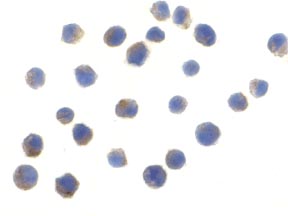
Immunohistochemistry (Formalin/PFA-fixed paraffin-embedded sections) - Anti-TLR6 antibody (AB197807)
  • IHC-P

Supplier Data

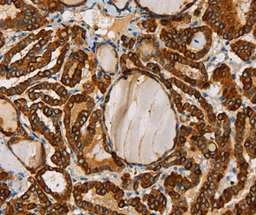
Immunohistochemistry (Formalin/PFA-fixed paraffin-embedded sections) - Anti-TLR6 antibody (AB197807)

Immunohistochemical analysis of paraffin-embedded Human thyroid cancer tissue labeling TLR6 using ab197807 at a 1/25 dilution.
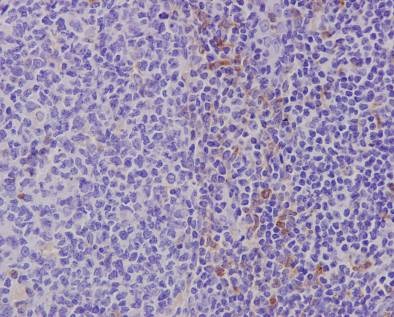
Immunohistochemistry (Formalin/PFA-fixed paraffin-embedded sections) - Anti-TLR6 antibody (AB197807)
  • IHC-P

Supplier Data

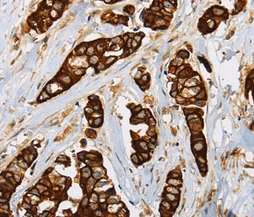
Immunohistochemistry (Formalin/PFA-fixed paraffin-embedded sections) - Anti-TLR6 antibody (AB197807)

Immunohistochemical analysis of paraffin-embedded Human breast cancer tissue labeling TLR6 using ab197807 at a 1/25 dilution.

Key facts

Host species

Rabbit

Clonality

Polyclonal

Isotype

IgG

Carrier free

No

Reacts with

Human

Applications

IHC-P

applications

Immunogen

Fusion protein corresponding to TLR6, fused to TLR6. The exact immunogen used to generate this antibody is proprietary information.

Q9Y2C9

Reactivity data

{ "title": "Reactivity Data", "filters": { "stats": ["", "Species", "Dilution Info", "Notes"], "tabs": { "all-applications": {"fullname" : "All Applications", "shortname": "All Applications"}, "IHCP" : {"fullname" : "Immunohistochemistry (Formalin/PFA-fixed paraffin-embedded sections)", "shortname":"IHC-P"} }, "product-promise": { "all": "all", "testedAndGuaranteed": "tested", "guaranteed": "expected", "predicted": "predicted", "notRecommended": "not-recommended" } }, "values": { "Human": { "IHCP-species-checked": "testedAndGuaranteed", "IHCP-species-dilution-info": "1/50 - 1/200", "IHCP-species-notes": "<p></p>" } } }

Properties and storage information

Form
Liquid
Purification technique
Affinity purification Immunogen
Storage buffer
pH: 7.4 Preservative: 0.05% Sodium azide Constituents: PBS, 50% Glycerol (glycerin, glycerine)
Shipped at conditions
Blue Ice
Appropriate short-term storage duration
1-2 weeks
Appropriate short-term storage conditions
+4°C
Appropriate long-term storage conditions
-20°C
Aliquoting information
Upon delivery aliquot
Storage information
Avoid freeze / thaw cycle

Supplementary information

This supplementary information is collated from multiple sources and compiled automatically.

Toll-like receptor 6 (TLR6) acts as an important component of the innate immune system. TLR6 is alternatively known as CD286 and has an approximate molecular mass of 91 kDa. This protein is predominantly expressed in immune cells such as monocytes dendritic cells and macrophages. It localizes mainly on the cell surface and is involved in recognizing pathogen-associated molecular patterns specifically diacyl lipopeptides and peptidoglycans.
Biological function summary

TLR6 plays a role in pathogen recognition and activation of inflammatory responses. It often forms a functional heterodimer with TLR2 a necessity for its function. Through this complex TLR6 mediates the recognition of bacterial lipoproteins and triggers downstream signaling involved in immune cell activation and cytokine production. This signaling increases the host's immune response to bacterial infections by promoting the release of pro-inflammatory cytokines.

Pathways

TLR6 initiates signaling cascades that are significant in the immune system such as the NF-kB and MAPK pathways. TLR6 partners with TLR2 to activate the MyD88-dependent signaling pathway an important pathway in innate immunity that affects transcription of pro-inflammatory genes. Interaction with these pathways involves proteins like MyD88 and TRAF6 which are central components in signal transduction leading to inflammation and antimicrobial responses.

TLR6 contributes to the pathogenesis of inflammatory and autoimmune diseases. Research indicates its association with conditions like rheumatoid arthritis and asthma where it influences inflammation levels and immune system dysregulation. TLR6 through its interaction with TLR2 affects the differentiation and activation of immune cells leading to overactive immune responses observed in these disorders. Its role in inflammation makes it a potential target for therapeutic intervention in diseases related to immune system dysfunction.

Product protocols

For this product, it's our understanding that no specific protocols are required. You can visit:

Target data

Participates in the innate immune response to Gram-positive bacteria and fungi. Specifically recognizes diacylated and, to a lesser extent, triacylated lipopeptides (PubMed : 20037584). In response to diacylated lipopeptides, forms the activation cluster TLR2 : TLR6 : CD14 : CD36, this cluster triggers signaling from the cell surface and subsequently is targeted to the Golgi in a lipid-raft dependent pathway (PubMed : 16880211). Acts via MYD88 and TRAF6, leading to NF-kappa-B activation, cytokine secretion and the inflammatory response. Recognizes mycoplasmal macrophage-activating lipopeptide-2kD (MALP-2), soluble tuberculosis factor (STF), phenol-soluble modulin (PSM) and B.burgdorferi outer surface protein A lipoprotein (OspA-L) cooperatively with TLR2 (PubMed : 11441107). In complex with TLR4, promotes sterile inflammation in monocytes/macrophages in response to oxidized low-density lipoprotein (oxLDL) or amyloid-beta 42. In this context, the initial signal is provided by oxLDL- or amyloid-beta 42-binding to CD36. This event induces the formation of a heterodimer of TLR4 and TLR6, which is rapidly internalized and triggers inflammatory response, leading to the NF-kappa-B-dependent production of CXCL1, CXCL2 and CCL9 cytokines, via MYD88 signaling pathway, and CCL5 cytokine, via TICAM1 signaling pathway, as well as IL1B secretion (PubMed : 11441107, PubMed : 20037584).
See full target information TLR6

Publications (1)

Recent publications for all applications. Explore the full list and refine your search

Cell proliferation 58:e13755 PubMed39329203

2024

Dynamic transcriptomic and regulatory networks underpinning the transition from fetal primordial germ cells to spermatogonia in mice.

Applications

Unspecified application

Species

Unspecified reactive species

Jiexiang Zhao,Kang Tang,Gurong Jiang,Xinyan Yang,Manman Cui,Cong Wan,Zhaoxiang Ouyang,Yi Zheng,Zhaoting Liu,Mei Wang,Xiao-Yang Zhao,Gang Chang
View all publications

Product promise

We are committed to supporting your work with high-quality reagents, and we're here for you every step of the way. In the unlikely event that one of our products does not perform as expected, you're protected by our Product Promise.
For full details, please see our Terms & Conditions

Please note: All products are 'FOR RESEARCH USE ONLY. NOT FOR USE IN DIAGNOSTIC OR THERAPEUTIC PROCEDURES'.

For licensing inquiries, please contact partnerships@abcam.com