- IHC-P
Unknown
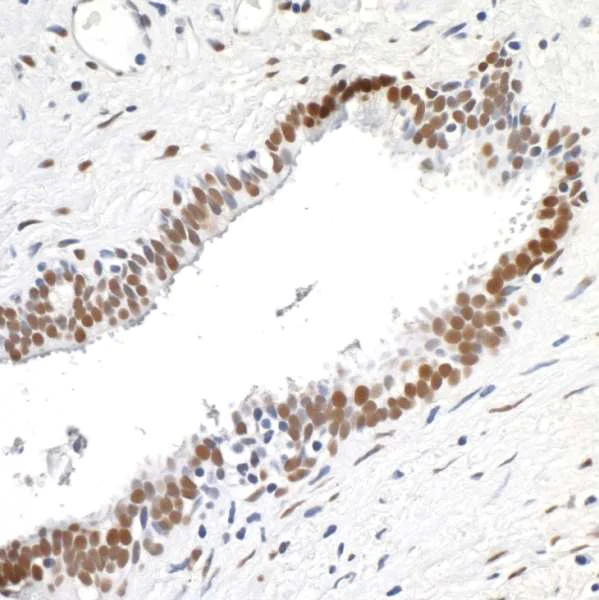
Immunohistochemistry (Formalin/PFA-fixed paraffin-embedded sections) - Anti-TLS/FUS antibody [BLR023E] - BSA free (AB272077)
Formalin-fixed, paraffin-embedded human prostate carcinoma tissue stained for TLS/FUS using ab243880 at 1/250 dilution in immunohistochemical analysis. A HRP-conjugated goat anti-rabbit antibody was used as the secondary. DAB staining.This data was developed using the same antibody clone in a different buffer formulation containing Borate buffered saline, BSA, glycerol and sodium azide (ab243880).
- ICC/IF
Unknown
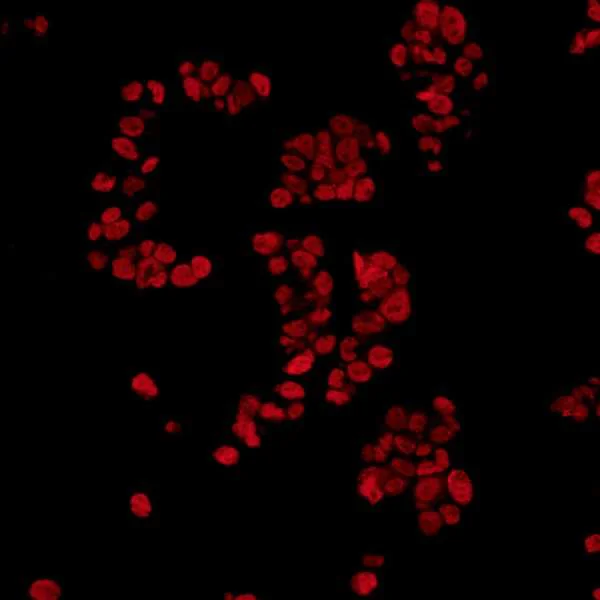
Immunocytochemistry/ Immunofluorescence - Anti-TLS/FUS antibody [BLR023E] - BSA free (AB272077)
Formaldehyde-fixed HepG2 (human liver hepatocellular carcinoma cell line) cells labeling TLS/FUS using ab243880 at 1/250 dilution in ICC/IF analysis. A DyLight594-conjugated goat anti-rabbit IgG was used as the secondary antibody.This data was developed using the same antibody clone in a different buffer formulation containing Borate buffered saline, BSA, glycerol and sodium azide (ab243880).
- IHC-P
Unknown
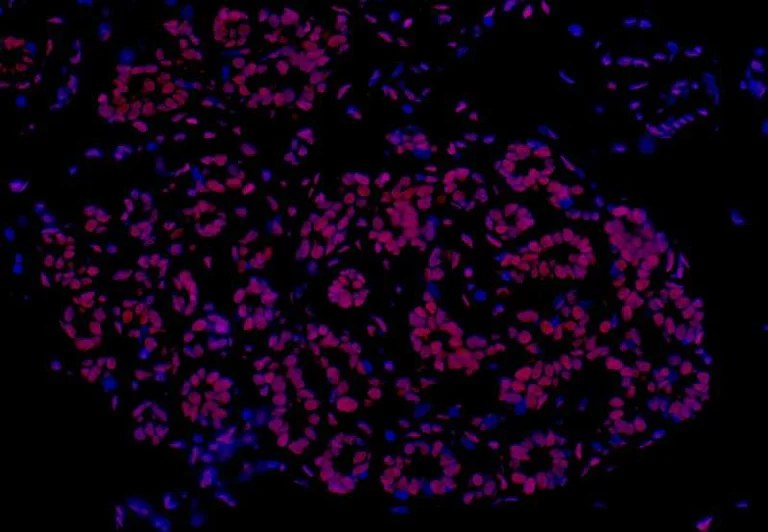
Immunohistochemistry (Formalin/PFA-fixed paraffin-embedded sections) - Anti-TLS/FUS antibody [BLR023E] - BSA free (AB272077)
Formalin-fixed, paraffin-embedded human breast tissue stained for TLS/FUS using ab243880 at 1/250 dilution in immunohistochemical analysis. A DyLight594-conjugated goat anti-rabbit antibody was used as the secondary.This data was developed using the same antibody clone in a different buffer formulation containing Borate buffered saline, BSA, glycerol and sodium azide (ab243880).
- IP
Unknown
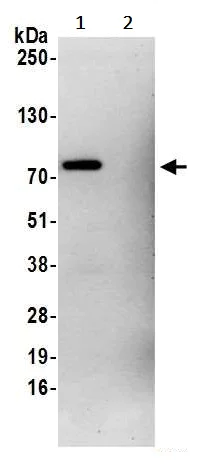
Immunoprecipitation - Anti-TLS/FUS antibody [BLR023E] - BSA free (AB272077)
TLS/FUS was immunoprecipitated from 1.0 mg HEK-293T (human epithelial cell line from embryonic kidney transformed with large T antigen) whole cell lysate with ab243880 at 20 μl per reaction. Western blot was performed on the immunoprecipitate using ab243880 at 1/1000 dilution.
Lane 1 : ab243880 IP in HEK-293T whole cell lysate.
Lane 2 : Control IgG IP in HEK-293T whole cell lysate.
Detection : Chemiluminescence with an exposure time of 3 minutes.
This data was developed using the same antibody clone in a different buffer formulation containing Borate buffered saline, BSA, glycerol and sodium azide (ab243880).
All lanes:
Immunoprecipitation - Anti-TLS/FUS antibody [BLR023E] (<a href='/en-us/products/primary-antibodies/tls-fus-antibody-blr023e-ab243880'>ab243880</a>)
Predicted band size: 53 kDa
false
Related conjugates and formulations (1)
-
Anti-TLS/FUS antibody [BLR023E]
Alternative Products


Primary Antibodies
AB124923
Anti-TLS/FUS antibody [EPR5812]
20ul selling size|RabMAb|Recombinant|KO Validated

- 5
- 4


Primary Antibodies
AB232065
Anti-TLS/FUS antibody [EPR5812] - BSA and Azide free
RabMAb|Recombinant|KO Validated

- 0
- 0
Complementary Products


Primary Antibodies
AB109535
20ul selling size|BOND RX™ Validated|KO Validated|RabMAb|Recombinant

- 5
- 1
Primary Antibodies
AB133288
Anti-EWSR1/EWS antibody [EPR4647]
20ul selling size|BOND RX™ Validated|RabMAb|Recombinant|Advanced Validation

- 0
- 0
Primary Antibodies
AB220163
Anti-YTHDF2 antibody [EPR20318]
20ul selling size|RabMAb|Recombinant|KO Validated

- 5
- 3
Reactivity data
Product details
ab272077 is the BSA-free version of ab243880.
REACH authorisation
Abcam has not and does not intend to apply for the REACH Authorisation of customers' uses of products that contain European Authorisation list (Annex XIV) substances.
It is the responsibility of our customers to check the necessity of application of REACH Authorisation, and any other relevant authorisations, for their intended uses.
This product is sold under License from Bethyl Laboratories, Inc.
Properties and storage information
Form
Purification notes
Storage buffer
Shipped at conditions
Appropriate short-term storage duration
Appropriate short-term storage conditions
Appropriate long-term storage conditions
Aliquoting information
Storage information
Supplementary information
This supplementary information is collated from multiple sources and compiled automatically.
Biological function summary
The FUS protein aids in the maintenance and stabilization of mRNA molecules and participates in the formation of stress granules distinct cytoplasmic aggregates of proteins and RNAs. It forms part of a large protein complex alongside other RNA-binding proteins. FUS stabilizes pre-mRNA structures which affects protein expression patterns essential for cell survival and differentiation. Its ability to bind to RNA and DNA indicates its fundamental role in genomic stability.
Pathways
The functions of FUS help regulate RNA metabolism-related pathways and cellular stress response pathways. FUS interacts with proteins like TAF15 and EWSR1 within these pathways showing a complex network of interactions that contribute to RNA maturation and stress granule dynamic formation. The activity of FUS in these pathways ultimately affects cellular homeostasis gene expression modulation and response to cellular stress.
Product protocols
- Visit the General protocols
- Visit the Troubleshooting
Target data
Alternative Names
Product promise
Please note: All products are 'FOR RESEARCH USE ONLY. NOT FOR USE IN DIAGNOSTIC OR THERAPEUTIC PROCEDURES'.
For licensing inquiries, please contact partnerships@abcam.com