JavaScript is disabled in your browser. Please enable JavaScript to view this website.
AB151307

Anti-TRIP antibody

Be the first to review this product! Submit a review

|

(1 Publication)

Rabbit Polyclonal TRIP antibody. Suitable for IHC-P, WB and reacts with Human samples. Cited in 1 publication. Immunogen corresponding to Recombinant Fragment Protein within Human TRAIP aa 150-400.

View Alternative Names

RNF206, TRIP, TRAIP, E3 ubiquitin-protein ligase TRAIP, RING finger protein 206, TRAF-interacting protein
2 Images
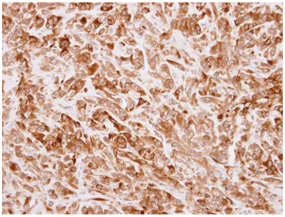
Immunohistochemistry (Formalin/PFA-fixed paraffin-embedded sections) - Anti-TRIP antibody (AB151307)
  • IHC-P

Unknown

Immunohistochemistry (Formalin/PFA-fixed paraffin-embedded sections) - Anti-TRIP antibody (AB151307)

Immunohistochemical analysis of paraffin-embedded TOV-21G xenograft labeling TRIP with ab151307 antibody at 1/100 dilution.
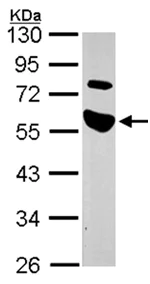
Western blot - Anti-TRIP antibody (AB151307)
  • WB

Unknown

Western blot - Anti-TRIP antibody (AB151307)

10% SDS PAGE

All lanes:

Western blot - Anti-TRIP antibody (ab151307) at 1/1000 dilution

All lanes:

A549 whole cells lysate at 30 µg

Predicted band size: 53 kDa

false

Key facts

Host species

Rabbit

Clonality

Polyclonal

Isotype

IgG

Carrier free

No

Reacts with

Human

Applications

WB, IHC-P

applications

Immunogen

Recombinant Fragment Protein within Human TRAIP aa 150-400. The exact immunogen used to generate this antibody is proprietary information.

Q9BWF2

Reactivity data

{ "title": "Reactivity Data", "filters": { "stats": ["", "Species", "Dilution Info", "Notes"], "tabs": { "all-applications": {"fullname" : "All Applications", "shortname": "All Applications"}, "IHCP" : {"fullname" : "Immunohistochemistry (Formalin/PFA-fixed paraffin-embedded sections)", "shortname":"IHC-P"}, "WB" : {"fullname" : "Western blot", "shortname":"WB"} }, "product-promise": { "all": "all", "testedAndGuaranteed": "tested", "guaranteed": "expected", "predicted": "predicted", "notRecommended": "not-recommended" } }, "values": { "Human": { "IHCP-species-checked": "testedAndGuaranteed", "IHCP-species-dilution-info": "1/100 - 1/1000", "IHCP-species-notes": "<p></p> Perform heat-mediated antigen retrieval with citrate buffer pH 6 before commencing with IHC staining protocol.", "WB-species-checked": "testedAndGuaranteed", "WB-species-dilution-info": "1/500 - 1/3000", "WB-species-notes": "<p></p>" } } }

Properties and storage information

Form
Liquid
Purification technique
Affinity purification Immunogen
Storage buffer
pH: 7 Preservative: 0.01% Thimerosal (merthiolate) Constituents: 10% Glycerol (glycerin, glycerine), 1.21% Tris, 0.75% Glycine
Shipped at conditions
Blue Ice
Appropriate short-term storage conditions
+4°C
Appropriate long-term storage conditions
-20°C
Aliquoting information
Upon delivery aliquot
Storage information
Avoid freeze / thaw cycle

Supplementary information

This supplementary information is collated from multiple sources and compiled automatically.

TRIP also known as thyroid hormone receptor interactor protein interacts with the thyroid hormone receptor to modulate its function. TRIP weighs approximately 82 kDa and shows expression in various tissues especially in those with thyroid hormone activity. Researchers identify this protein mainly in the gastrointestinal tract liver and kidneys. Its expression profile suggests that TRIP plays a role in managing local responses to thyroid hormones across the body.
Biological function summary

TRIP influences the regulation and modulation of thyroid hormone receptor activity. It does this by being part of a larger multiprotein complex that assists in gene transcription regulation. This activity is important for controlling metabolic processes and energy balance as the thyroid hormone significantly impacts these areas. TRIP's ability to alter receptor activity suggests that it may serve as an important regulatory node in cellular metabolism potentially impacting growth and development pathways.

Pathways

The interaction of TRIP with thyroid hormone receptors integrates into the thyroid hormone signaling pathway. This pathway is essential for regulating metabolism heart rate and even cognitive function. TRIP is believed to interact with proteins such as PPARs (peroxisome proliferator-activated receptors) which are also important in lipid metabolism. These interactions highlight TRIP’s broad contributions to critical physiological processes and disease modulation.

Researchers find TRIP to have a connection with metabolic disorders and certain cancers. In metabolic syndrome TRIP's modulation of thyroid hormone receptor activity can influence lipid metabolism and contribute to the onset of obesity and type II diabetes. In cancer alterations in TRIP expression or function correlate with abnormal cellular proliferation and tumor progression with connections seen to proteins like TGF-beta which plays a role in cell growth and differentiation.

Product protocols

For this product, it's our understanding that no specific protocols are required. You can visit:

Target data

E3 ubiquitin ligase required to protect genome stability in response to replication stress (PubMed : 25335891, PubMed : 26595769, PubMed : 26711499, PubMed : 26781088, PubMed : 27462463, PubMed : 31545170). Acts as a key regulator of interstrand cross-link repair, which takes place when both strands of duplex DNA are covalently tethered together, thereby blocking replication and transcription (By similarity). Controls the choice between the two pathways of replication-coupled interstrand-cross-link repair by mediating ubiquitination of MCM7 subunit of the CMG helicase complex (By similarity). Short ubiquitin chains on MCM7 promote recruitment of DNA glycosylase NEIL3 (By similarity). If the interstrand cross-link cannot be cleaved by NEIL3, the ubiquitin chains continue to grow on MCM7, promoting the unloading of the CMG helicase complex by the VCP/p97 ATPase, enabling the Fanconi anemia DNA repair pathway (By similarity). Only catalyzes ubiquitination of MCM7 when forks converge (By similarity). Also involved in the repair of covalent DNA-protein cross-links (DPCs) during DNA synthesis : promotes ubiquitination of DPCs, leading to their degradation by the proteasome (By similarity). Has also been proposed to play a role in promoting translesion synthesis by mediating the assembly of 'Lys-63'-linked poly-ubiquitin chains on the Y-family polymerase POLN in order to facilitate bypass of DNA lesions and preserve genomic integrity (PubMed : 24553286). The function in translesion synthesis is however controversial (PubMed : 26595769). Acts as a regulator of the spindle assembly checkpoint (PubMed : 25335891). Also acts as a negative regulator of innate immune signaling by inhibiting activation of NF-kappa-B mediated by TNF (PubMed : 22945920). Negatively regulates TLR3/4- and RIG-I-mediated IRF3 activation and subsequent IFNB1 production and cellular antiviral response by promoting 'Lys-48'-linked polyubiquitination of TNK1 leading to its proteasomal degradation (PubMed : 22945920).
See full target information TRAIP

Publications (1)

Recent publications for all applications. Explore the full list and refine your search

Cancers 15: PubMed36672365

2023

TRIM10 Is Downregulated in Acute Myeloid Leukemia and Plays a Tumor Suppressive Role via Regulating NF-κB Pathway.

Applications

Unspecified application

Species

Unspecified reactive species

Lin Li,Qi Li,Zhengrong Zou,Zoufang Huang,Yijian Chen
View all publications

Product promise

We are committed to supporting your work with high-quality reagents, and we're here for you every step of the way. In the unlikely event that one of our products does not perform as expected, you're protected by our Product Promise.
For full details, please see our Terms & Conditions

Please note: All products are 'FOR RESEARCH USE ONLY. NOT FOR USE IN DIAGNOSTIC OR THERAPEUTIC PROCEDURES'.

For licensing inquiries, please contact partnerships@abcam.com