JavaScript is disabled in your browser. Please enable JavaScript to view this website.
AB138150

Anti-ZC3H13 antibody

4

(1 Review)

|

(1 Publication)

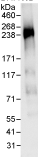
Rabbit Polyclonal ZC3H13 antibody. Suitable for WB and reacts with Human samples. Cited in 1 publication. Immunogen corresponding to Synthetic Peptide within Human ZC3H13.

View Alternative Names

KIAA0853, ZC3H13, Zinc finger CCCH domain-containing protein 13

Key facts

Host species

Rabbit

Clonality

Polyclonal

Isotype

IgG

Carrier free

No

Reacts with

Human

Applications

WB

applications

Immunogen

Synthetic Peptide within Human ZC3H13. The exact immunogen used to generate this antibody is proprietary information.

Q5T200

Reactivity data

{ "title": "Reactivity Data", "filters": { "stats": ["", "Species", "Dilution Info", "Notes"], "tabs": { "all-applications": {"fullname" : "All Applications", "shortname": "All Applications"}, "WB" : {"fullname" : "Western blot", "shortname":"WB"} }, "product-promise": { "all": "all", "testedAndGuaranteed": "tested", "guaranteed": "expected", "predicted": "predicted", "notRecommended": "not-recommended" } }, "values": { "Human": { "WB-species-checked": "testedAndGuaranteed", "WB-species-dilution-info": "1/500 - 1/1000", "WB-species-notes": "<p></p>" }, "Mouse": { "WB-species-checked": "predicted", "WB-species-dilution-info": "", "WB-species-notes": "" } } }

Properties and storage information

Form
Liquid
Purification technique
Affinity purification Immunogen
Purification notes
ab138150 was affinity-purified from rabbit antiserum by immunogenic peptide affinity-chromatography.
Storage buffer
pH: 7.4 Preservative: 0.02% Sodium azide Constituents: PBS, 50% Glycerol (glycerin, glycerine), 0.88% Sodium chloride
Shipped at conditions
Blue Ice
Appropriate short-term storage conditions
+4°C
Appropriate long-term storage conditions
-20°C

Supplementary information

This supplementary information is collated from multiple sources and compiled automatically.

ZC3H13 also known as zinc finger CCCH-type containing 13 is a protein with mass around 110 kDa. This protein is recognized for its role in post-transcriptional regulation of gene expression by mediating methylation of the N6 position of adenosine residues within RNA molecules. It possesses zinc finger motifs which allow it to bind to RNA and participate in RNA processing. ZC3H13 is expressed in various tissues including the liver lungs and brain indicating its widespread influence in physiological processes.
Biological function summary

ZC3H13 functions as part of the m6A methyltransferase complex where it interacts with other proteins like METTL3 and METTL14. This complex modifies mRNA influencing its stability localization and translation efficiency. Through these actions ZC3H13 plays an important role in regulating RNA metabolism impacting numerous biological activities such as cellular differentiation and response to environmental stress.

Pathways

The function of ZC3H13 integrates into both the mRNA processing and m6A methylation pathways. The protein maintains a strong link with RNA metabolism underpinning cellular processes critical for gene expression. In the pathways it associates with proteins like WTAP and KIAA1429 which coordinate to modulate mRNA methylation levels and stability therefore influencing gene expression patterns and cellular function.

Abnormal function or expression of ZC3H13 is associated with cancer and developmental disorders such as acute myeloid leukemia. ZC3H13's activity is often altered in these conditions contributing to dysregulation of gene expression and uncontrolled cell growth. In cancer its connections with proteins like METTL3 play a role in oncogenic transformation highlighting its potential as a therapeutic target for intervention strategies aiming to modulate mRNA methylation and stabilize normal cellular functions.

Product protocols

For this product, it's our understanding that no specific protocols are required. You can visit:

Target data

Associated component of the WMM complex, a complex that mediates N6-methyladenosine (m6A) methylation of RNAs, a modification that plays a role in the efficiency of mRNA splicing and RNA processing (PubMed : 29507755). Acts as a key regulator of m6A methylation by promoting m6A methylation of mRNAs at the 3'-UTR (By similarity). Controls embryonic stem cells (ESCs) pluripotency via its role in m6A methylation (By similarity). In the WMM complex, anchors component of the MACOM subcomplex in the nucleus (By similarity). Also required for bridging WTAP to the RNA-binding component RBM15 (RBM15 or RBM15B) (By similarity).
See full target information ZC3H13

Publications (1)

Recent publications for all applications. Explore the full list and refine your search

Scientific reports 15:10925 PubMed40157968

2025

Characterization of a new mutation of mitochondrial ND6 gene in hepatocellular carcinoma and its effects on respiratory complex I.

Applications

Unspecified application

Species

Unspecified reactive species

Veronica Bazzani,Deepali L Kundnani,Mara Equisoain Redin,Francesca Agostini,Kirti Chhatlani,Angelo Corso Faini,Jakub Poziemski,Umberto Baccarani,Pawel Siedlecki,Silvia Deaglio,Francesca Storici,Carlo Vascotto
View all publications

Product promise

We are committed to supporting your work with high-quality reagents, and we're here for you every step of the way. In the unlikely event that one of our products does not perform as expected, you're protected by our Product Promise.
For full details, please see our Terms & Conditions

Please note: All products are 'FOR RESEARCH USE ONLY. NOT FOR USE IN DIAGNOSTIC OR THERAPEUTIC PROCEDURES'.

For licensing inquiries, please contact partnerships@abcam.com