Anti-ZO1 tight junction protein antibody
5
(2 Reviews)
|
(194 Publications )
- Over 120 publications
- WB
Lab
Western blot - Anti-ZO1 tight junction protein antibody (AB216880)
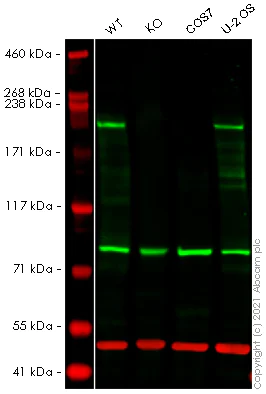
Lanes 1 - 4 : Merged signal (red and green). Green - ab216880 observed at 200 kDa. Red - loading control ab7291 (Mouse anti-Alpha Tubulin [DM1A]) observed at 55 kDa.
ab216880 was shown to react with ZO1 tight junction protein in wild-type HeLa cells in Western blot with loss of signal observed in TJP1 knockout cell line ab264897 (TJP1 knockout cell lysate ab257744). Wild-type HeLa and TJP1 knockout cell lysates were subjected to SDS-PAGE. Membranes were blocked in 3 % milk in TBS-T (0.1 % Tween®) before incubation with ab216880 and ab7291 (Mouse anti-Alpha Tubulin [DM1A]) overnight at 4 °C at a 1 in 1000 dilution and a 1 in 20000 dilution respectively. Blots were incubated with Goat anti-Rabbit IgG H&L (IRDye® 800CW) preabsorbed (ab216773) and Goat anti-Mouse IgG H&L (IRDye® 680RD) preabsorbed (ab216776) secondary antibodies at 1 in 20000 dilution for 1 h at room temperature before imaging.
All lanes:
Western blot - Anti-ZO1 tight junction protein antibody (ab216880) at 1/1000 dilution
Lane 1:
Wild-type HeLa cell lysate at 20 µg
Lane 2:
TJP1 knockout HeLa cell lysate at 20 µg
Lane 2:
Western blot - Human TJP1 (ZO1 tight junction protein) knockout HeLa cell line (<a href='/en-us/products/cell-lines/human-tjp1-zo1-tight-junction-protein-knockout-hela-cell-line-ab264897'>ab264897</a>)
Lane 3:
COS7 cell lysate at 10 µg
Lane 4:
U-2 OS cell lysate at 20 µg
Predicted band size: 195 kDa
Observed band size: 200 kDa
false
- ICC
Supplier Data
Immunocytochemistry - Anti-ZO1 tight junction protein antibody (AB216880)
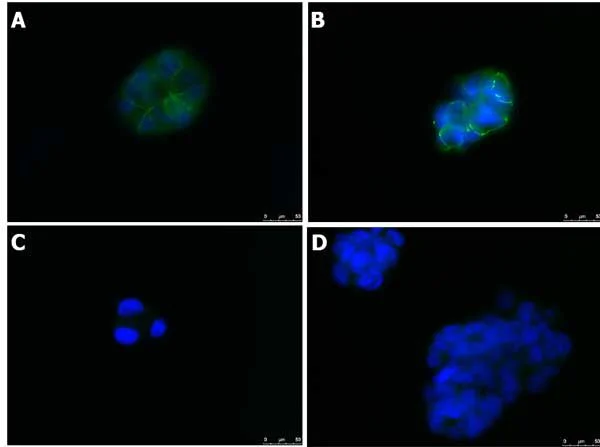
Immunofluorescent analysis of 0.5% PFA-fixed (A and C) and 0.5% methanol-fixed (B and D) Caco-2 (human colorectal adenocarcinoma cell line) cells labeling ZO1 tight junction protein with ab216880 at 10 μg/ml (green).
The nuclear counter stain is DAPI (blue).
Secondary antibody only control : C and D.
- ICC
Lab
Immunocytochemistry - Anti-ZO1 tight junction protein antibody (AB216880)
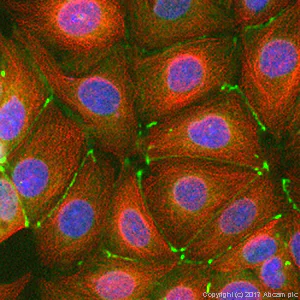
ab216880 stained in MCF7 (Human breast adenocarcinoma cell line) cells. Cells were fixed with 100% methanol (5 minutes) at room temperature and incubated with PBS containing 10% goat serum, 0.3 M glycine, 1% BSA and 0.1% tween for 1 hour at room temperature to permeabilize the cells and block non-specific protein-protein interactions. The cells were then incubated with the antibody ab216880 at 1 μg/ml and ab7291 (Mouse monoclonal [DM1A] to alpha Tubulin - Loading Control) at 1/1000 dilution overnight at +4°C. The secondary antibodies were ab150120 (pseudo-colored red) and ab150081 (colored green) used at 1 μg/ml for 1 hour at room temperature. DAPI was used to stain the cell nuclei (colored blue) at a concentration of 1.43 μM for 1 hour at room temperature

- ICC
Supplier Data
Immunocytochemistry - Anti-ZO1 tight junction protein antibody (AB216880)
Immunocytochemistry analysis of 4% paraformaldehyde fixed Caco-2 (human colorectal adenocarcinoma cell line) cells labeling ZO1 tight junction protein with ab216880 at 15 μg/mL. Cells permeabilized with 0.3% Triton X-100 and incubated with primary antibody overnight at 2-8°C. Donkey Anti-Rabbit IgG DyLight™ 488 Conjugated (Preadsorbed) was used as the secondary antibody at 5 μg/mL for 1 hour at room temperature. Staining : (A) DAPI. (B) ab216880 with secondary. (C) Merge A-B. (D) Secondary Only.
- WB
Supplier Data
Western blot - Anti-ZO1 tight junction protein antibody (AB216880)
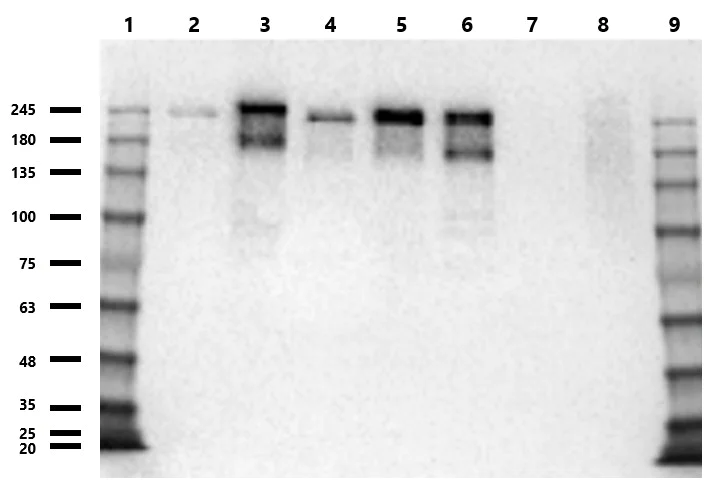
Lysates reduced with beta-Mercaptoethanol and proteins separated by SDS-PAGE. Transferred to 0.2 μm nitrocellulose membrane at 20V for 7 minutes. Blocked with 5% BLOTTO for 1 hour at room temperature. Incubated with primary overnight at 2-8°C, followed by secondary for 30 minutes at room temperature.
All lanes:
Western blot - Anti-ZO1 tight junction protein antibody (ab216880) at 1 µg/mL
Lanes 1 and 9:
Protein Standard at 10 µL
Lane 2:
WM115 (human melanoma cell line) whole cell lysate at 10 µg
Lane 3:
A549 (human lung carcinoma cell line) whole cell lysate at 10 µg
Lane 4:
HeLa (human epithelial cell line from cervix adenocarcinoma) whole cell lysate at 10 µg
Lane 5:
PC-3 (human prostate adenocarcinoma cell line) whole cell lysate at 10 µg
Lane 6:
SK-OV-3 (human ovarian cancer cell line) whole cell lysate at 10 µg
Lane 7:
Mouse testis tissue lysate at 10 µg
Lane 8:
Rat testis tissue lysate at 10 µg
Secondary
All lanes:
Goat anti Rabbit IgG H&L (HRP) at 1/70000 dilution
Predicted band size: 195 kDa
Observed band size: 195 kDa,245 kDa
false
Exposure time: 5s
Alternative Products
Primary Antibodies
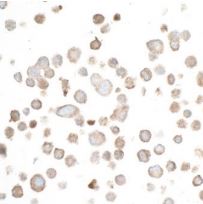
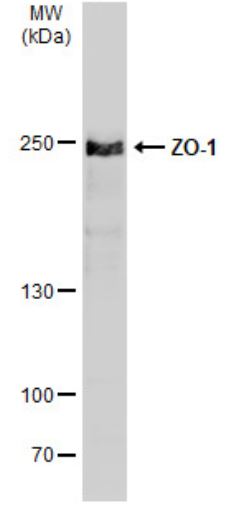
AB276131
Anti-ZO1 tight junction protein antibody [BLR092G]
Recombinant|KO Validated
- 3
- 3
Primary Antibodies
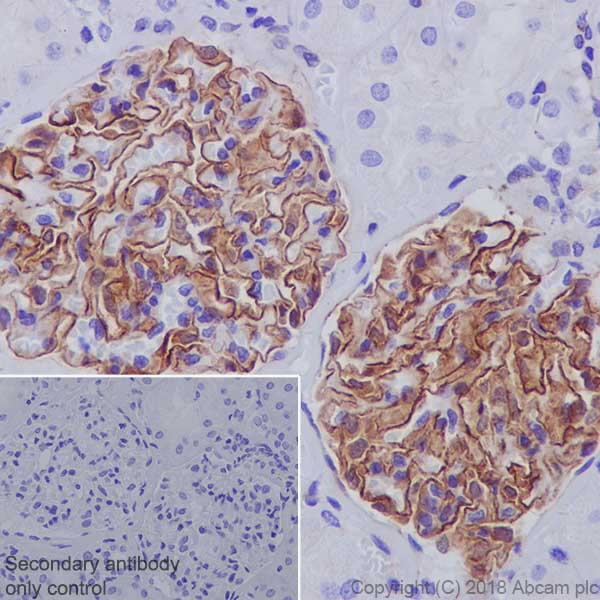
AB221546
Anti-ZO1 tight junction protein antibody [EPR19945-224]
20ul selling size|RabMAb|Recombinant
- 5
- 2

Primary Antibodies
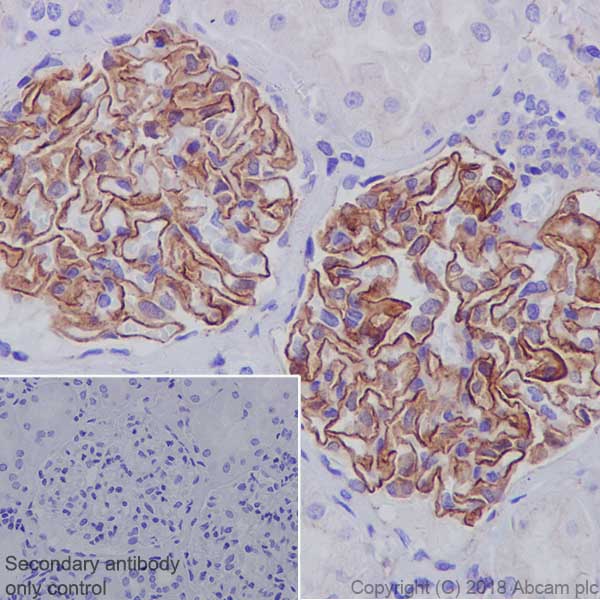
AB221547
Anti-ZO1 tight junction protein antibody [EPR19945-296]
20ul selling size|RabMAb|Recombinant
- 5
- 6
Complementary Products
Primary Antibodies
AB216327
Anti-Occludin antibody [EPR20992]
RabMAb|Recombinant|KO Validated|20ul selling size
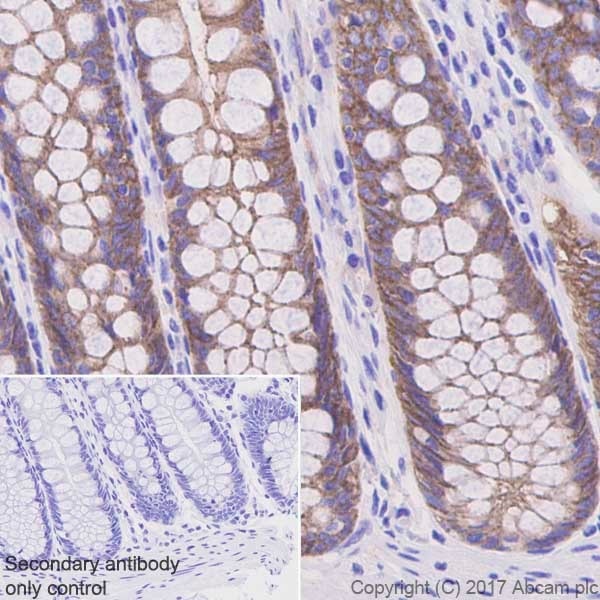
- 4
- 7
Primary Antibodies
AB318152
Anti-VE Cadherin antibody [RM2022]
BOND RX™ Validated|20ul selling size|Recombinant|RabMAb
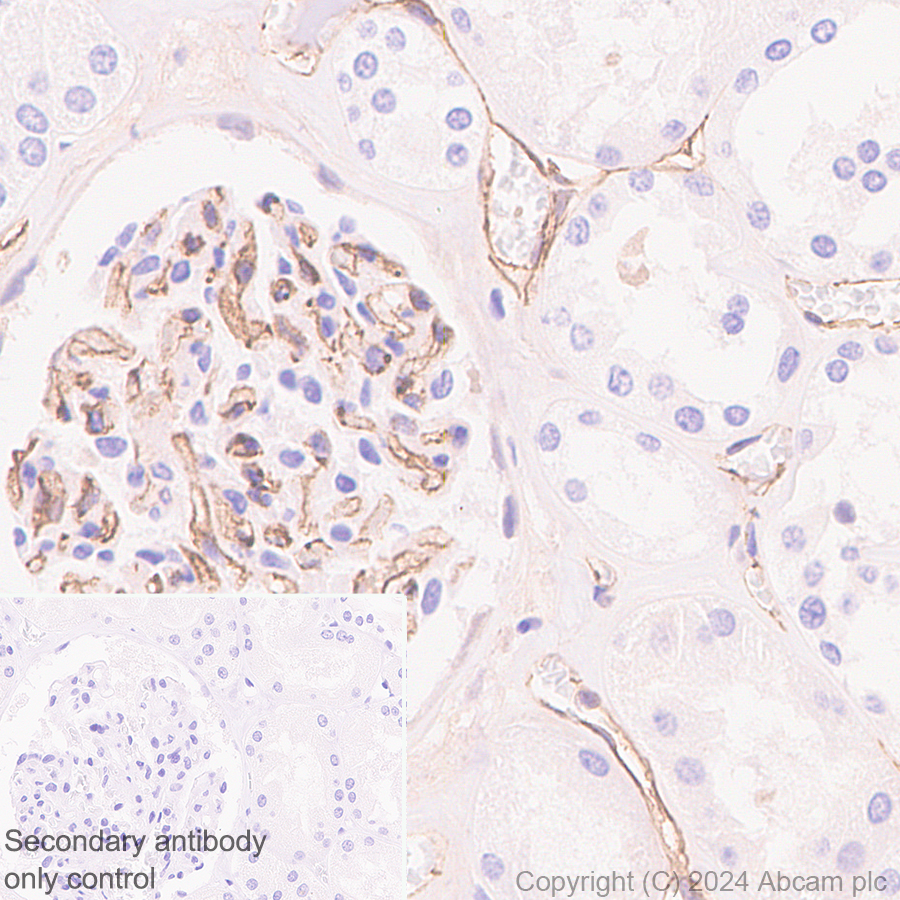
- 0
- 0
Primary Antibodies
AB211737
Anti-Claudin 1 antibody [EPRR18871]
20ul selling size|RabMAb|Recombinant|KO Validated
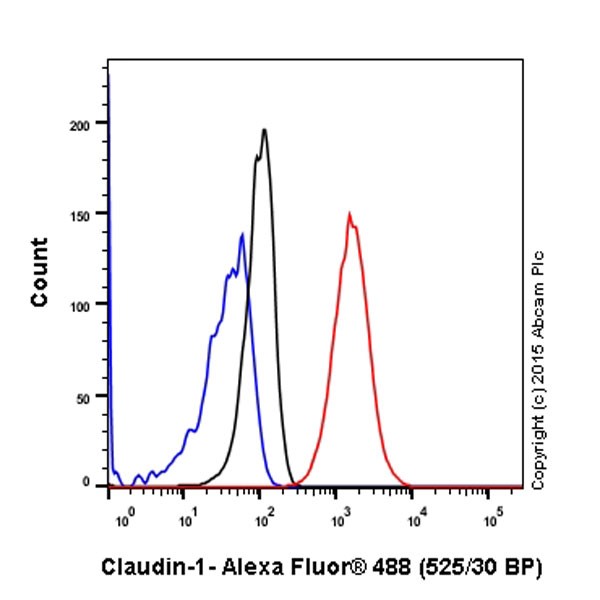
- 5
- 7
Primary Antibodies
AB115777
Anti-beta Actin antibody [SP124] - Cytoskeleton Marker
20ul selling size|RabMAb|Lab Essentials|Recombinant
- 4
- 1
Reactivity data
Product details
Anti-ZO1 tight junction protein antibody (ab216880) is a rabbit polyclonal antibody and is validated for use in ICC, WB in human samples.
Anti-ZO1 tight junction protein antibody (ab216880) specifically detects ZO1 tight junction protein (UniProt ID: Q07157; Molecular weight: 195kDa) and is sold in 100 µg selling sizes.
Quality and Validation
Abcam's high quality validation processes ensure Anti-ZO1 tight junction protein antibody (ab216880) has high sensitivity and specificity.
Anti-ZO1 tight junction protein antibody (ab216880) has been cited over 124 times in peer reviewed journals and is trusted by the scientific community.
Properties and storage information
Form
Purification technique
Storage buffer
Shipped at conditions
Appropriate short-term storage duration
Appropriate short-term storage conditions
Appropriate long-term storage conditions
Aliquoting information
Storage information
Supplementary information
This supplementary information is collated from multiple sources and compiled automatically.
Biological function summary
ZO1 tight junction protein maintains cellular barriers and regulates paracellular permeability. This protein forms part of the tight junction complex with other proteins like occludin and claudins contributing to cellular integrity. ZO1's presence at tight junctions helps control the passage of ions and molecules between cells therefore ensuring selective permeability while protecting tissue function. Its ability to interact with multiple proteins enables it to coordinate complex signaling mechanisms that are important for cell adhesion and communication.
Pathways
The tight junction protein ZO1 participates in important signaling pathways like the epithelial barrier formation pathway and the actin cytoskeleton regulation pathway. It interacts with proteins like ZO2 and ZO3 which are critical for enhancing barrier function and cytoskeletal dynamics. By participating in these pathways ZO1 helps mediate both the structural and signaling functions necessary for maintaining tissue homeostasis and responding to cellular stress or injury.
Product protocols
- Visit the General protocols
- Visit the Troubleshooting
Target data
Alternative Names
Publications (194)
Recent publications for all applications. Explore the full listand refine your search
Stem cell research & therapy 16:443 PubMed40830519
2025
Applications
Unspecified application
Species
Unspecified reactive species
Biology 14: PubMed40563838
2025
Applications
Unspecified application
Species
Unspecified reactive species
Cell death discovery 11:239 PubMed40379643
2025
Applications
Unspecified application
Species
Unspecified reactive species
Cellular and molecular life sciences : CMLS 82:146 PubMed40192810
2025
Applications
Unspecified application
Species
Unspecified reactive species
NPJ biofilms and microbiomes 11:51 PubMed40133348
2025
Applications
Unspecified application
Species
Unspecified reactive species
World journal of clinical oncology 16:94091 PubMed40130046
2025
Applications
Unspecified application
Species
Unspecified reactive species
Frontiers in neurology 16:1450868 PubMed40083458
2025
Applications
Unspecified application
Species
Unspecified reactive species
Scientific reports 15:8778 PubMed40082523
2025
Applications
Unspecified application
Species
Unspecified reactive species
eLife 13: PubMed39937579
2025
Applications
Unspecified application
Species
Unspecified reactive species
Open medicine (Warsaw, Poland) 20:20241137 PubMed39927163
2025
Applications
Unspecified application
Species
Unspecified reactive species
Product promise
Please note: All products are 'FOR RESEARCH USE ONLY. NOT FOR USE IN DIAGNOSTIC OR THERAPEUTIC PROCEDURES'.
For licensing inquiries, please contact partnerships@abcam.com