Herpes Simplex Virus type 1 is a Human alphaherpesvirus 1 strain 17 protein, expressed in Native, with >80%.
View Alternative Names
UL10, gM, Envelope glycoprotein M, Herpes simplex virus, Herpes simplex virus 1, Herpes simplex virus type 1, Human Herpesvirus 1, Human herpesvirus type 1
Complementary Products
Reagents, Controls & Accessories
AB234592
Prestained Protein Ladder - Extra broad molecular weight (6.5 - 270 kDa)
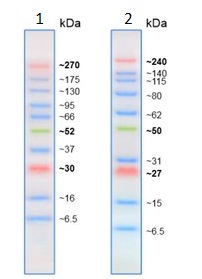
- 0
- 0
Product details
ab124004 is a sucrose-purified version which is enriched for full HSV particles (including membrane and capsid). This is best when just the structural capsid and membrane proteins are desired with much less contaminating cellular material.
Inactivation: 0.1% Triton x-100. Tested by passage on permissive cells for 5 days yielding no CPE. Vortex before use.
This protein is derived from a pathogenic organism, and may be involved in a disease process, consequently exposure may have adverse health effects.
REACH authorisation
Abcam has not and does not intend to apply for the REACH Authorisation of customers' uses of products that contain European Authorisation list (Annex XIV) substances.
It is the responsibility of our customers to check the necessity of application of REACH Authorisation, and any other relevant authorisations, for their intended uses.
Sequence info
Properties and storage information
Form
Shipped at conditions
Appropriate short-term storage conditions
Appropriate long-term storage conditions
Aliquoting information
Storage information
Supplementary information
This supplementary information is collated from multiple sources and compiled automatically.
Biological function summary
HSV1 interacts with the host's cellular mechanisms to establish latency and persistent infection. During infection several HSV1 proteins contribute to its ability to subvert and evade the host immune response sometimes forming part of existing viral protein complexes. Virion-host cell membrane fusion facilitated by glycoprotein gHSV1 is an important step allowing the viral genome to enter the host cell driving subsequent viral replication.
Pathways
The life cycle of HSV1 includes entry replication and egress tightly integrated into cellular pathways like the apoptosis and the interferon response pathways. HSV1 modulates the apoptotic pathway through proteins such as ICP22 which allows survival and efficient viral replication. Also it influences the interferon response pathway by inhibiting the host's antiviral mechanisms ensuring viral persistence in the host.
General info
Function
Envelope glycoprotein important for virion assembly and egress. Plays a role in the correct incorporation of gH-gL into virion membrane. Directs the glycoprotein N (gN) to the host trans-Golgi network.
Sequence similarities
Belongs to the herpesviridae glycoprotein M family.
Subcellular localisation
Host endosome membrane
Target data
Additional targets
Product promise
Please note: All products are 'FOR RESEARCH USE ONLY. NOT FOR USE IN DIAGNOSTIC OR THERAPEUTIC PROCEDURES'.
For licensing inquiries, please contact partnerships@abcam.com