N-Acetylgalactosamine BSA Glycoconjugate (Tag Free)
Be the first to review this product! Submit a review
|
(0 Publication)
N-Acetylgalactosamine BSA Glycoconjugate (Tag Free) is a Cow Full Length protein, expressed in Synthetic, with >98%, suitable for WB, ELISA.
View Alternative Names
Albumin, BSA, ALB
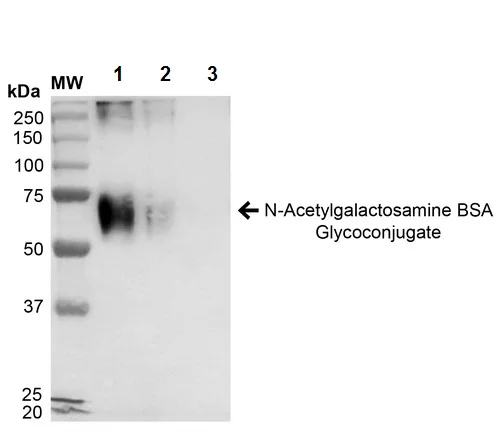
- WB
Supplier Data
Western blot - N-Acetylgalactosamine BSA Glycoconjugate (Tag Free) (AB245916)
Block : 5% Skim Milk in 1X TBST. Color Development : Luminol for 1 min at RT
All lanes:
Anti-O-GalNAc Antibody, clone 9B9, 2 hrs at RT at 1/500 dilution
Lane 1:
Western blot - N-Acetylgalactosamine BSA Glycoconjugate (Tag Free) (ab245916) at 1 µg
Lane 2:
Western blot - N-Acetylgalactosamine BSA Glycoconjugate (Tag Free) (ab245916) at 0.5 µg
Lane 3:
Western blot - N-Acetylgalactosamine BSA Glycoconjugate (Tag Free) (ab245916) at 0.1 µg
Secondary
All lanes:
Anti-Mouse IgG: HRP, 60 min at RT at 1/2000 dilution
false
Complementary Products
Reagents, Controls & Accessories
AB313995
Prestained Protein Ladder - Mid-range molecular weight (15 - 170 kDa)

- 0
- 0


Primary Antibodies
AB207327
Anti-Albumin antibody [EPR20195]
20ul selling size|RabMAb|Recombinant|Lab Essentials

- 5
- 2

Reactivity data
Sequence info
Properties and storage information
Form
Shipped at conditions
Appropriate short-term storage conditions
Appropriate long-term storage conditions
Aliquoting information
Storage information
Supplementary information
This supplementary information is collated from multiple sources and compiled automatically.
Biological function summary
Proteins such as BSA play a critical role in maintaining osmotic pressure and pH balance in biological fluids. BSA does not form part of a larger protein complex but interacts with numerous small molecules and ions stabilizing their concentrations in the bloodstream. The interaction of albumin bovine serum with fatty acids is especially important for modulating the bioavailability of lipophilic molecules.
Pathways
Albumin actively contributes to lipid metabolism and transport pathways. It interacts closely with other proteins involved in these processes such as lipoproteins. BSA's binding affinity for various drugs and toxins also places it within the detoxification and excretory pathways ensuring the stability and solubility of these substances in circulation.
General info
Function
Binds water, Ca(2+), Na(+), K(+), fatty acids, hormones, bilirubin and drugs. Its main function is the regulation of the colloidal osmotic pressure of blood. Major zinc transporter in plasma, typically binds about 80% of all plasma zinc (By similarity). Major calcium and magnesium transporter in plasma, binds approximately 45% of circulating calcium and magnesium in plasma (Probable). Potentially has more than two calcium-binding sites and might additionally bind calcium in a non-specific manner (PubMed : 22677715). The shared binding site between zinc and calcium at residue Asp-272 suggests a crosstalk between zinc and calcium transport in the blood (Probable). The rank order of affinity is zinc > calcium > magnesium (Probable). Binds to the bacterial siderophore enterobactin and inhibits enterobactin-mediated iron uptake of E.coli, and may thereby limit the utilization of iron and growth of enteric bacteria such as E.coli (PubMed : 6234017). Does not prevent iron uptake by the bacterial siderophore aerobactin (PubMed : 6234017).
Sequence similarities
Belongs to the ALB/AFP/VDB family.
Post-translational modifications
Phosphorylated by FAM20C in the extracellular medium.
Target data
Product promise
Please note: All products are 'FOR RESEARCH USE ONLY. NOT FOR USE IN DIAGNOSTIC OR THERAPEUTIC PROCEDURES'.
For licensing inquiries, please contact partnerships@abcam.com