Recombinant Human Myelin Basic Protein (GST tag N-Terminus)
Be the first to review this product! Submit a review
|
(0 Publication)
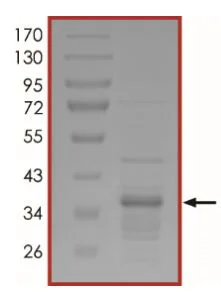
- SDS-PAGE
Supplier Data
SDS-PAGE - Recombinant Human Myelin Basic Protein (GST tag N-Terminus) (AB43614)
SDS-PAGE analysis of ab43614.
Complementary Products
Reagents, Controls & Accessories
AB313996
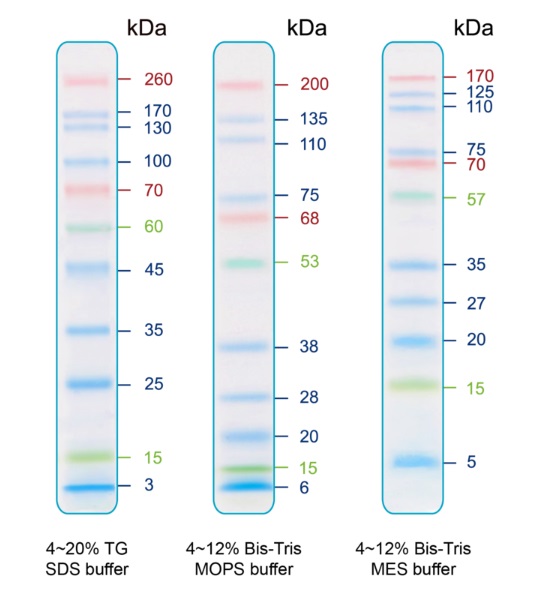
Prestained Protein Ladder - Extra broad molecular weight (3 - 260 kDa)
- 0
- 0


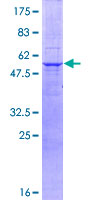

Reactivity data
Product details
ab43614 (Human Myelin Basic Protein full length protein) can be utilized as a substrate for the following active protein Kinases:
ab51435 (Active human Aurora B full length protein)
ab55692 (Active human CaMKK full length protein)
ab55700 (Active human MAP3K8 protein fragment)
ab55712 (Active human MAP4K6 protein fragment)
ab55721 (Active Raf1 (mutated F341 Q) protein fragment)
ab60013 (Active human MEK2 full length protein)
ab60300 (Active ITK protein fragment)
ab60325 (Active human ASK1 protein fragment)
ab60341 (Active human MST4 full length protein)
ab60900 (Active TXK protein fragment)
ab61414 (Active mouse PAK3 full length protein)
ab63173 (Active TGF beta Receptor II protein fragment)
ab63177 (Active human IPL-1/STK13/Aurora C full length protein)
Sequence info
Properties and storage information
Form
Shipped at conditions
Appropriate short-term storage conditions
Appropriate long-term storage conditions
Aliquoting information
Storage information
Supplementary information
This supplementary information is collated from multiple sources and compiled automatically.
Biological function summary
MBP is not just a passive structural element; it binds and interacts with lipids and other proteins to maintain the compact structure of the myelin sheath. MBP forms part of a complex that includes various other proteins and lipids ensuring the stability and function of myelin. Misfolding or altered expression of MBP can compromise myelin integrity affecting the insulation of neural pathways and signal transmission.
Pathways
MBP is an essential component in the pathways of myelination and neural plasticity. It plays a role in the signaling pathways that stimulate the development and maintenance of the myelin sheath. The protein interacts with other elements of the myelin sheath such as proteolipid protein (PLP) and myelin-associated glycoprotein (MAG) to coordinate its formation and repair processes.
General info
Function
The classic group of MBP isoforms (isoform 4-isoform 14) are with PLP the most abundant protein components of the myelin membrane in the CNS. They have a role in both its formation and stabilization. The smaller isoforms might have an important role in remyelination of denuded axons in multiple sclerosis. The non-classic group of MBP isoforms (isoform 1-isoform 3/Golli-MBPs) may preferentially have a role in the early developing brain long before myelination, maybe as components of transcriptional complexes, and may also be involved in signaling pathways in T-cells and neural cells. Differential splicing events combined with optional post-translational modifications give a wide spectrum of isomers, with each of them potentially having a specialized function. Induces T-cell proliferation.
Sequence similarities
Belongs to the myelin basic protein family.
Post-translational modifications
Several charge isomers of MBP; C1 (the most cationic, least modified, and most abundant form), C2, C3, C4, C5, C6, C7, C8-A and C8-B (the least cationic form); are produced as a result of optional PTM, such as phosphorylation, deamidation of glutamine or asparagine, arginine citrullination and methylation. C8-A and C8-B contain each two mass isoforms termed C8-A(H), C8-A(L), C8-B(H) and C8-B(L), (H) standing for higher and (L) for lower molecular weight. C3, C4 and C5 are phosphorylated. The ratio of methylated arginine residues decreases during aging, making the protein more cationic.. The N-terminal alanine is acetylated (isoform 3, isoform 4, isoform 5 and isoform 6).. Arg-241 was found to be 6% monomethylated and 60% symmetrically dimethylated.. Proteolytically cleaved in B cell lysosomes by cathepsin CTSG which degrades the major immunogenic MBP epitope and prevents the activation of MBP-specific autoreactive T cells.. Phosphorylated by TAOK2, VRK2, MAPK11, MAPK12, MAPK14 and MINK1.
Target data
Alternative Names
Product promise
Please note: All products are 'FOR RESEARCH USE ONLY. NOT FOR USE IN DIAGNOSTIC OR THERAPEUTIC PROCEDURES'.
For licensing inquiries, please contact partnerships@abcam.com