Recombinant human Tau (mutated P301L) protein (Active) (Tag Free)
Be the first to review this product! Submit a review
|
(0 Publication)
- EM
Supplier Data
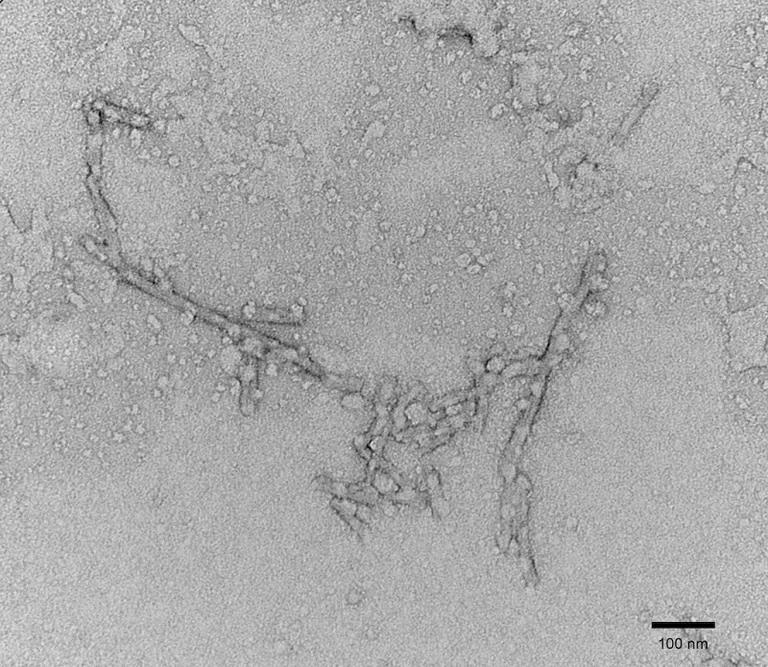
Electron Microscopy - Recombinant human Tau (mutated P301L) protein (Active) (Tag Free) (AB256152)
TEM of ab256152 at 150kx magnification. HV=80kV. Fibrils were sonicated and stained with uranyl acetate.
- FuncS
Supplier Data
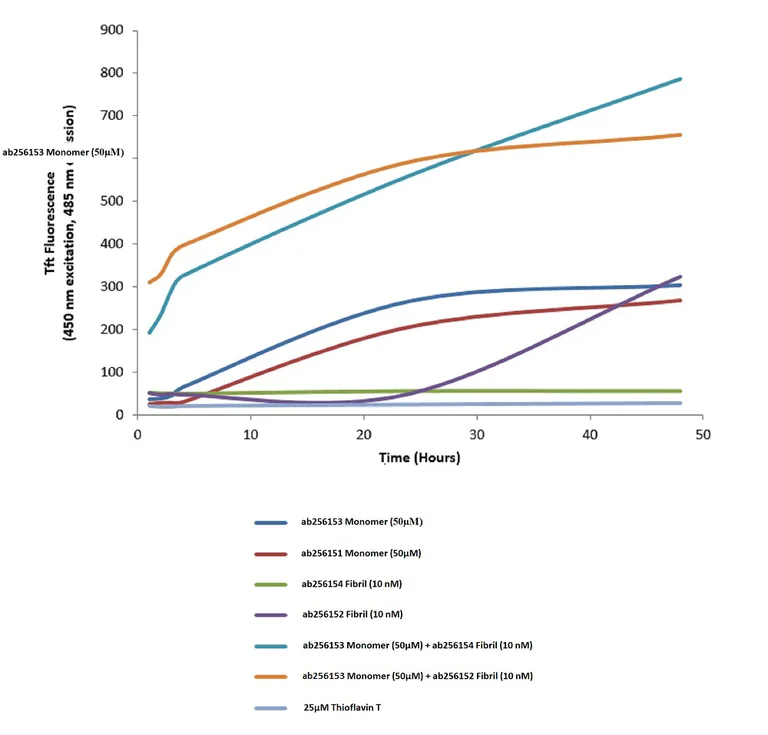
Functional Studies - Recombinant human Tau (mutated P301L) protein (Active) (Tag Free) (AB256152)
Thioflavin T emission curves show increased fluorescence (correlated to tau aggregation) over time in tau preformed fibrils (ab256152). Tau preformed fibrils (ab256152) seed the formation of new tau fibrils when combined with tau monomers (ab256153). Thioflavin T ex = 450 nm, em = 485 nm.
- EM
Supplier Data
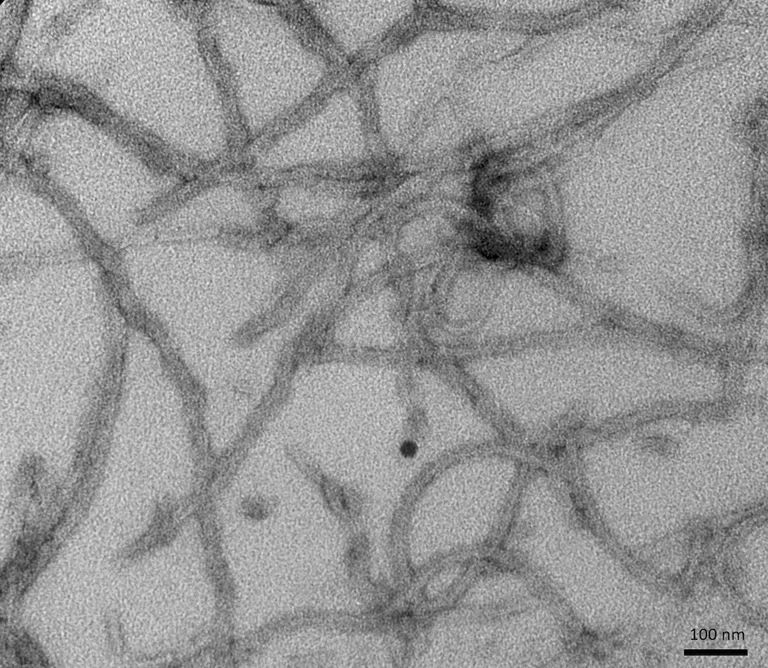
Electron Microscopy - Recombinant human Tau (mutated P301L) protein (Active) (Tag Free) (AB256152)
TEM of ab256152 at 150kx magnification. HV=80kV.
- EM
Supplier Data
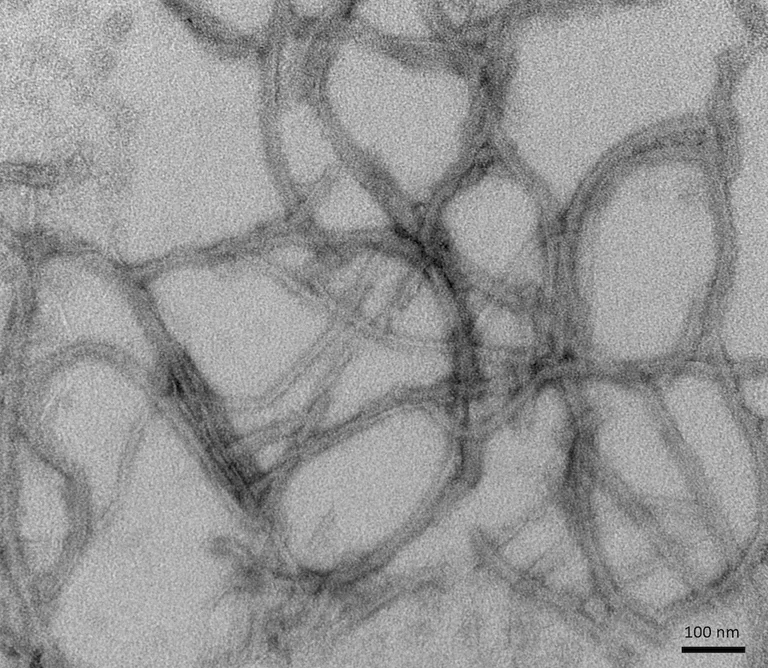
Electron Microscopy - Recombinant human Tau (mutated P301L) protein (Active) (Tag Free) (AB256152)
TEM of ab256152 at 150kx magnification. HV=80kV.
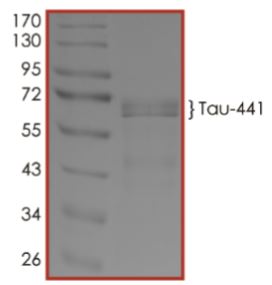
- SDS-PAGE
Supplier Data
SDS-PAGE - Recombinant human Tau (mutated P301L) protein (Active) (Tag Free) (AB256152)
SDS-PAGE - Recombinant human Tau (mutated P301 L) protein (Active) (ab256152).
Complementary Products
Reagents, Controls & Accessories
AB116027
Prestained Protein Ladder - Mid-range molecular weight (10 - 180 kDa)

- 5
- 2

Primary Antibodies
AB281588
Anti-MAP2 antibody [RM1010] - Neuronal Marker
RabMAb|Recombinant|Lab Essentials|20ul selling size

- 0
- 0

Reactivity data
Product details
Pre-formed Fibrils.
For best results, sonicate immediately prior to use.
Sequence info
Properties and storage information
Form
Purification technique
Shipped at conditions
Appropriate short-term storage conditions
Appropriate long-term storage conditions
Supplementary information
This supplementary information is collated from multiple sources and compiled automatically.
Biological function summary
Tau is involved in the assembly and stabilization of microtubules essential for maintaining neuronal structure. It interacts with microtubule-binding domains (MBD) to bind and bundle microtubules facilitating intracellular transport. Tau forms a part of the neuronal cytoskeleton complex working closely with other cytoskeletal proteins to preserve the proper axonal transport and function. Abnormally phosphorylated Tau often termed phospho-Tau disrupts this complex affecting microtubule stability.
Pathways
Tau has critical involvement in several signaling cascades such as the microtubule-binding and transport pathways. Glycogen synthase kinase 3 beta (GSK3β) and cyclin-dependent kinase 5 (CDK5) frequently phosphorylate Tau controlling its interaction with microtubules. Phosphorylated Tau accumulates leading to the formation of neurofibrillary tangles often observed in neurodegenerative conditions. Additionally Tau interacts with GAPDH impacting cellular energy regulation through potential pathway cross-talk involving oxidative stress responses.
Target data
Alternative Names
Product promise
Please note: All products are 'FOR RESEARCH USE ONLY. NOT FOR USE IN DIAGNOSTIC OR THERAPEUTIC PROCEDURES'.
For licensing inquiries, please contact partnerships@abcam.com