Recombinant Mouse PLA2G7 protein (His tag)
Be the first to review this product! Submit a review
|
(0 Publication)
Recombinant Mouse PLA2G7 protein (His tag) is a Mouse Full Length protein, in the 1 to 440 aa range, expressed in HEK 293 cells, with >90%, < 1 EU/µg endotoxin level, suitable for SDS-PAGE.
View Alternative Names
Pafah, Pla2g7, Platelet-activating factor acetylhydrolase, PAF acetylhydrolase, 1-alkyl-2-acetylglycerophosphocholine esterase, 2-acetyl-1-alkylglycerophosphocholine esterase, LDL-associated phospholipase A2, PAF 2-acylhydrolase, LDL-PLA(2)
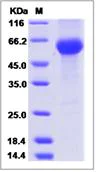
- SDS-PAGE
Supplier Data
SDS-PAGE - Recombinant Mouse PLA2G7 protein (His tag) (AB277006)
SDS-PAGE analysis of ab277006
Complementary Products
Primary Antibodies
AB245045
Anti-PLA2G7 antibody [EPR20360-245] - BSA and Azide free (Detector)
RabMAb|Recombinant

- 0
- 0


Reactivity data
Sequence info
Properties and storage information
Form
Shipped at conditions
Appropriate short-term storage conditions
Appropriate long-term storage conditions
Aliquoting information
Storage information
General info
Function
Lipoprotein-associated calcium-independent phospholipase A2 involved in phospholipid catabolism during inflammatory and oxidative stress response (PubMed : 10066756, PubMed : 18434304). At the lipid-aqueous interface, hydrolyzes the ester bond of fatty acyl group attached at sn-2 position of phospholipids (phospholipase A2 activity) (PubMed : 10066756, PubMed : 18434304). Specifically targets phospholipids with a short-chain fatty acyl group at sn-2 position. Can hydrolyze phospholipids with long fatty acyl chains, only if they carry oxidized functional groups (By similarity). Hydrolyzes and inactivates platelet-activating factor (PAF, 1-O-alkyl-2-acetyl-sn-glycero-3-phosphocholine), a potent pro-inflammatory signaling lipid that acts through PTAFR on various innate immune cells (PubMed : 10066756, PubMed : 18434304). Hydrolyzes oxidatively truncated phospholipids carrying an aldehyde group at omega position, preventing their accumulation in lipoprotein particles and uncontrolled pro-inflammatory effects (By similarity). As part of high-density lipoprotein (HDL) particles, can hydrolyze phospholipids having long-chain fatty acyl hydroperoxides at sn-2 position and protect against potential accumulation of these oxylipins in the vascular wall (By similarity). Catalyzes the release from membrane phospholipids of F2-isoprostanes, lipid biomarkers of cellular oxidative damage (By similarity).
Sequence similarities
Belongs to the AB hydrolase superfamily. Lipase family.
Post-translational modifications
N-glycosylated.
Target data
Product promise
Please note: All products are 'FOR RESEARCH USE ONLY. NOT FOR USE IN DIAGNOSTIC OR THERAPEUTIC PROCEDURES'.
For licensing inquiries, please contact partnerships@abcam.com