JavaScript is disabled in your browser. Please enable JavaScript to view this website.
AB310786

Recombinant Mouse TSLP Protein (His tag)

Be the first to review this product! Submit a review

|

(1 Publication)

Recombinant Mouse TSLP Protein (His tag) is a Mouse Full Length protein, in the 20 to 140 aa range, expressed in HEK 293 cells, with >95%, <0.005 EU/µg endotoxin level, suitable for SDS-PAGE, Mass Spec.

View Alternative Names

Thymic stromal lymphopoietin, Thymic stroma-derived lymphopoietin, Tslp
2 Images
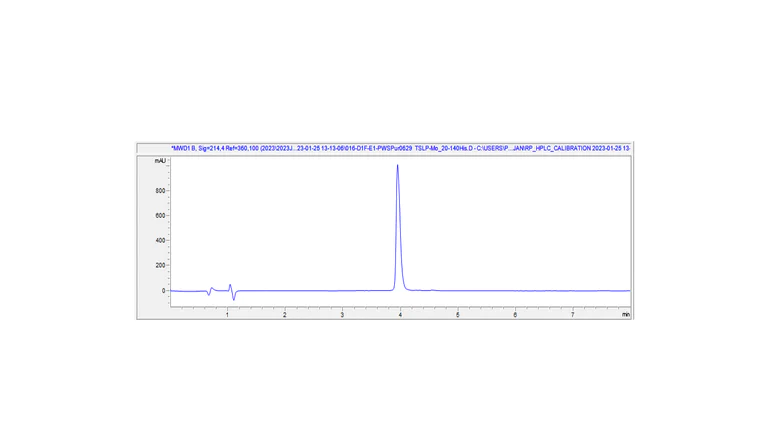
HPLC - Recombinant Mouse TSLP Protein (His tag) (AB310786)
  • HPLC

Supplier Data

HPLC - Recombinant Mouse TSLP Protein (His tag) (AB310786)

HPLC analysis of ab310786
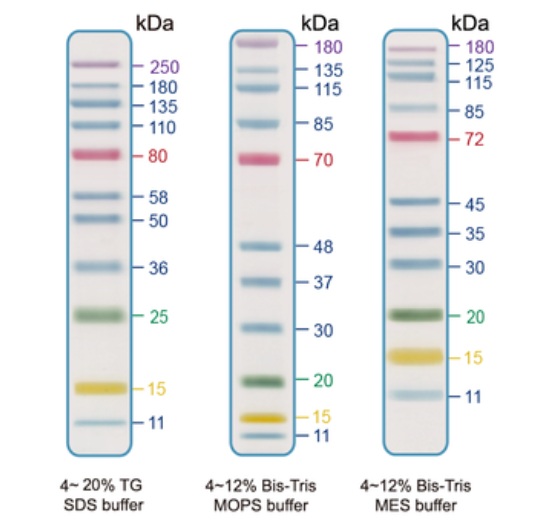
SDS-PAGE - Recombinant Mouse TSLP Protein (His tag) (AB310786)
  • SDS-PAGE

Lab

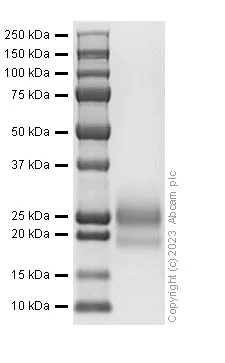
SDS-PAGE - Recombinant Mouse TSLP Protein (His tag) (AB310786)

SDS-PAGE analysis of ab310786

Key facts

Purity

>95% HPLC

SDS-PAGE >= 95%

Endotoxin level

<0.005 EU/µg

Expression system

HEK 293 cells

Tags

His tag C-Terminus

Applications

SDS-PAGE, Mass Spec

applications

Biologically active

No

Accession

Animal free

Yes

Carrier free

No

Species

Mouse

Reconstitution

Lyophilized contents may appear as either a translucent film or a white powder. This variance does not affect the quality of the product. Store lyophilized form at room temperature. Reconstitute in phosphate buffered saline, aliquot and store at -80°C for 12 months or +4°C for 1 week. Avoid repeated freeze-thaw.

Storage buffer

pH: 7.4 Constituents: 10.26% Trehalose, 0.727% Dibasic monohydrogen potassium phosphate, 0.248% Potassium phosphate monobasic

storage-buffer

Reactivity data

{ "title": "Reactivity Data", "filters": { "stats": ["", "Reactivity", "Dilution Info", "Notes"] }, "values": { "SDS-PAGE": { "reactivity":"TESTED_AND_REACTS", "dilution-info":"", "notes":"<p></p>" }, "HPLC": { "reactivity":"TESTED_AND_DOES_NOT_REACT", "dilution-info":"", "notes":"<p></p>" }, "Mass Spec": { "reactivity":"TESTED_AND_REACTS", "dilution-info":"", "notes":"<p></p>" } } }

Sequence info

[{"linker":null,"sequence":"YNFSNCNFTSITKIYCNIIFHDLTGDLKGAKFEQIEDCESKPACLLKIEYYTLNPIPGCPSLPDKTFARRTREALNDHCPGYPETERNDGTQEMAQEVQNICLNQTSQILRLWYSFMQSPE","proteinLength":"Full Length","predictedMolecularWeight":"15.5 kDa","actualMolecularWeight":"15.48 kDa","aminoAcidEnd":140,"aminoAcidStart":20,"nature":"Recombinant","expressionSystem":"HEK 293 cells","accessionNumber":"Q9JIE6","tags":[{"tag":"His","terminus":"C-Terminus"}]}]

Properties and storage information

Form
Lyophilized
Shipped at conditions
Blue Ice
Appropriate short-term storage conditions
Ambient
Appropriate long-term storage conditions
Ambient
False

Supplementary information

This supplementary information is collated from multiple sources and compiled automatically.

TSLP or thymic stromal lymphopoietin is a cytokine protein weighing around 27 kDa. It is also known as a hematopoietic cytokine and functions in the signaling processes of the immune system. TSLP is expressed in epithelial cells most notably in the skin lungs and gut. This cytokine holds significance due to its role in immune responses acting through its receptor complex made of TSLP receptor (TSLPR) and the interleukin-7 receptor alpha chain (IL-7Rα).
Biological function summary

TSLP plays a role in mediating immune system responses. It induces the differentiation of T-helper 2 (Th2) cells promoting a specific type of immune response. TSLP does not appear to be part of a larger protein complex but it often functions in association with the TSLPR and IL-7Rα receptor complex. It influences the activity and maturation of dendritic cells which are important for initiating immune responses.

Pathways

A mechanical understanding of TSLP reveals its involvement in both the JAK-STAT and NF-kB signaling pathways. It interacts with proteins like JAK2 and STAT5 which are important for the downstream signaling cascade leading to inflammation and immune responses. These pathways play important roles in the immune system's ability to detect and respond to environmental triggers.

TSLP has relevance in conditions like asthma and atopic dermatitis. It promotes inflammation that contributes to these allergic diseases. The dysregulation of TSLP expression can exacerbate these conditions. In asthma TSLP interacts with proteins such as interleukin-33 (IL-33) to enhance inflammatory responses in airway tissues. In atopic dermatitis connections with interleukin-4 (IL-4) are noted as both cytokines contribute to the inflammatory processes involved in the disease pathology. These associations make TSLP a potential target for therapeutic interventions in such disorders.

General info

Function

Cytokine that induces the release of T-cell-attracting chemokines from monocytes and, in particular, enhances the maturation of CD11c(+) dendritic cells. Can induce allergic inflammation by directly activating mast cells (By similarity).

Product protocols

Target data

Cytokine that induces the release of T-cell-attracting chemokines from monocytes and, in particular, enhances the maturation of CD11c(+) dendritic cells. Can induce allergic inflammation by directly activating mast cells (By similarity).
See full target information Tslp

Publications (1)

Recent publications for all applications. Explore the full list and refine your search

Journal of nanobiotechnology 22:575 PubMed39294599

2024

New insights into allergic rhinitis treatment: MSC nanovesicles targeting dendritic cells.

Applications

Unspecified application

Species

Unspecified reactive species

Jianyu Liu,Meiqun Wang,Xiaoyan Tian,Shuhong Wu,Haisen Peng,Yaqiong Zhu,Yuehui Liu
View all publications

Product promise

We are committed to supporting your work with high-quality reagents, and we're here for you every step of the way. In the unlikely event that one of our products does not perform as expected, you're protected by our Product Promise.
For full details, please see our Terms & Conditions

Please note: All products are 'FOR RESEARCH USE ONLY. NOT FOR USE IN DIAGNOSTIC OR THERAPEUTIC PROCEDURES'.

For licensing inquiries, please contact partnerships@abcam.com