Human Tau (phospho T217) Antibody Pair - BSA and Azide free
- RabMAb
- 각 태그의 뜻
Be the first to review this product! 리뷰 제출
|
(0 출판물)
- sELISA
Supplier Data
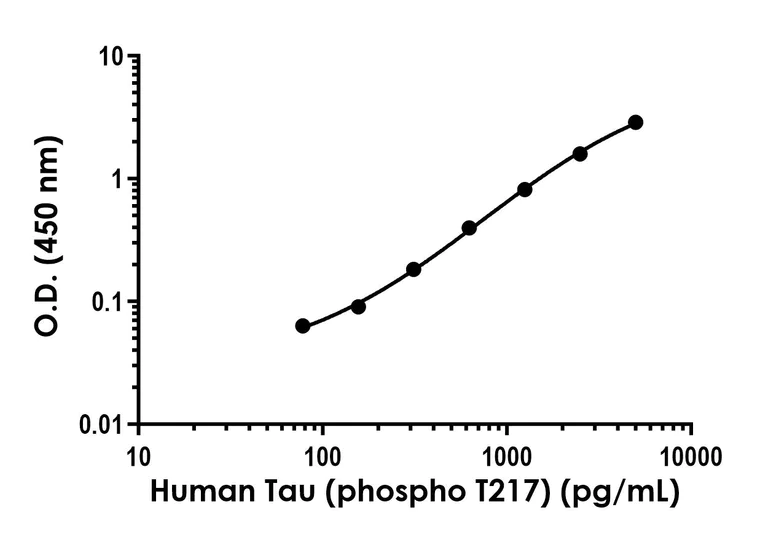
Sandwich ELISA - Human Tau (phospho T217) Antibody Pair - BSA and Azide free (AB314557)
Example of human Tau (phospho T217) standard curve with SimpleStep ELISA. phospho T217 phosphorylated protein mimic used as standard. Background-subtracted data values (mean +/- SD) are graphed
- sELISA
Supplier Data
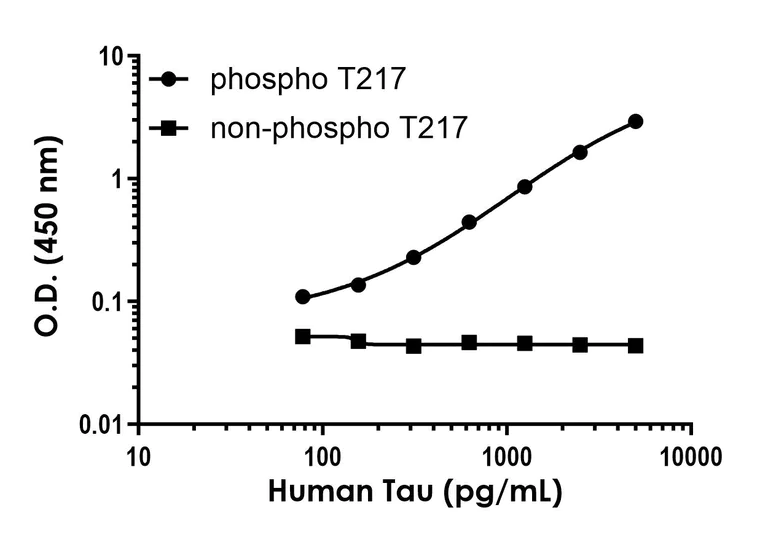
Sandwich ELISA - Human Tau (phospho T217) Antibody Pair - BSA and Azide free (AB314557)
Example of human Tau (phospho T217) standard curve with SimpleStep ELISA. phospho T217 and non-phospho T217 are phosphorylated and non-phosphorylated protein mimic standards. Background-subtracted data values (mean +/- SD) are graphed
보완 제품
Assay Kits
AB253583
Human/Mouse/Rat beta Amyloid 1-42 Antibody Pair - BSA and Azide free
RabMAb|Recombinant

- 0
- 0
Reactivity 정보
제품 세부 정보
Patented technology
Our RabMAb® technology is a patented hybridoma-based technology for making rabbit monoclonal antibodies. For details on our patents, please refer to RabMAb® patents.
Use our conjugation kits for antibody conjugates that are ready-to-use in as little as 20 minutes with <1 minute hands-on-time and 100% antibody recovery: available for fluorescent dyes, HRP, biotin and gold.
The pair can be used in variety of assays and platforms including but not limited to:
- Sandwich ELISA
- FRET/TR-FRET/HTRF
- Meso Scale Discovery® (MSD®)
- Bead-based assays
- AlphaLISA®/AlphaScreen®
- DELFIA® immunoassays
- Simoa® and Single Molecule Counting (SMC™) immunoassays
- Multiplex
Our antibody pairs are supplied in a carrier-free format that is conjugation-ready:
- Buffer free of BSA, sodium azide, and glycerol for higher conjugation efficiency.
- Concentration of ~1 mg/ml as measured by the protein A280 method.
We can label antibodies for you: get in touch today to discuss how we can help accelerate your assay development with custom conjugation services.
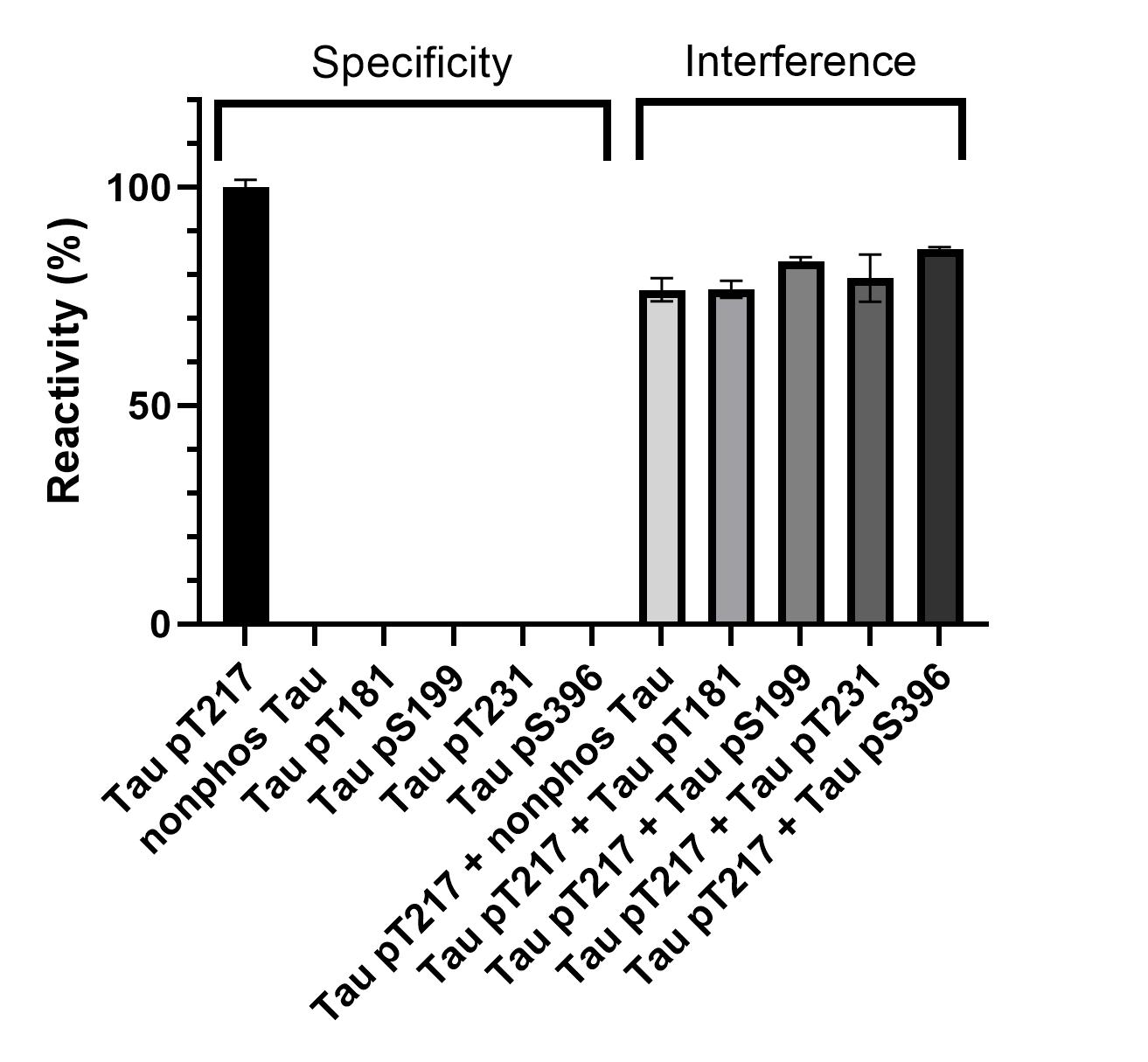
Pairs are screened in biological samples, including plasma and serum, to ensure specificity in complex samples.
Please note:
The recommended antibody orientation is based on internal optimization in sandwich ELISA. Antibody orientation is assay dependent and needs to be optimized for each assay type.
The range provided for this antibody pair is based on initial sandwich ELISA validation data using recombinant protein. Performance and range of the antibody pair will depend on the specific characteristics of your assay, including standard protein selection.
We guarantee the product works in sandwich ELISA, but we do not guarantee the sensitivity or dynamic range of the antibodies in other assays.
Antibody properties:
Capture antibody: recombinant rabbit monoclonal (unconjugated) – 100 µg
Detector antibody: recombinant rabbit monoclonal (unconjugated) - 100 µg
Concentration: ~1 mg/ml
Storage buffer: 100% PBS
Form: Liquid
Isotype: IgG
Recombinant monoclonal antibodies offer several advantages including:
- High batch-to-batch consistency and reproducibility
- Improved sensitivity and specificity
- Long-term security of supply
- Animal-free production
Meso Scale Discovery and MSD are registered trademarks of Meso Scale Diagnostics, LLC.
AlphaLISA, AlphaScreen, and DELFIA are registered trademarks of PerkinElmer, Inc.
Simoa is a registered trademark of Quanterix, Inc.
SMC is a registered trademark of Merck KGaA, Darmstadt, Germany.
제품 구성
특성 및 보관 정보
배송 시 보관 조건
적절한 단기 보관 조건
적절한 장기 보관 조건
보관 정보
추가 정보
This supplementary information is collated from multiple sources and compiled automatically.
Biological function summary
Tau is involved in the assembly and stabilization of microtubules essential for maintaining neuronal structure. It interacts with microtubule-binding domains (MBD) to bind and bundle microtubules facilitating intracellular transport. Tau forms a part of the neuronal cytoskeleton complex working closely with other cytoskeletal proteins to preserve the proper axonal transport and function. Abnormally phosphorylated Tau often termed phospho-Tau disrupts this complex affecting microtubule stability.
Pathways
Tau has critical involvement in several signaling cascades such as the microtubule-binding and transport pathways. Glycogen synthase kinase 3 beta (GSK3β) and cyclin-dependent kinase 5 (CDK5) frequently phosphorylate Tau controlling its interaction with microtubules. Phosphorylated Tau accumulates leading to the formation of neurofibrillary tangles often observed in neurodegenerative conditions. Additionally Tau interacts with GAPDH impacting cellular energy regulation through potential pathway cross-talk involving oxidative stress responses.
타겟 정보
대체 명칭 보기
Product promise
Please note: All products are 'FOR RESEARCH USE ONLY. NOT FOR USE IN DIAGNOSTIC OR THERAPEUTIC PROCEDURES'.
For licensing inquiries, please contact partnerships@abcam.com