- IHC-P
Supplier Data
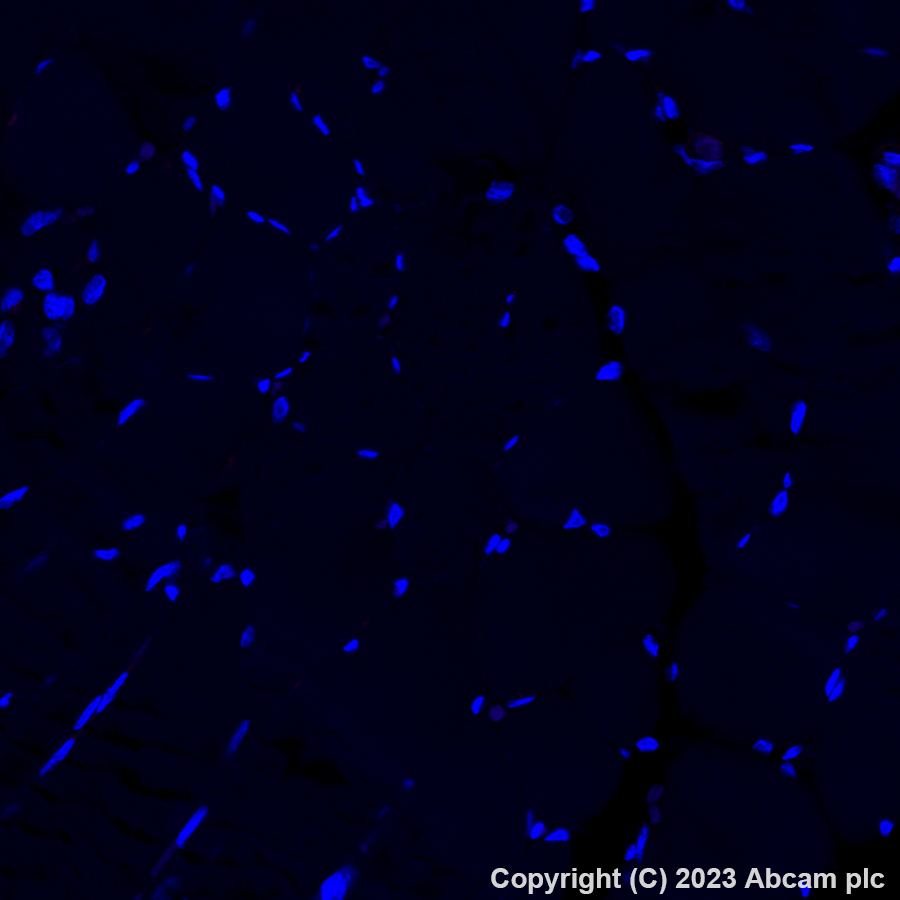
Immunohistochemistry (Formalin/PFA-fixed paraffin-embedded sections) - Alexa Fluor® 647 Anti-CD206 antibody [EPR22489-7] (AB313671)
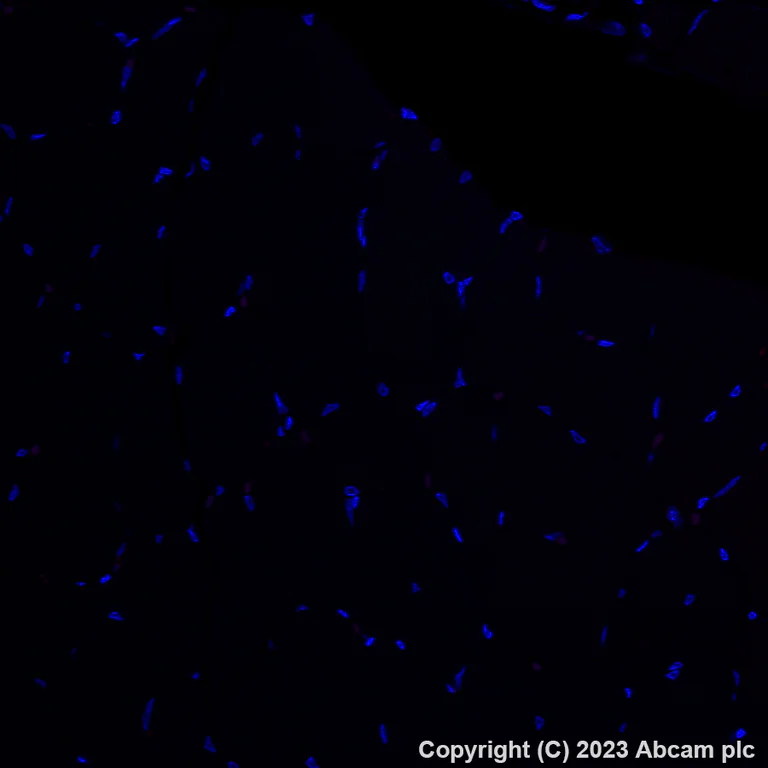
Immunohistochemical analysis of paraffin-embedded Human skeletal muscle tissue labeling CD206 with ab313671 at 1/50 (10.0 ug/ml). Negative control : no staining on human skeletal muscle. The section was incubated with ab313671 at 4°C overnight (shown in red). Nuclear DNA was labelled with DAPI (shown in blue). The section was then mounted using Fluoromount®. Image was taken with a confocal microscope (Leica-Microsystems, TCS SP8). Heat mediated antigen retrieval was performed using ab93684 (Tris/EDTA buffer, pH 9.0).
- IHC-P
Supplier Data
Immunohistochemistry (Formalin/PFA-fixed paraffin-embedded sections) - Alexa Fluor® 647 Anti-CD206 antibody [EPR22489-7] (AB313671)
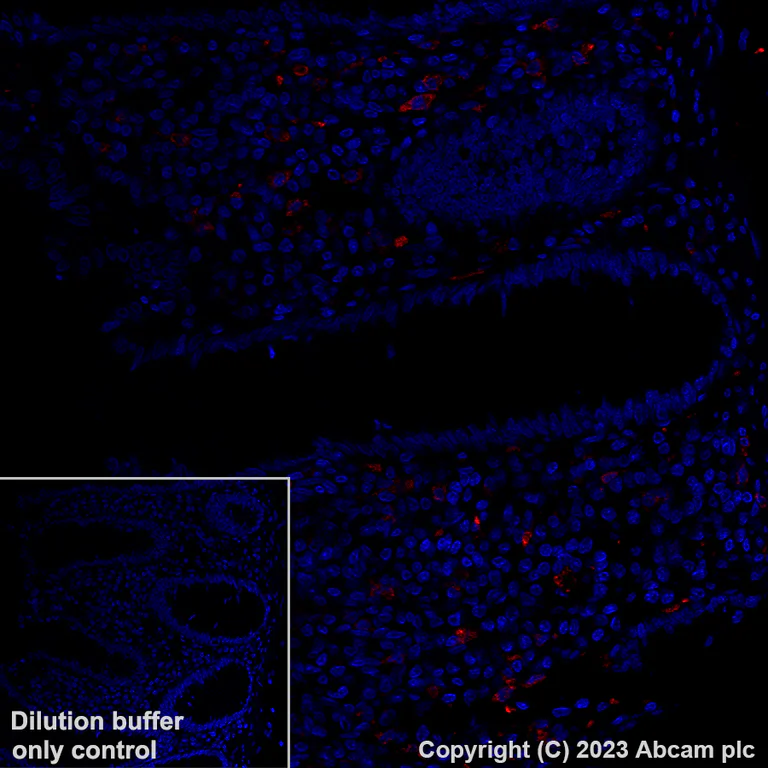
Immunohistochemical analysis of paraffin-embedded human colon tissue labeling CD206 with ab313671 at 1/50 (10.0 ug/ml). Membranous staining on immune cells in human colon. The section was incubated with ab313671 at 4°C overnight (shown in red). Nuclear DNA was labelled with DAPI (shown in blue). The section was then mounted using Fluoromount®. Image was taken with a confocal microscope (Leica-Microsystems, TCS SP8). Heat mediated antigen retrieval was performed using ab93684 (Tris/EDTA buffer, pH 9.0).
- IHC-P
Supplier Data
Immunohistochemistry (Formalin/PFA-fixed paraffin-embedded sections) - Alexa Fluor® 647 Anti-CD206 antibody [EPR22489-7] (AB313671)
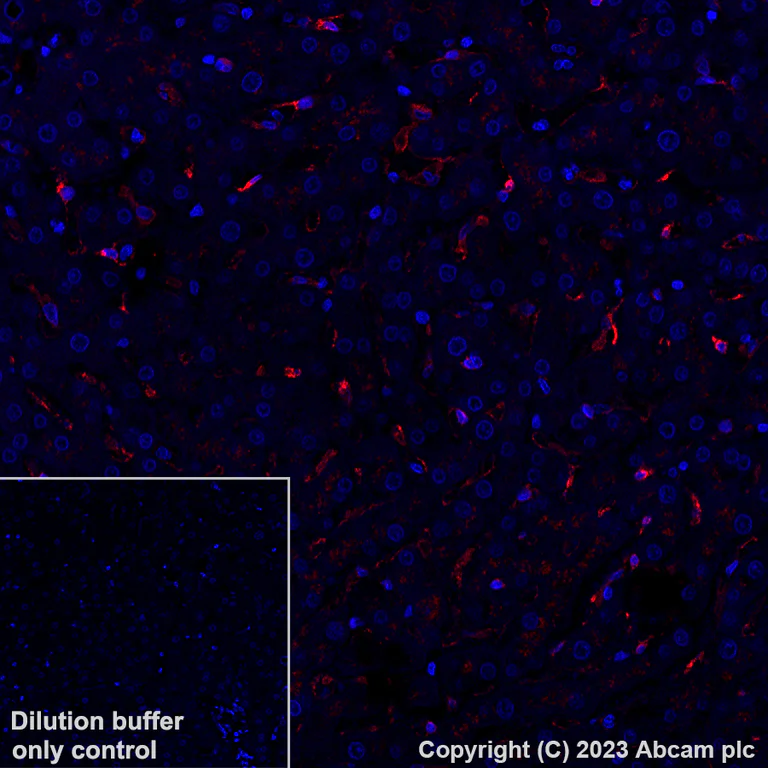
Immunohistochemical analysis of paraffin-embedded human liver tissue labeling CD206 with ab313671 at 1/50 (10.0 ug/ml). Membranous staining on stromal cells in human liver. The section was incubated with ab313671 at 4°C overnight (shown in red). Nuclear DNA was labelled with DAPI (shown in blue). The section was then mounted using Fluoromount®. Image was taken with a confocal microscope (Leica-Microsystems, TCS SP8). Heat mediated antigen retrieval was performed using ab93684 (Tris/EDTA buffer, pH 9.0).
관련 conjugated 항체와 다양한 조성의 항체 (4)
-
Anti-CD206 antibody [EPR22489-7]
-
Anti-CD206 antibody [EPR22489-7] - BSA and Azide free
-
519 Alexa Fluor® 488
Alexa Fluor® 488 Anti-CD206 antibody [EPR22489-7]
-
565 Alexa Fluor® 555
Alexa Fluor® 555 Anti-CD206 antibody [EPR22489-7]
보완 제품

Primary Antibodies
AB225153
Alexa Fluor® 647 Anti-CD103 antibody [EPR4166(2)]
RabMAb|Recombinant

- 4
- 2

Primary Antibodies
AB313397
Alexa Fluor® 647 Anti-CD69 antibody [EPR21814]
BOND RX™ Validated|RabMAb|Recombinant
- 0
- 0
Reactivity 정보
제품 세부 정보
Patented technology
Our RabMAb® technology is a patented hybridoma-based technology for making rabbit monoclonal antibodies. For details on our patents, please refer to RabMAb® patents.
What are the advantages of a recombinant monoclonal antibody?
This product is a recombinant monoclonal antibody, which offers several advantages including:
- - High batch-to-batch consistency and reproducibility
- - Improved sensitivity and specificity
- - Long-term security of supply
- - Animal-free batch production
For more information, read more on recombinant antibodies.
Alexa Fluor® is a registered trademark of Molecular Probes, Inc, a Thermo Fisher Scientific Company. The Alexa Fluor® dye included in this product is provided under an intellectual property license from Life Technologies Corporation. As this product contains the Alexa Fluor® dye, the purchase of this product conveys to the buyer the non-transferable right to use the purchased product and components of the product only in research conducted by the buyer (whether the buyer is an academic or for-profit entity). As this product contains the Alexa Fluor® dye the sale of this product is expressly conditioned on the buyer not using the product or its components, or any materials made using the product or its components, in any activity to generate revenue, which may include, but is not limited to use of the product or its components: in manufacturing; (ii) to provide a service, information, or data in return for payment (iii) for therapeutic, diagnostic or prophylactic purposes; or (iv) for resale, regardless of whether they are sold for use in research. For information on purchasing a license to this product for purposes other than research, contact Life Technologies Corporation, 5781 Van Allen Way, Carlsbad, CA 92008 USA or outlicensing@thermofisher.com.
특성 및 보관 정보
제형
Purification 테크닉
보관 버퍼
배송 시 보관 조건
적절한 단기 보관 기간
적절한 단기 보관 조건
적절한 장기 보관 조건
분주 정보
보관 정보
추가 정보
This supplementary information is collated from multiple sources and compiled automatically.
Biological function summary
The CD206 functions in pathogen recognition and clearance by binding to specific carbohydrates on the pathogen's surface. It is not part of a larger molecular complex but works independently to facilitate phagocytosis. The receptor is essential in immune responses allowing macrophages and dendritic cells to efficiently capture and process antigens for presentation to T cells. This enables the initiation of adaptive immune responses.
Pathways
Researchers know that the CD206 plays an important role in immune signaling pathways particularly in antigen processing and presentation. It interacts with proteins involved in these pathways including those necessary for the internalization and degradation of bound antigens. Moreover it works alongside scavenger receptors contributing to the regulation of immune and inflammatory responses.
제품 프로토콜
- Visit the General protocols
- Visit the Troubleshooting
타겟 정보
대체 명칭 보기
Product promise
Please note: All products are 'FOR RESEARCH USE ONLY. NOT FOR USE IN DIAGNOSTIC OR THERAPEUTIC PROCEDURES'.
For licensing inquiries, please contact partnerships@abcam.com