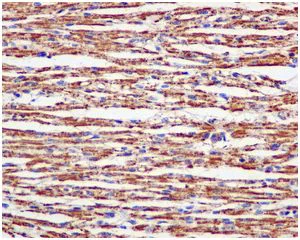
- IHC-P
Supplier Data
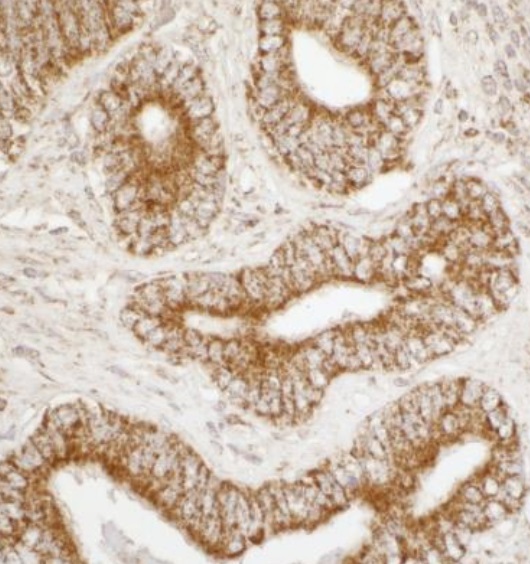
Immunohistochemistry (Formalin/PFA-fixed paraffin-embedded sections) - Anti-ATP5A antibody [EPR13031] - Mitochondrial Marker (AB178421)
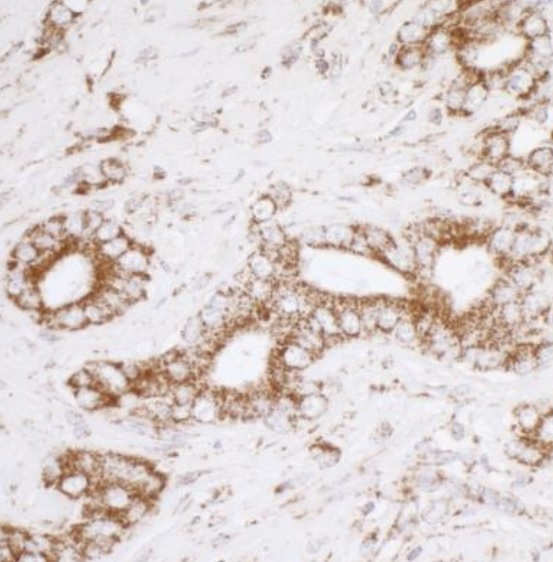
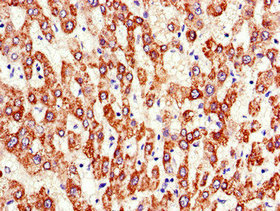
Immunohistochemical analysis of paraffin-embedded Human fetal heart tissue labeling ATP5A with ab178421 at 1/50 dilution.
Perform heat mediated antigen retrieval before commencing with IHC staining protocol.
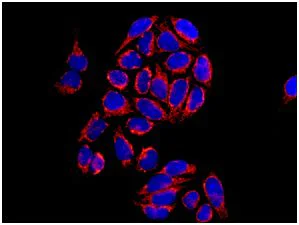
- ICC/IF
Supplier Data
Immunocytochemistry/ Immunofluorescence - Anti-ATP5A antibody [EPR13031] - Mitochondrial Marker (AB178421)
Immunofluorescent analysis of Hela cells labeling ATP5A with ab178421 at 1/100 dilution (red). DAPI nuclear staining (blue).
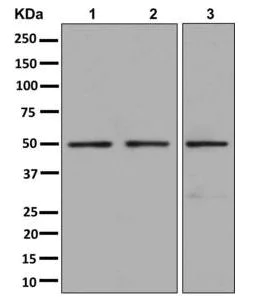
- WB
Supplier Data
Western blot - Anti-ATP5A antibody [EPR13031] - Mitochondrial Marker (AB178421)
All lanes:
Western blot - Anti-ATP5A antibody [EPR13031] - Mitochondrial Marker (ab178421) at 1/1000 dilution
Lane 1:
HepG2 cell lysate at 10 µg
Lane 2:
HeLa cell lysate at 10 µg
Lane 3:
Human fetal liver tissue lysate at 10 µg
Secondary
All lanes:
Goat anti-rabbit HRP at 1/2000 dilution
Predicted band size: 60 kDa
false
관련 conjugated 항체와 다양한 조성의 항체 (1)
-
Anti-ATP5A antibody [EPR13031] - BSA and Azide free
대체품
Primary Antibodies
AB119688
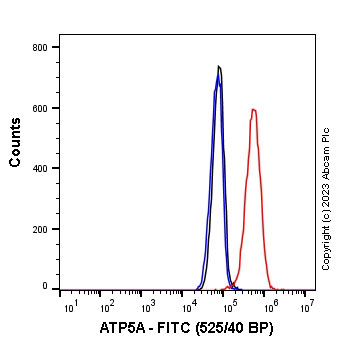
FITC Anti-ATP5A antibody [15H4C4] - Mitochondrial Marker
Lab Essentials
- 5
- 1
Primary Antibodies
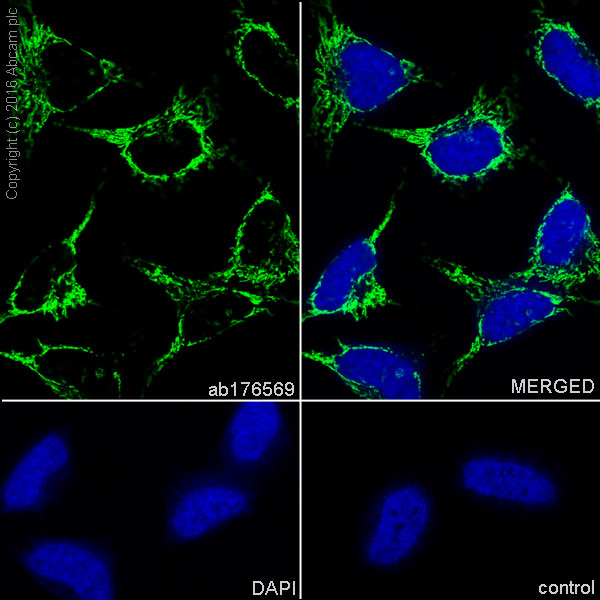
AB176569
Anti-ATP5A antibody [EPR13030(B)] - Mitochondrial Marker
RabMAb|Recombinant|Lab Essentials|20ul selling size
- 5
- 5
Primary Antibodies
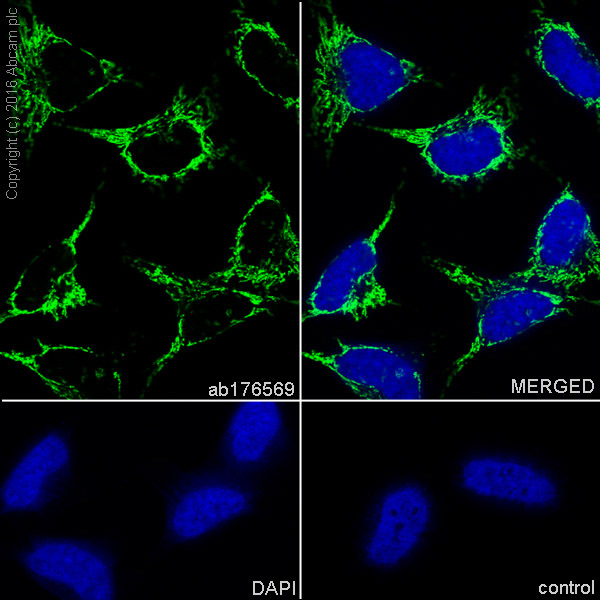
AB231692
Anti-ATP5A antibody [EPR13030(B)] - BSA and Azide free
RabMAb|Recombinant
- 5
- 2
Primary Antibodies
AB196467
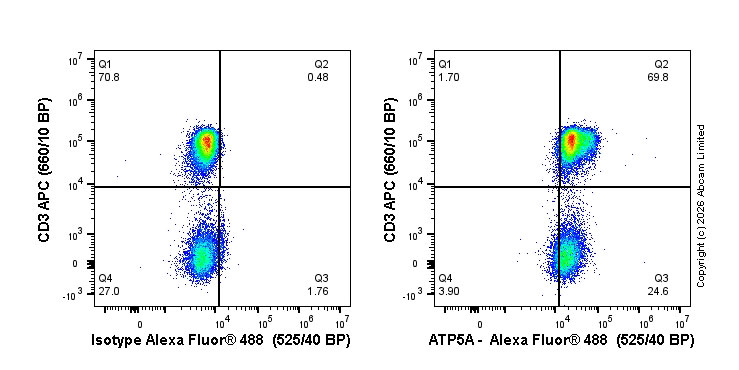
Alexa Fluor® 488 Anti-ATP5A antibody [EPR13030(B)] - Mitochondrial Marker
RabMAb|Recombinant|Trial Size
- 0
- 0
Primary Antibodies
AB14748
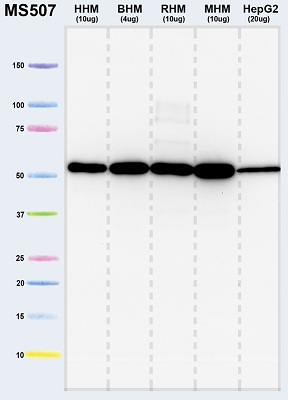
Anti-ATP5A antibody [15H4C4] - Mitochondrial Marker
BOND RX™ Validated|Lab Essentials
- 5
- 27
Primary Antibodies
AB110273
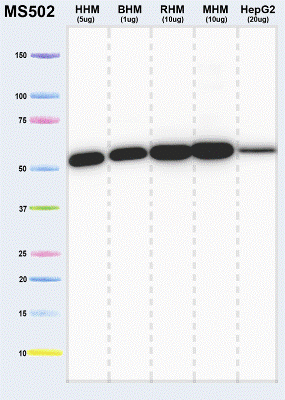
Anti-ATP5A antibody [7H10BD4F9] - Mitochondrial Marker
Lab Essentials
- 5
- 7
Primary Antibodies
AB195891
HRP Anti-ATP5A antibody [EPR13030(B)] - Mitochondrial Marker
BOND RX™ Validated|RabMAb|Recombinant
- 0
- 0
Primary Antibodies
AB216385
Alexa Fluor® 594 Anti-ATP5A antibody [EPR13030(B)] - Mitochondrial Marker
RabMAb|Recombinant
- 4
- 1
Primary Antibodies
AB196198
Alexa Fluor® 647 Anti-ATP5A antibody [EPR13030(B)] - Mitochondrial Marker
RabMAb|Recombinant|Trial Size
- 0
- 0
보완 제품
Primary Antibodies
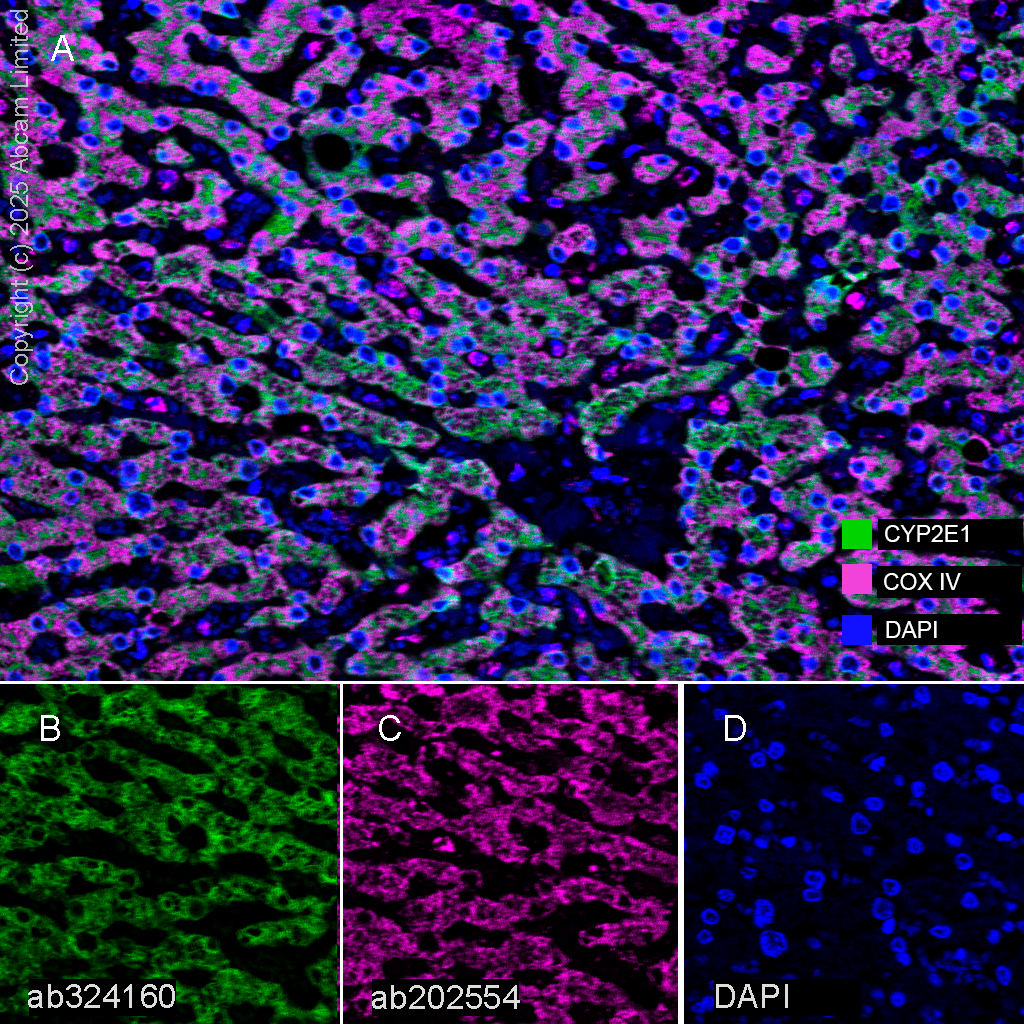
AB202554
Anti-COX IV antibody [EPR9442(ABC)] - Mitochondrial Loading Control
RabMAb|Recombinant|Lab Essentials|Advanced Validation|20ul selling size
- 5
- 2
Primary Antibodies
AB203832
Anti-UQCRC2 antibody [EPR13051]
RabMAb|Recombinant|20ul selling size

- 5
- 1
Primary Antibodies
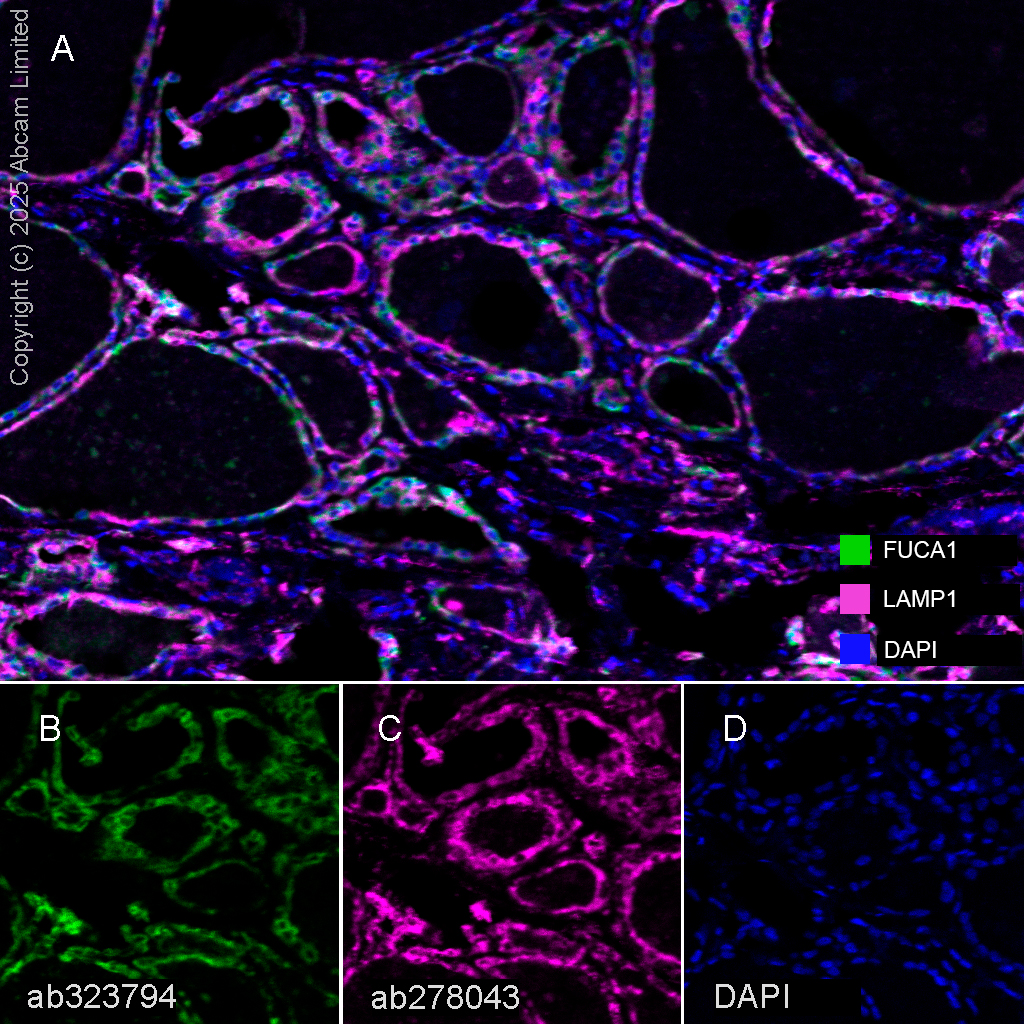
AB278043
Anti-LAMP1 antibody [EPR24395-31] - Lysosome Marker
BOND RX™ Validated|RabMAb|KO Validated|Recombinant|20ul selling size
- 0
- 0

Reactivity 정보
제품 세부 정보
Patented technology
Our RabMAb® technology is a patented hybridoma-based technology for making rabbit monoclonal antibodies. For details on our patents, please refer to RabMAb® patents.
What are the advantages of a recombinant monoclonal antibody?
This product is a recombinant monoclonal antibody, which offers several advantages including:
- - High batch-to-batch consistency and reproducibility
- - Improved sensitivity and specificity
- - Long-term security of supply
- - Animal-free batch production
For more information, read more on recombinant antibodies.
특성 및 보관 정보
제형
Purification 테크닉
보관 버퍼
배송 시 보관 조건
적절한 단기 보관 기간
적절한 단기 보관 조건
적절한 장기 보관 조건
분주 정보
보관 정보
추가 정보
This supplementary information is collated from multiple sources and compiled automatically.
Biological function summary
ATP5A is essential in cellular respiration serving as a catalytic core of the F1 component of ATP synthase. As part of the multi-subunit enzyme complex ATP synthase is responsible for ATP production the primary energy currency in cells. The ATP5A subunit works in conjunction with other subunits of the enzyme oligomer to facilitate the conversion of energy released during oxidative phosphorylation into a usable form. The protein's efficiency in this biological role underpins its importance in sustaining cellular energy homeostasis.
Pathways
ATP5A plays a pivotal role in oxidative phosphorylation and the electron transport chain integral components of cellular respiration. The oxidative phosphorylation pathway depends on this protein to manage the synthesis of ATP molecules while the electron transport chain creates the proton gradient necessary for ATP production. ATP5A is functionally connected to other proteins in these pathways such as ATP5B and cytochrome c oxidase working in a coordinated manner to ensure efficient energy transfer and maintenance.
제품 프로토콜
- Visit the General protocols
- Visit the Troubleshooting
타겟 정보
대체 명칭 보기
제품이 사용된 논문 (1)
Recent publications for all applications. Explore the 전체 목록and refine your search
Science signaling 13: PubMed32398349
2020
Applications
Unspecified application
Species
Unspecified reactive species
Product promise
Please note: All products are 'FOR RESEARCH USE ONLY. NOT FOR USE IN DIAGNOSTIC OR THERAPEUTIC PROCEDURES'.
For licensing inquiries, please contact partnerships@abcam.com