- IHC-P
Lab
Immunohistochemistry (Formalin/PFA-fixed paraffin-embedded sections) - Biotin Anti-CD68 antibody [KP1] (AB317601)
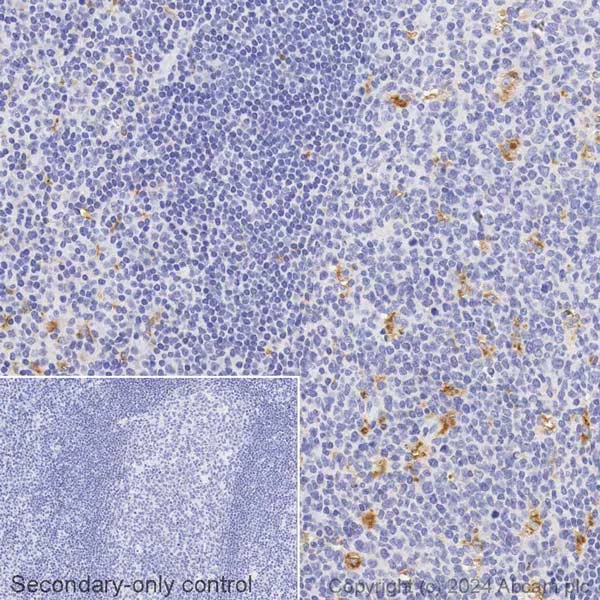
IHC image of CD68 staining in a section of formalin-fixed paraffin-embedded normal human tonsil*.
Performed on a Leica BOND™ system. The section was pre-treated using heat mediated antigen retrieval with EDTA buffer (pH 9.0, epitope retrieval solution 2) for 20mins, before blocking of endogenous biotin using ab64212. The section was then incubated with ab317601 at 0.5µg/ml, for 15 mins at room temperature and detected using an HRP conjugated ABC system. DAB was used as the chromogen. The section was then counterstained with haematoxylin and mounted with DPX. The inset secondary-only control image is taken from an identical assay without primary antibody.
For other IHC staining systems (automated and non-automated) customers should optimize variable parameters such as antigen retrieval conditions, primary antibody concentration and antibody incubation times.
*Tissue obtained from the Human Research Tissue Bank, supported by the NIHR Cambridge Biomedical Research Centre.
관련 conjugated 항체와 다양한 조성의 항체 (7)
-
Anti-CD68 antibody [KP1], prediluted
-
Anti-CD68 antibody [KP1]
-
Anti-CD68 antibody [KP1] - BSA and Azide free
-
519 Alexa Fluor® 488
Alexa Fluor® 488 Anti-CD68 antibody [KP1]
-
565 Alexa Fluor® 555
Alexa Fluor® 555 Anti-CD68 antibody [KP1]
-
617 Alexa Fluor® 594
Alexa Fluor® 594 Anti-CD68 antibody [KP1]
-
665 Alexa Fluor® 647
Alexa Fluor® 647 Anti-CD68 antibody [KP1]
보완 제품
Primary Antibodies
AB307134
Alexa Fluor® 488 Anti-CD3 antibody [SP162]
BOND RX™ Validated|RabMAb|Recombinant
- 0
- 0
Primary Antibodies
AB207082
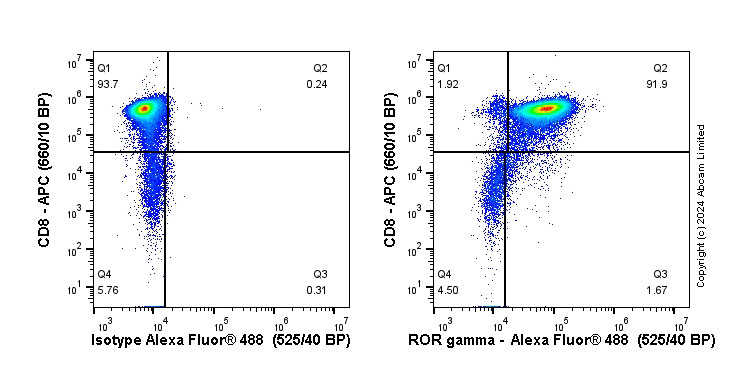
Anti-ROR gamma antibody [EPR20006]
20ul selling size|RabMAb|Recombinant
- 5
- 5

Reactivity 정보
제품 세부 정보
What are the advantages of a recombinant monoclonal antibody?
This product is a recombinant monoclonal antibody, which offers several advantages including:
- - High batch-to-batch consistency and reproducibility
- - Improved sensitivity and specificity
- - Long-term security of supply
- - Animal-free batch production
For more information, read more on recombinant antibodies.
Want a custom formulation?
This antibody clone is manufactured by Abcam. If you require a custom buffer formulation or conjugation for your experiments, please contact orders@abcam.com
특성 및 보관 정보
제형
Purification 테크닉
보관 버퍼
배송 시 보관 조건
적절한 단기 보관 기간
적절한 단기 보관 조건
적절한 장기 보관 조건
분주 정보
보관 정보
추가 정보
This supplementary information is collated from multiple sources and compiled automatically.
Biological function summary
CD68 facilitates functions associated with the innate immune response. It serves as an important part of macrophages which contribute to immune surveillance and tissue homeostasis. Though it primarily operates on its own in some contexts CD68 might assist in forming complexes with other receptors to modulate phagocytic activity. This target is significant in atherosclerotic plaque stability as macrophages engulf lipids and cell debris through processes facilitated by CD68.
Pathways
CD68 is involved in pathways connected to inflammation and phagocytosis. The CD68 protein works closely with other scavenger receptors like CD36 to mediate uptake of oxidized low-density lipoproteins (oxLDL) in the lipid metabolism pathway. Additionally CD68 engagement can influence the toll-like receptor (TLR) signaling pathways thereby linking innate immunity and inflammatory responses critical for host defense and disease progression.
제품 프로토콜
- Visit the General protocols
- Visit the Troubleshooting
타겟 정보
대체 명칭 보기
Product promise
Please note: All products are 'FOR RESEARCH USE ONLY. NOT FOR USE IN DIAGNOSTIC OR THERAPEUTIC PROCEDURES'.
For licensing inquiries, please contact partnerships@abcam.com