
- IHC-P
Supplier Data
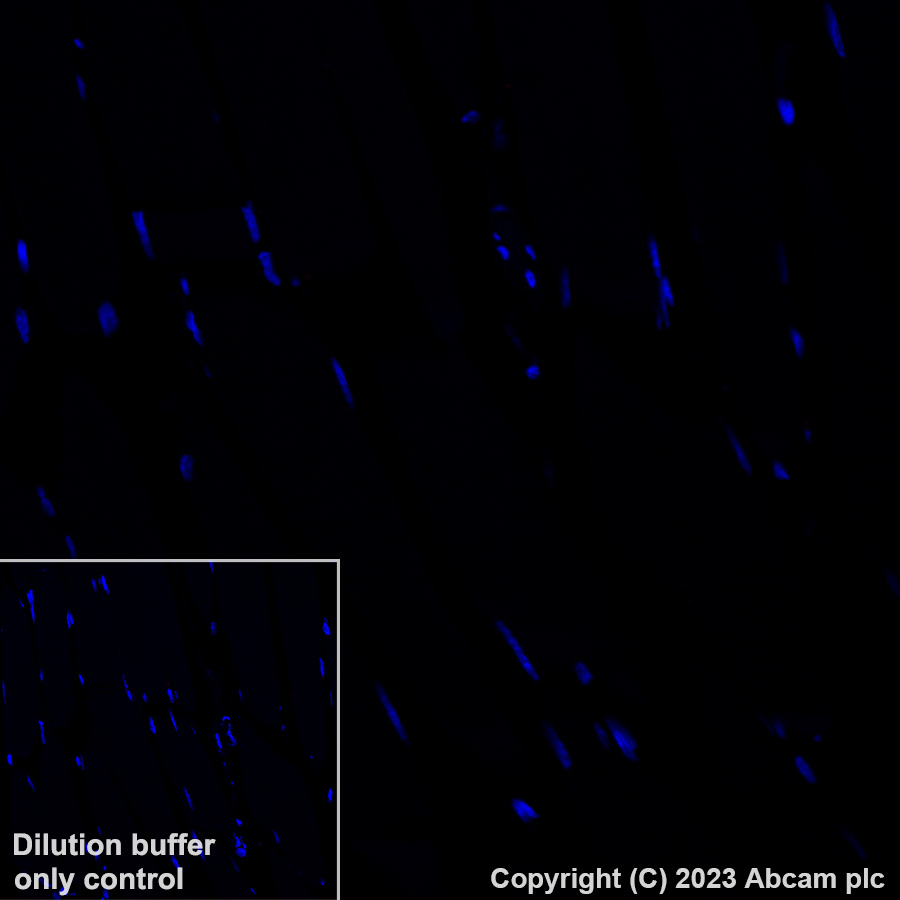
Immunohistochemistry (Formalin/PFA-fixed paraffin-embedded sections) - Biotin Anti-CXCL13 antibody [EPR23400-92] (AB316303)
IHC image of CXCL13 staining in a section of formalin-fixed paraffin-embedded normal human tonsil*. Performed on a Leica BOND™ system. The section was pre-treated using heat mediated antigen retrieval with EDTA buffer (pH 9.0, epitope retrieval solution 2) for 20mins, before blocking of endogenous biotin using ab64212. The section was then incubated with ab316303 at 2 µg/ml, for 15 mins at room temperature and detected using an HRP conjugated ABC system. DAB was used as the chromogen. The section was then counterstained with haematoxylin and mounted with DPX. The inset secondary-only control image is taken from an identical assay without primary antibody. For other IHC staining systems (automated and non-automated) customers should optimize variable parameters such as antigen retrieval conditions, primary antibody concentration and antibody incubation times. *Tissue obtained from the Human Research Tissue Bank, supported by the NIHR Cambridge Biomedical Research Centre.
관련 conjugated 항체와 다양한 조성의 항체 (3)
-
Anti-CXCL13 antibody [EPR23400-92]
-
Anti-CXCL13 antibody [EPR23400-92] - BSA and Azide free
-
665 Alexa Fluor® 647
Alexa Fluor® 647 Anti-CXCL13 antibody [EPR23400-92]
보완 제품


Primary Antibodies
AB315359
Alexa Fluor® 647 Anti-CLEC9A antibody [EPR22324]
BOND RX™ Validated|RabMAb|Recombinant
- 0
- 0
Primary Antibodies
AB270127
Alexa Fluor® 647 Anti-CTLA4 antibody [CAL49]
BOND RX™ Validated|RabMAb|Recombinant|Advanced Validation

- 0
- 0

Reactivity 정보
제품 세부 정보
Patented technology
Our RabMAb® technology is a patented hybridoma-based technology for making rabbit monoclonal antibodies. For details on our patents, please refer to RabMAb® patents.
What are the advantages of a recombinant monoclonal antibody?
This product is a recombinant monoclonal antibody, which offers several advantages including:
- - High batch-to-batch consistency and reproducibility
- - Improved sensitivity and specificity
- - Long-term security of supply
- - Animal-free batch production
For more information, read more on recombinant antibodies.
특성 및 보관 정보
제형
Purification 테크닉
보관 버퍼
배송 시 보관 조건
적절한 단기 보관 기간
적절한 단기 보관 조건
적절한 장기 보관 조건
분주 정보
보관 정보
추가 정보
This supplementary information is collated from multiple sources and compiled automatically.
Biological function summary
In the context of immune response and lymphoid tissue organization CXCL13 attracts B cells by interacting with the chemokine receptor CXCR5. These interactions support the formation of B-cell follicles essential for efficient immune responses. CXCL13 is not known to be part of a larger protein complex but instead works through its specific receptor-ligand interactions. Its role in guiding cell migration is vital for the development of secondary lymphoid structures.
Pathways
CXCL13 is significantly involved in the B-cell receptor signaling pathway. The chemokine facilitates the homing of B cells to follicles an important step in the adaptive immune response. CXCL13 closely associates with CXCR5 its specific receptor playing a part in establishing the spatial organization of lymphoid tissues. Additionally the chemokine influences the germinal center reaction an integral part of the immune pathway for antibody maturation.
제품 프로토콜
- Visit the General protocols
- Visit the Troubleshooting
타겟 정보
대체 명칭 보기
Product promise
Please note: All products are 'FOR RESEARCH USE ONLY. NOT FOR USE IN DIAGNOSTIC OR THERAPEUTIC PROCEDURES'.
For licensing inquiries, please contact partnerships@abcam.com