JavaScript is disabled in your browser. Please enable JavaScript to view this website.
AB183434

Biotin Anti-NMDAR1 antibody [N308/48]

Be the first to review this product! 리뷰 제출

|

(1 출판물)

Anti-NMDAR1 antibody [N308/48] conjugated to Biotin - suitable for Western blot, and reacts with rat samples. Clone [N308/48] is a mouse monoclonal antibody.

관련 conjugated 항체와 다양한 조성의 항체 (1)

  • Unconjugated

    Anti-NMDAR1 antibody [N308/48] - Neuronal Marker

주요 정보

Host species

Mouse

Clonality

Monoclonal

Clone number

N308/48

Isotype

IgG1

Conjugation

Biotin

Excitation/Emission
Carrier free

No

Reacts with

Rat

Applications

WB

applications

Immunogen

Recombinant Fragment Protein within Rat Grin1 aa 1-400. The exact immunogen used to generate this antibody is proprietary information.

P35439

Reactivity 정보

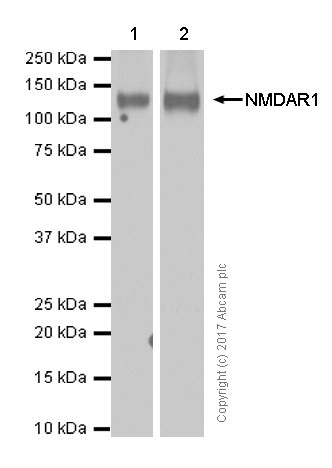
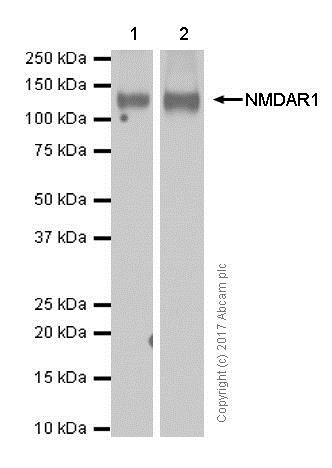
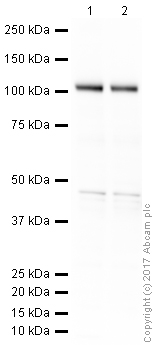
{ "title": "Reactivity Data", "filters": { "stats": ["", "Species", "Dilution Info", "Notes"], "tabs": { "all-applications": {"fullname" : "All Applications", "shortname": "All Applications"}, "WB" : {"fullname" : "Western blot", "shortname":"WB"} }, "product-promise": { "all": "all", "testedAndGuaranteed": "tested", "guaranteed": "expected", "predicted": "predicted", "notRecommended": "not-recommended" } }, "values": { "Rat": { "WB-species-checked": "testedAndGuaranteed", "WB-species-dilution-info": "1 µg/mL", "WB-species-notes": "<p>1 μg/ml of ab183434 is sufficient for detection of NMDAR1 in 20μg of rat brain membrane lysate.</p>" } } }

제품 세부 정보

The clone number has been updated from S308-48 to N308/48, both clone numbers name the same antibody clone.

특성 및 보관 정보

제형
Liquid
Purification 테크닉
Affinity purification Protein G
보관 버퍼
Preservative: 0.09% Sodium azide Constituents: PBS, 50% Glycerol (glycerin, glycerine)
배송 시 보관 조건
Blue Ice
적절한 단기 보관 조건
+4°C
적절한 장기 보관 조건
+4°C

추가 정보

This supplementary information is collated from multiple sources and compiled automatically.

NMDAR1 also known as GluN1 is a subunit of the NMDA receptor a type of ion channel protein found in the brain. This receptor weighs around 120 kDa and plays an important role in synaptic transmission and plasticity. NMDAR1 operates as part of a receptor complex that allows for calcium influx when activated. It shows high expression throughout the central nervous system primarily in neurons across the cortex and hippocampus. The receptor's function is important to certain calcium-dependent processes in the brain.
Biological function summary

NMDA receptors including the NMDAR1 subunit serve essential functions in synaptic plasticity and memory processes. As part of the receptor complex NMDAR1 contributes to the control of synaptic strength. It requires co-activation by glutamate and glycine or D-serine linking its function to excitatory neurotransmission. The receptor's capacity to modulate synaptic connections forms the basis of learning and long-term memory.

Pathways

NMDAR1 plays a critical role in the glutamatergic pathway influencing synaptic plasticity and memory function. It interacts with other proteins like PSD-95 within the postsynaptic density. NMDAR1 is also involved in the calcium signaling pathway due to its ability to facilitate calcium entry into neurons upon synaptic activity. This positions the receptor as an important modulator in pathways that control neuronal communication and plasticity.

NMDA receptor dysfunction including the NMDAR1 subunit links to neurodegenerative diseases such as Alzheimer's. The alterations in NMDAR1 function can lead to excitotoxicity contributing to neuronal damage. NMDAR1 also associates with schizophrenia where altered glutamatergic transmission has been observed. Here abnormalities in proteins like the synaptic scaffolding protein PSD-95 have also been noted to relate to NMDAR1 dysfunction in the pathophysiology of these disorders.

제품 프로토콜

For this product, it's our understanding that no specific protocols are required. You can visit:

타겟 정보

Component of N-methyl-D-aspartate (NMDA) receptors (NMDARs) that function as heterotetrameric, ligand-gated cation channels with high calcium permeability and voltage-dependent block by Mg(2+) (PubMed : 21376300, PubMed : 26875626, PubMed : 26919761, PubMed : 28126851, PubMed : 28228639, PubMed : 36959261, PubMed : 7679115, PubMed : 7681588, PubMed : 7685113). NMDARs participate in synaptic plasticity for learning and memory formation by contributing to the long-term potentiation (LTP) (PubMed : 26875626). Channel activation requires binding of the neurotransmitter L-glutamate to the GluN2 subunit, glycine or D-serine binding to the GluN1 subunit, plus membrane depolarization to eliminate channel inhibition by Mg(2+) (PubMed : 21376300, PubMed : 26875626, PubMed : 26919761, PubMed : 27164704, PubMed : 28095420, PubMed : 28105280, PubMed : 28126851, PubMed : 28228639, PubMed : 36959261, PubMed : 38538865, PubMed : 7679115, PubMed : 7681588, PubMed : 7685113). NMDARs mediate simultaneously the potassium efflux and the influx of calcium and sodium (By similarity). Each GluN2 or GluN3 subunit confers differential attributes to channel properties, including activation, deactivation and desensitization kinetics, pH sensitivity, Ca2(+) permeability, and binding to allosteric modulators (PubMed : 26875626, PubMed : 26919761, PubMed : 36309015, PubMed : 38598639).
See full target information GRIN1

대체 명칭 보기

NMDAR1, GRIN1, GluN1, Glutamate [NMDA] receptor subunit zeta-1, N-methyl-D-aspartate receptor subunit NR1, NMD-R1, hNR1

제품이 사용된 논문 (1)

Recent publications for all applications. Explore the 전체 목록and refine your search

Genetics and molecular research : GMR 15: PubMed27525866

2016

KCNQ1 A340E impairs electrolyte homeostasis independently of the renin-angiotensin-aldosterone system in mice.

Applications

Unspecified application

Species

Unspecified reactive species

Q Pan,Y Sang,C Sun,G Li,Y Wang
제품이 사용된 논문 모두 보기

Product promise

저희는 고품질 시약으로 고객님의 연구를 서포트하고자 최선을 다하고 있으며, 모든 단계에서 함께 하겠습니다. 만약 제품이 기대한 성능을 보이지 않을 경우에도 Product Promise로 보호받으실 수 있습니다.
자세한 내용은 이용 약관을 확인해 주세요.

Please note: All products are 'FOR RESEARCH USE ONLY. NOT FOR USE IN DIAGNOSTIC OR THERAPEUTIC PROCEDURES'.

For licensing inquiries, please contact partnerships@abcam.com