- IHC-P
Lab
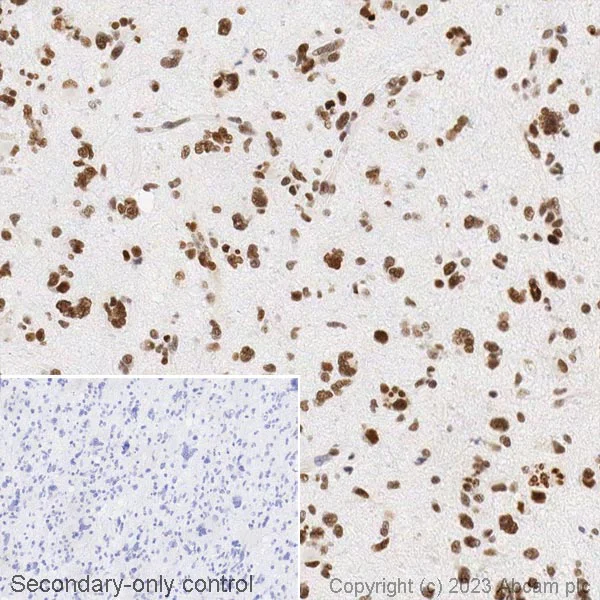
Immunohistochemistry (Formalin/PFA-fixed paraffin-embedded sections) - Biotin Anti-TDP43 antibody [EPR5810] (AB314265)
IHC image of TDP43 staining in a section of formalin-fixed paraffin-embedded human glioma*. Performed on a Leica BOND™ system. The section was pre-treated using heat mediated antigen retrieval with EDTA buffer (pH 9.0, epitope retrieval solution 2) for 20mins, before blocking of endogenous biotin using ab64212. The section was then incubated with ab314265 at 5 µg/ml, for 15 mins at room temperature and detected using an HRP conjugated ABC system. DAB was used as the chromogen. The section was then counterstained with haematoxylin and mounted with DPX. The inset secondary-only control image is taken from an identical assay without primary antibody. For other IHC staining systems (automated and non-automated) customers should optimize variable parameters such as antigen retrieval conditions, primary antibody concentration and antibody incubation times. *Tissue obtained from the Human Research Tissue Bank, supported by the NIHR Cambridge Biomedical Research Centre.
관련 conjugated 항체와 다양한 조성의 항체 (11)
-
Anti-TDP43 antibody [EPR5810]
-
Anti-TDP43 antibody [EPR5810] - BSA and Azide free
-
660 APC
APC Anti-TDP43 antibody [EPR5810]
-
519 Alexa Fluor® 488
Alexa Fluor® 488 Anti-TDP43 antibody [EPR5810]
-
565 Alexa Fluor® 555
Alexa Fluor® 555 Anti-TDP43 antibody [EPR5810]
-
603 Alexa Fluor® 568
Alexa Fluor® 568 Anti-TDP43 antibody [EPR5810]
-
617 Alexa Fluor® 594
Alexa Fluor® 594 Anti-TDP43 antibody [EPR5810]
-
665 Alexa Fluor® 647
Alexa Fluor® 647 Anti-TDP43 antibody [EPR5810]
-
775 Alexa Fluor® 750
Alexa Fluor® 750 Anti-TDP43 antibody [EPR5810]
-
HRP Anti-TDP43 antibody [EPR5810]
-
578 PE
PE Anti-TDP43 antibody [EPR5810]
보완 제품
Primary Antibodies
AB278054
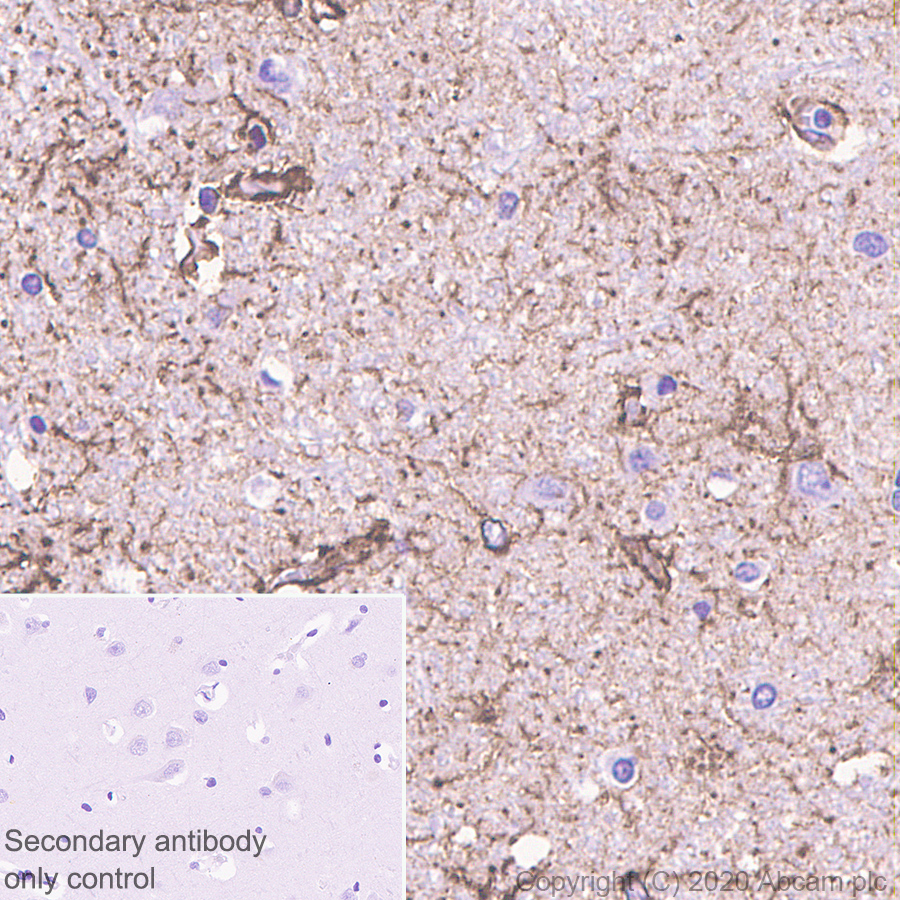
Anti-GFAP antibody [RM1003] - Astrocyte Marker
BOND RX™ Validated|20ul selling size|RabMAb|Recombinant
- 0
- 0
Primary Antibodies
AB7349
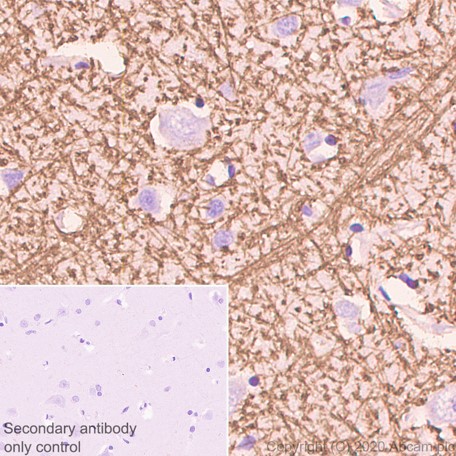
Anti-Myelin Basic Protein antibody [12] - Oligodendrocyte Marker
BOND RX™ Validated|Recombinant|Lab Essentials
- 4
- 23
Primary Antibodies
AB190565
Alexa Fluor® 647 Anti-NeuN antibody [EPR12763] - Neuronal Marker
BOND RX™ Validated|RabMAb|Recombinant
- 5
- 7
Primary Antibodies
AB246808
Anti-Tau Alzheimer’s Disease antibody [GT-38] - Conformation-Specific
BOND RX™ Validated|Trial Size

- 0
- 0
Reactivity 정보
제품 세부 정보
Patented technology
Our RabMAb® technology is a patented hybridoma-based technology for making rabbit monoclonal antibodies. For details on our patents, please refer to RabMAb® patents.
What are the advantages of a recombinant monoclonal antibody?
This product is a recombinant monoclonal antibody, which offers several advantages including:
- - High batch-to-batch consistency and reproducibility
- - Improved sensitivity and specificity
- - Long-term security of supply
- - Animal-free batch production
For more information, read more on recombinant antibodies.
특성 및 보관 정보
제형
Purification 테크닉
보관 버퍼
배송 시 보관 조건
적절한 단기 보관 기간
적절한 단기 보관 조건
적절한 장기 보관 조건
분주 정보
보관 정보
추가 정보
This supplementary information is collated from multiple sources and compiled automatically.
Biological function summary
TDP43 acts as a regulator of RNA splicing and transcription by forming ribonucleoprotein complexes. The protein can bind to specific sequences in RNA helping in the proper processing and transport of mRNA. Furthermore TDP43 has a role in stress granule formation a cell response to stress. Researchers have identified that the protein undergoes various post-translational modifications which could influence its behavior and function within the cellular environment.
Pathways
Several important pathways include TDP43 due to its functions in RNA metabolism. This protein contributes to the spliceosomal cycle and other pathways involved in mRNA processing. TDP43 interacts with proteins such as FUS and hnRNP which are also involved in RNA splicing and are essential for maintaining mRNA integrity. These relations make TDP43 an important player in regulating gene expression and protein synthesis.
제품 프로토콜
- Visit the General protocols
- Visit the Troubleshooting
타겟 정보
대체 명칭 보기
Product promise
Please note: All products are 'FOR RESEARCH USE ONLY. NOT FOR USE IN DIAGNOSTIC OR THERAPEUTIC PROCEDURES'.
For licensing inquiries, please contact partnerships@abcam.com