Anti-Cytokeratin 7 antibody [EPR1619Y] - BSA and Azide free
- RabMAb
- Recombinant
- KO Validated
- 각 태그의 뜻
Be the first to review this product! 리뷰 제출
|
(5 제품이 사용된 논문 )
- IHC-P
Supplier Data
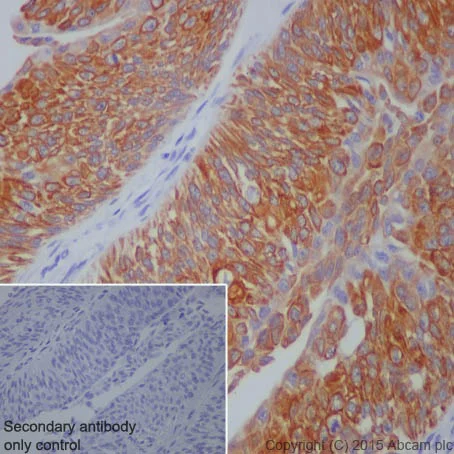
Immunohistochemistry (Formalin/PFA-fixed paraffin-embedded sections) - Anti-Cytokeratin 7 antibody [EPR1619Y] - BSA and Azide free (AB181831)
Immunohistochemistry (Formalin/PFA-fixed paraffin-embedded sections) analysis of human bladder carcinoma tissue labelling Cytokeratin 7 with purified ab68459 at a dilution of 1/1000. Heat mediated antigen retrieval was performed using EDTA buffer pH 9. ab97051, a HRP-conjugated goat anti-rabbit IgG (H+L) was used as the secondary antibody (1/500). Negative control using PBS instead of primary antibody. Counterstained with hematoxylin.
This data was developed using the same antibody clone in a different buffer formulation containing PBS, BSA, glycerol, and sodium azide (ab68459).
- ICC/IF
Unknown
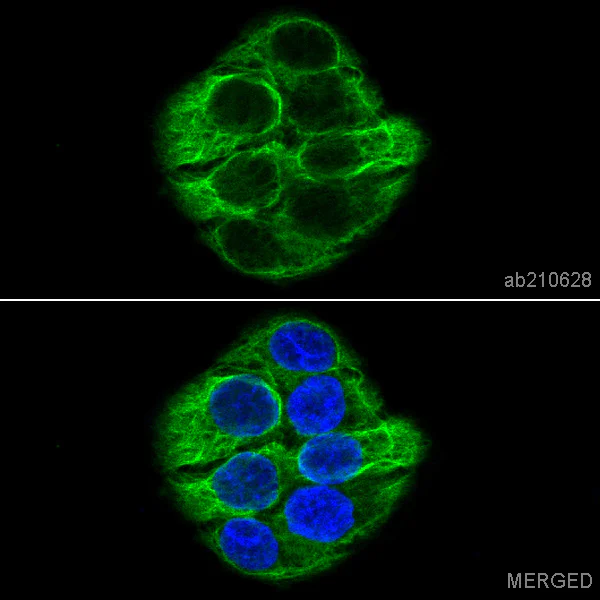
Immunocytochemistry/ Immunofluorescence - Anti-Cytokeratin 7 antibody [EPR1619Y] - BSA and Azide free (AB181831)
Clone EPR1619Y (ab181831) has been successfully conjugated by Abcam. This image was generated using Anti-Cytokeratin 7 antibody [EPR1619Y] - Cytoskeleton Marker (PE). Please refer to ab210628 for protocol details.
Figure Legend for the image : ab210628 staining Cytokeratin 7 in T74D cells. The cells were fixed with 100%methanol, permeabilized with 0.1% Triton X-100 for 5 minutes and then blocked with 1% BSA/10% normal goat serum/0.3M glycine in 0.1%PBS-Tween for 1h. The cells were then incubated overnight at +4°C with ab210628 at 1/100 dilution (pseudocolored in green). Nuclear DNA was labelled with DAPI (shown in blue).
Image was taken with a confocal microscope (Leica-Microsystems, TCS SP8).
This product also gave a positive signal under the same testing conditions in T74D cells fixed with 4%formaldehyde.
- ICC/IF
Unknown
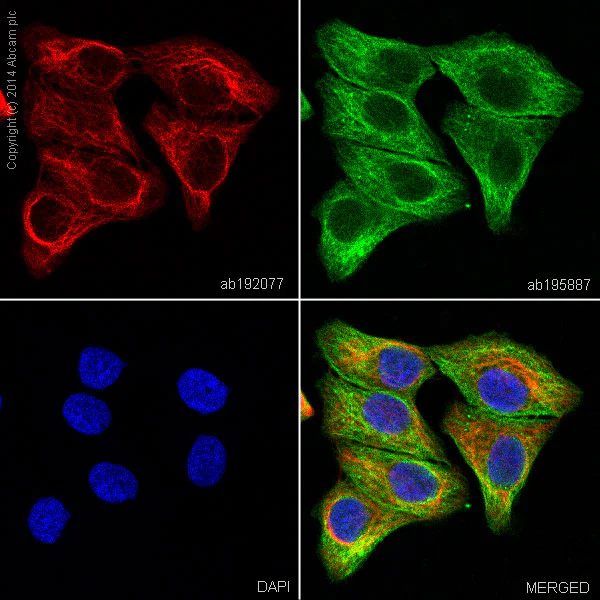
Immunocytochemistry/ Immunofluorescence - Anti-Cytokeratin 7 antibody [EPR1619Y] - BSA and Azide free (AB181831)
Clone EPR1619Y (ab181831) has been successfully conjugated by Abcam. This image was generated using Anti-Cytokeratin 7 antibody [EPR1619Y] - Cytoskeleton Marker (Alexa Fluor® 647). Please refer to ab192077 for protocol details.
ab192077 staining Cytokeratin 7 in T47D cells. The cells were fixed with 4% formaldehyde (10 min), permeabilised in 0.1% Triton X-100 for 5 minutes and then blocked in 1% BSA/10% normal goat serum/0.3M glycine in 0.1% PBS-Tween for 1h. The cells were then incubated with ab192077 at a working dilution of 1 in 100 (shown in red) and ab195887, Mouse monoclonal [DM1A] to alpha Tubulin (Alexa Fluor® 488, shown in green) at 2µg/ml overnight at +4°C. Nuclear DNA was labelled in blue with DAPI.
This product gave a positive signal in 100% methanol (5 min) fixed T47D cells under the same testing conditions.
Image was taken with a confocal microscope (Leica-Microsystems, TCS SP8).
- ICC/IF
Unknown
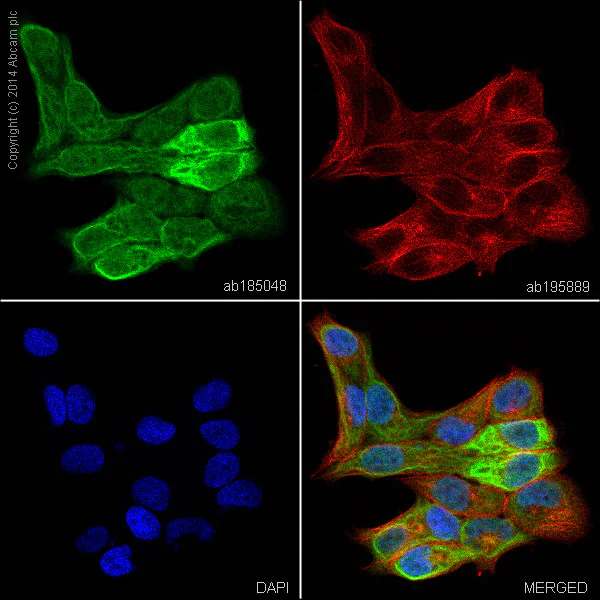
Immunocytochemistry/ Immunofluorescence - Anti-Cytokeratin 7 antibody [EPR1619Y] - BSA and Azide free (AB181831)
Clone EPR1619Y (ab181831) has been successfully conjugated by Abcam. This image was generated using Anti-Cytokeratin 7 antibody [EPR1619Y] - Cytoskeleton Marker (Alexa Fluor® 488). Please refer to ab185048 for protocol details.
ab185048 staining Cytokeratin 7 in T47D cells. The cells were fixed with 4% formaldehyde (10 min), permeabilised in 0.1% Triton X-100 for 5 minutes and then blocked in 1% BSA/10% normal goat serum/0.3M glycine in 0.1%PBS-Tween for 1h. The cells were then incubated with ab185048 at 1/100 dilution (shown in green) and ab195889, Mouse monoclonal [DM1A] to alpha Tubulin (Alexa Fluor® 594, shown in red) at 2µg/ml overnight at +4°C. Nuclear DNA was labelled in blue with DAPI.
This product gave a positive signal in 100% methanol (5 min) fixed A549 cells under the same testing conditions.
Image was taken with a confocal microscope (Leica-Microsystems, TCS SP8).
관련 conjugated 항체와 다양한 조성의 항체 (6)
-
Anti-Cytokeratin 7 antibody [EPR1619Y] - Cytoskeleton Marker
-
519 Alexa Fluor® 488
Alexa Fluor® 488 Anti-Cytokeratin 7 antibody [EPR1619Y] - Cytoskeleton Marker
-
565 Alexa Fluor® 555
Alexa Fluor® 555 Anti-Cytokeratin 7 antibody [EPR1619Y] - Cytoskeleton Marker
-
617 Alexa Fluor® 594
Alexa Fluor® 594 Anti-Cytokeratin 7 antibody [EPR1619Y] - Cytoskeleton Marker
-
665 Alexa Fluor® 647
Alexa Fluor® 647 Anti-Cytokeratin 7 antibody [EPR1619Y] - Cytoskeleton Marker
-
578 PE
PE Anti-Cytokeratin 7 antibody [EPR1619Y] - Cytoskeleton Marker
대체품
Primary Antibodies
AB208273
Alexa Fluor® 488 Anti-Cytokeratin 7 antibody [EPR17078]
RabMAb|Recombinant

- 0
- 0
Primary Antibodies
AB209601
Alexa Fluor® 555 Anti-Cytokeratin 7 antibody [EPR17078]
RabMAb|Recombinant

- 5
- 1
Primary Antibodies
AB181598
Anti-Cytokeratin 7 antibody [EPR17078] - Cytoskeleton Marker
20ul selling size|KO Validated|RabMAb|Recombinant|Lab Essentials

- 5
- 13
Primary Antibodies
AB271885
Anti-Cytokeratin 7 antibody [SP52] - BSA and Azide free
RabMAb|Recombinant|KO Validated
- 0
- 0
보완 제품
Primary Antibodies
AB16667
BOND RX™ Validated|KO Validated|RabMAb|Advanced Validation|Recombinant|20ul selling size

- 5
- 133
Primary Antibodies
AB92378
Anti-HNF-4-alpha antibody [EPR3648]
KO Validated|20ul selling size|RabMAb|Advanced Validation|Recombinant
- 5
- 4
Primary Antibodies
AB52625
Anti-Cytokeratin 19 antibody [EP1580Y] - Cytoskeleton Marker
BOND RX™ Validated|RabMAb|Recombinant|Lab Essentials|20ul selling size|Advanced Validation

- 5
- 12
Primary Antibodies
AB52635
Anti-Cytokeratin 5 antibody [EP1601Y] - Cytoskeleton Marker
BOND RX™ Validated|RabMAb|Recombinant|Lab Essentials
- 5
- 11
Reactivity 정보
제품 세부 정보
ab181831 is the carrier-free version of ab68459.
Patented technology
Our RabMAb® technology is a patented hybridoma-based technology for making rabbit monoclonal antibodies. For details on our patents, please refer to RabMAb® patents.
What are the advantages of a recombinant monoclonal antibody?
This product is a recombinant monoclonal antibody, which offers several advantages including:
- - High batch-to-batch consistency and reproducibility
- - Improved sensitivity and specificity
- - Long-term security of supply
- - Animal-free batch production
For more information, read more on recombinant antibodies.
Conjugation ready
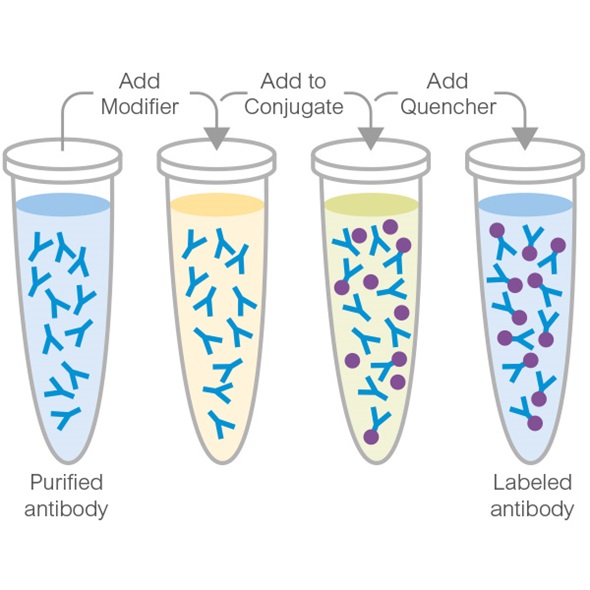
Our carrier-free antibodies are typically supplied in a PBS-only formulation, purified and free of BSA, sodium azide and glycerol. This conjugation-ready format is designed for use with fluorochromes, metal isotopes, oligonucleotides, and enzymes, which makes them ideal for antibody labelling, functional and cell-based assays, flow-based assays (e.g. mass cytometry) and Multiplex Imaging applications.
Use our conjugation kits for antibody conjugates that are ready-to-use in as little as 20 minutes with 1 minute hands-on-time and 100% antibody recovery: available for fluorescent dyes, HRP, biotin and gold.
Compatibility
This product is compatible with the Maxpar® Antibody Labeling Kit from Fluidigm, without the need for antibody preparation. Maxpar® is a trademark of Fluidigm Canada Inc.
특성 및 보관 정보
제형
Purification 테크닉
보관 버퍼
배송 시 보관 조건
적절한 단기 보관 조건
적절한 장기 보관 조건
보관 정보
제품 프로토콜
- Visit the General protocols
- Visit the Troubleshooting
타겟 정보
대체 명칭 보기
제품이 사용된 논문 (5)
Recent publications for all applications. Explore the 전체 목록and refine your search
Acta ophthalmologica 102:773-778 PubMed38553957
2024
Applications
Unspecified application
Species
Unspecified reactive species
Journal of clinical medicine 11: PubMed35683527
2022
Applications
Unspecified application
Species
Unspecified reactive species
Acta ophthalmologica 100:819-827 PubMed35527390
2022
Applications
Unspecified application
Species
Unspecified reactive species
BMJ open ophthalmology 6:e000892 PubMed34993350
2021
Applications
Unspecified application
Species
Unspecified reactive species
OncoTargets and therapy 13:10901-10916 PubMed33149607
2020
Applications
Unspecified application
Species
Unspecified reactive species
Product promise
Please note: All products are 'FOR RESEARCH USE ONLY. NOT FOR USE IN DIAGNOSTIC OR THERAPEUTIC PROCEDURES'.
For licensing inquiries, please contact partnerships@abcam.com