JavaScript is disabled in your browser. Please enable JavaScript to view this website.
AB137817

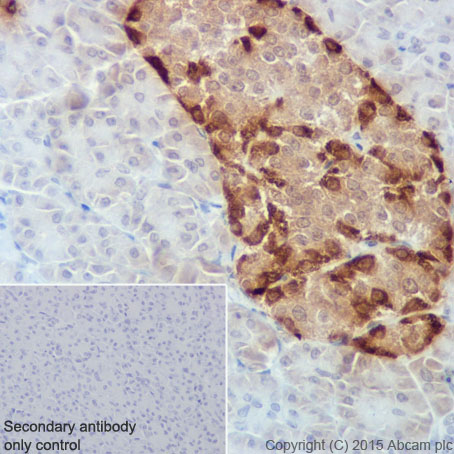
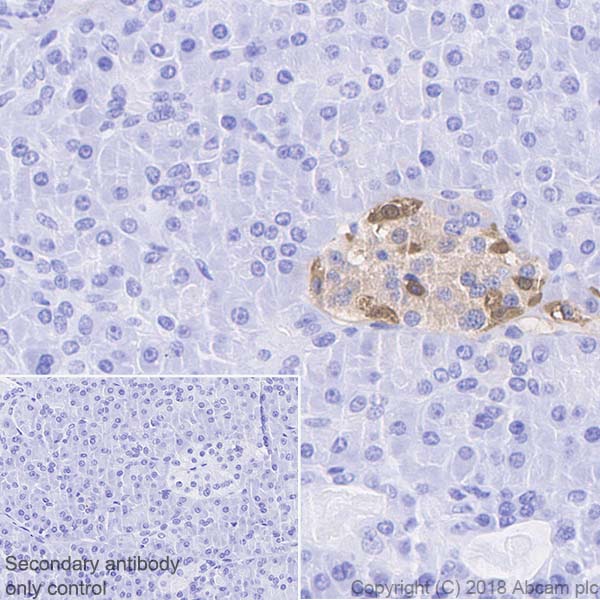
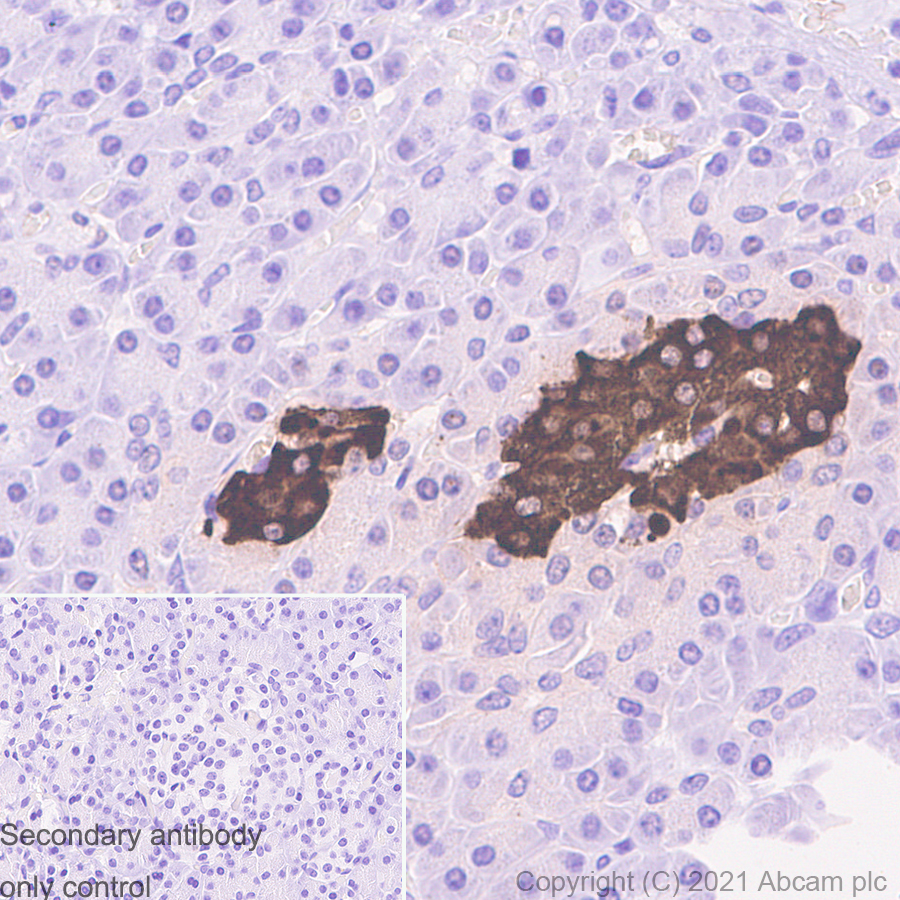
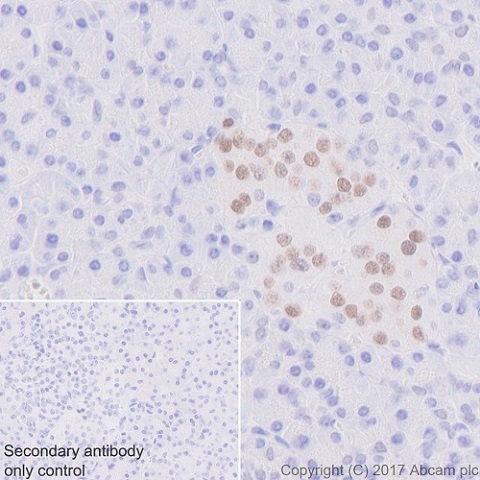
Anti-Glucagon antibody

Be the first to review this product! 리뷰 제출

|

(1 출판물)

Rabbit Polyclonal GLP-1 antibody. Suitable for WB and reacts with Human samples. Cited in 1 publication. Immunogen corresponding to Recombinant Fragment Protein within Human GCG aa 1 to C-terminus.

주요 정보

Host species

Rabbit

Clonality

Polyclonal

Isotype

IgG

Carrier free

No

Reacts with

Human

Applications

WB

applications

Immunogen

Recombinant Fragment Protein within Human GCG aa 1 to C-terminus. The exact immunogen used to generate this antibody is proprietary information.

P01275

Reactivity 정보

{ "title": "Reactivity Data", "filters": { "stats": ["", "Species", "Dilution Info", "Notes"], "tabs": { "all-applications": {"fullname" : "All Applications", "shortname": "All Applications"}, "WB" : {"fullname" : "Western blot", "shortname":"WB"} }, "product-promise": { "all": "all", "testedAndGuaranteed": "tested", "guaranteed": "expected", "predicted": "predicted", "notRecommended": "not-recommended" } }, "values": { "Human": { "WB-species-checked": "testedAndGuaranteed", "WB-species-dilution-info": "1/500 - 1/3000", "WB-species-notes": "<p></p>" }, "Mouse": { "WB-species-checked": "predicted", "WB-species-dilution-info": "", "WB-species-notes": "" }, "Rat": { "WB-species-checked": "predicted", "WB-species-dilution-info": "", "WB-species-notes": "" }, "Cow": { "WB-species-checked": "predicted", "WB-species-dilution-info": "", "WB-species-notes": "" }, "Dog": { "WB-species-checked": "predicted", "WB-species-dilution-info": "", "WB-species-notes": "" } } }

특성 및 보관 정보

제형
Liquid
Purification 테크닉
Affinity purification Immunogen
보관 버퍼
pH: 7 Preservative: 0.01% Thimerosal (merthiolate) Constituents: 10% Glycerol (glycerin, glycerine), 1.21% Tris, 0.75% Glycine
배송 시 보관 조건
Blue Ice
적절한 단기 보관 조건
+4°C
적절한 장기 보관 조건
-20°C
분주 정보
Upon delivery aliquot
보관 정보
Avoid freeze / thaw cycle

추가 정보

This supplementary information is collated from multiple sources and compiled automatically.

Glucagon also known as the “hunger hormone" is a 29-amino acid peptide hormone with a mass of approximately 3.5 kDa. It plays an important role in glucose metabolism and regulation of blood sugar levels. The human pancreas specifically the alpha cells located in the islets of Langerhans synthesizes and secretes glucagon. This hormone binds to glucagon receptors which are widely expressed across tissues including the liver and kidney where it initiates a cascade of signaling events.
Biological function summary

Glucagon plays a central role in maintaining glucose homeostasis. It increases blood glucose by promoting gluconeogenesis and glycogenolysis in the liver. Though glucagon mainly acts independently it exhibits significant interactions with other metabolic hormones such as insulin. This interaction helps balance blood sugar levels as glucagon and insulin work in opposition to ensure optimal blood glucose regulation.

Pathways

Glucagon primarily impacts the cAMP signaling pathway significantly increasing intracellular cAMP levels. This pathway initiates a complex series of downstream events including increased enzyme activity for gluconeogenesis and glycogen breakdown in the liver. Glucagon also cross-talks with insulin signaling pathways enabling the intertwined regulation of metabolism through these hormones and maintaining glucose balance.

Glucagon is closely linked to diabetes and hyperglycemia. Individuals with diabetes often exhibit dysregulated glucagon secretion leading to unstable blood sugar levels. Glucagon interacts with insulin in the pathology of diabetes where an improper balance between these hormones can exacerbate the disease. The understanding of glucagon's role in these conditions makes it a target for new therapeutic strategies including recombinant glucagon treatments and assays.

제품 프로토콜

For this product, it's our understanding that no specific protocols are required. You can visit:

타겟 정보

Glucagon. Plays a key role in glucose metabolism and homeostasis. Regulates blood glucose by increasing gluconeogenesis and decreasing glycolysis. A counterregulatory hormone of insulin, raises plasma glucose levels in response to insulin-induced hypoglycemia. Plays an important role in initiating and maintaining hyperglycemic conditions in diabetes. Binds to and activates the glucagon receptor GCGR, which couples to the G(s) G protein and elevates intracellular cAMP, triggering downstream metabolic responses (PubMed : 32193322).. Glucagon-like peptide 1. Potent stimulator of glucose-dependent insulin release (PubMed : 22037645, PubMed : 40446798). Also stimulates insulin release in response to IL6 (PubMed : 22037645). Plays important roles on gastric motility and the suppression of plasma glucagon levels (PubMed : 10605628, PubMed : 14719035, PubMed : 12554744). May be involved in the suppression of satiety and stimulation of glucose disposal in peripheral tissues, independent of the actions of insulin (PubMed : 10605628, PubMed : 14719035, PubMed : 12554744). Has growth-promoting activities on intestinal epithelium (PubMed : 10605628, PubMed : 14719035, PubMed : 12554744). May also regulate the hypothalamic pituitary axis (HPA) via effects on LH, TSH, CRH, oxytocin, and vasopressin secretion (PubMed : 10605628, PubMed : 14719035, PubMed : 12554744). Increases islet mass through stimulation of islet neogenesis and pancreatic beta cell proliferation (PubMed : 10605628, PubMed : 14719035, PubMed : 12554744). Inhibits beta cell apoptosis (PubMed : 10605628, PubMed : 14719035, PubMed : 12554744).. Glucagon-like peptide 2. Stimulates intestinal growth and up-regulates villus height in the small intestine, concomitant with increased crypt cell proliferation and decreased enterocyte apoptosis. The gastrointestinal tract, from the stomach to the colon is the principal target for GLP-2 action. Plays a key role in nutrient homeostasis, enhancing nutrient assimilation through enhanced gastrointestinal function, as well as increasing nutrient disposal. Stimulates intestinal glucose transport and decreases mucosal permeability.. Oxyntomodulin. Significantly reduces food intake. Inhibits gastric emptying in humans. Suppression of gastric emptying may lead to increased gastric distension, which may contribute to satiety by causing a sensation of fullness.. Glicentin. May modulate gastric acid secretion and the gastro-pyloro-duodenal activity. May play an important role in intestinal mucosal growth in the early period of life.
See full target information GCG

Additional targets

Glucagon

대체 명칭 보기

Pro-glucagon, GCG, GCG, GGR, GLR_HUMAN, Gcgr, Glucagon receptor, Glucagon receptor precursor, MGC138246

제품이 사용된 논문 (1)

Recent publications for all applications. Explore the 전체 목록and refine your search

Cancer management and research 11:5557-5572 PubMed31417306

2019

Candidate tumor suppressor gene IRF6 is involved in human breast cancer pathogenesis via modulating PI3K-regulatory subunit PIK3R2 expression.

Applications

Unspecified application

Species

Unspecified reactive species

Hong-Fa Xu,Tie-Jun Huang,Qin Yang,Liang Xu,Fen Lin,Yan-Hong Lang,Hao Hu,Li-Xia Peng,Dong-Fang Meng,Yu-Jie Xie,Li Tan,Chao-Nan Qian,Bi-Jun Huang
제품이 사용된 논문 모두 보기

Product promise

저희는 고품질 시약으로 고객님의 연구를 서포트하고자 최선을 다하고 있으며, 모든 단계에서 함께 하겠습니다. 만약 제품이 기대한 성능을 보이지 않을 경우에도 Product Promise로 보호받으실 수 있습니다.
자세한 내용은 이용 약관을 확인해 주세요.

Please note: All products are 'FOR RESEARCH USE ONLY. NOT FOR USE IN DIAGNOSTIC OR THERAPEUTIC PROCEDURES'.

For licensing inquiries, please contact partnerships@abcam.com