Anti-MCM2 (phospho S139) antibody [EPR10819]
- RabMAb
- Recombinant
- 각 태그의 뜻
Be the first to review this product! 리뷰 제출
|
(1 출판물)
Rabbit Recombinant Monoclonal MCM2 phospho S139 antibody. Suitable for IHC-P, IP, WB and reacts with Human samples. Cited in 1 publication.
대체 명칭 보기
BM28, CCNL1, CDCL1, KIAA0030, MCM2, DNA replication licensing factor MCM2, Minichromosome maintenance protein 2 homolog, Nuclear protein BM28
- IHC-P
Supplier Data
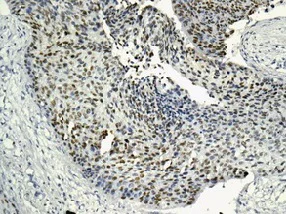
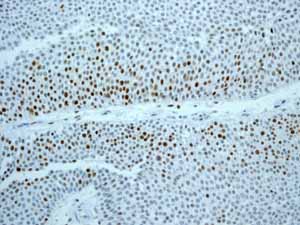
Immunohistochemistry (Formalin/PFA-fixed paraffin-embedded sections) - Anti-MCM2 (phospho S139) antibody [EPR10819] (AB170873)
Immunohistochemical analysis of paraffin-embedded Human cervical carcinoma tissue labeling MCM2 using ab170873 at a 1/50 dilution.
Perform heat mediated antigen retrieval with citrate buffer pH 6 before commencing with IHC staining protocol.
- IHC-P
Supplier Data
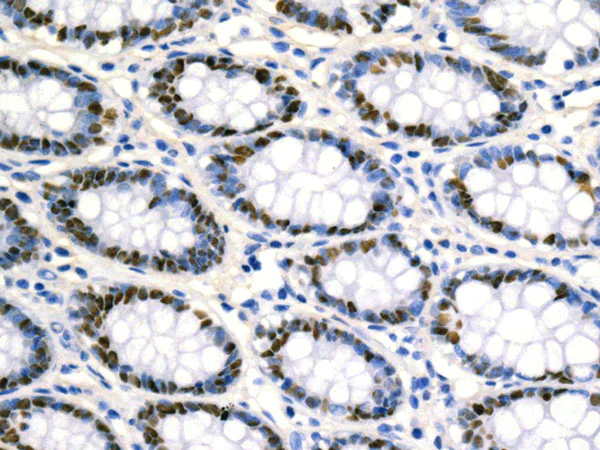
Immunohistochemistry (Formalin/PFA-fixed paraffin-embedded sections) - Anti-MCM2 (phospho S139) antibody [EPR10819] (AB170873)
ab170873 showing +ve staining in Human normal colon tissue.
Perform heat mediated antigen retrieval with citrate buffer pH 6 before commencing with IHC staining protocol.
- IHC-P
Supplier Data
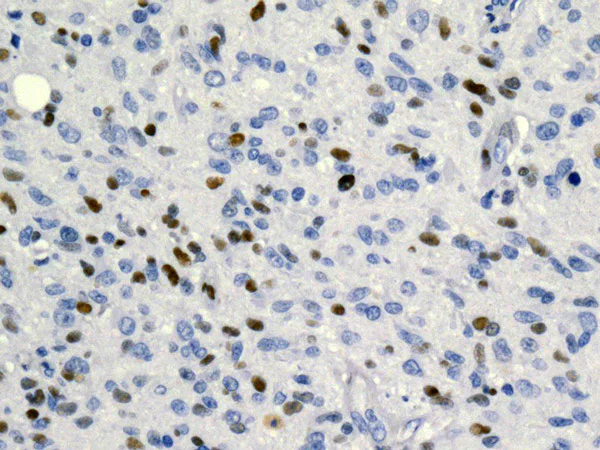
Immunohistochemistry (Formalin/PFA-fixed paraffin-embedded sections) - Anti-MCM2 (phospho S139) antibody [EPR10819] (AB170873)
ab170873 showing +ve staining in Human glioma tissue.
Perform heat mediated antigen retrieval with citrate buffer pH 6 before commencing with IHC staining protocol.
- IHC-P
Supplier Data
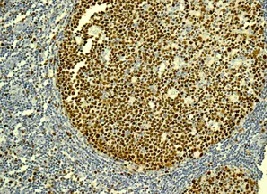
Immunohistochemistry (Formalin/PFA-fixed paraffin-embedded sections) - Anti-MCM2 (phospho S139) antibody [EPR10819] (AB170873)
Immunohistochemical analysis of paraffin-embedded Human tonsil tissue labeling MCM2 using ab170873 at a 1/50 dilution.
Perform heat mediated antigen retrieval with citrate buffer pH 6 before commencing with IHC staining protocol.
- IP
Supplier Data
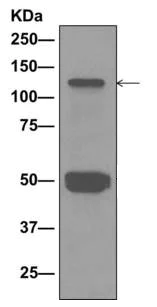
Immunoprecipitation - Anti-MCM2 (phospho S139) antibody [EPR10819] (AB170873)
Western blot analysis on immunoprecipitation pellet from Jurkat lysate using ab170873 at a 1/10 dilution and HRP-conjugated anti-rabbit IgG preferentially detecting the non-reduced form of rabbit IgG.
All lanes:
Immunoprecipitation - Anti-MCM2 (phospho S139) antibody [EPR10819] (ab170873) at 1/10 dilution
All lanes:
Jurkat cell lysate at 10 µg
Predicted band size: 102 kDa
false
- WB
Supplier Data
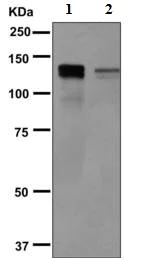
Western blot - Anti-MCM2 (phospho S139) antibody [EPR10819] (AB170873)
All lanes:
Western blot - Anti-MCM2 (phospho S139) antibody [EPR10819] (ab170873) at 1/1000 dilution
Lane 1:
Hela cell lysate at 10 µg
Lane 2:
Hela cell lysate treated with Alkaline Phosphatase at 10 µg
Secondary
All lanes:
HRP labeled goat anti-rabbit IgG at 1/2000 dilution
Predicted band size: 102 kDa
false
관련 conjugated 항체와 다양한 조성의 항체 (1)
-
Anti-MCM2 (phospho S139) antibody [EPR10819] - BSA and Azide free
대체품
Primary Antibodies
AB133243
Anti-MCM2 (phospho S40) antibody [EPR4170(2)]
20ul selling size|RabMAb|Recombinant
- 5
- 2

Primary Antibodies
AB109133
Anti-MCM2 (phospho S53) antibody [EP4120]
20ul selling size|RabMAb|Recombinant
- 5
- 4
보완 제품
Primary Antibodies
AB109133
Anti-MCM2 (phospho S53) antibody [EP4120]
20ul selling size|RabMAb|Recombinant
- 5
- 4
Primary Antibodies
AB133243
Anti-MCM2 (phospho S40) antibody [EPR4170(2)]
20ul selling size|RabMAb|Recombinant
- 5
- 2
Reactivity 정보
제품 세부 정보
Patented technology
Our RabMAb® technology is a patented hybridoma-based technology for making rabbit monoclonal antibodies. For details on our patents, please refer to RabMAb® patents.
What are the advantages of a recombinant monoclonal antibody?
This product is a recombinant monoclonal antibody, which offers several advantages including:
- - High batch-to-batch consistency and reproducibility
- - Improved sensitivity and specificity
- - Long-term security of supply
- - Animal-free batch production
For more information, read more on recombinant antibodies.
특성 및 보관 정보
제형
Purification 테크닉
보관 버퍼
배송 시 보관 조건
적절한 단기 보관 기간
적절한 단기 보관 조건
적절한 장기 보관 조건
분주 정보
보관 정보
추가 정보
This supplementary information is collated from multiple sources and compiled automatically.
Biological function summary
MCM2 is part of the heterohexameric MCM complex including other proteins like MCM3 to MCM7. This complex serves as a helicase unwinding DNA to allow replication machinery access to the template strand. The activity of the MCM complex is tightly regulated to ensure that every section of genomic DNA is replicated once per cell cycle. Its proper function ensures genetic information replication accuracy and contributes to genome stability.
Pathways
MCM2 participates in essential biological processes such as the DNA replication pathway and the cell cycle regulatory pathway. The presence of MCM2 is critical for the G1/S transition phase of the cell cycle. It interacts with other proteins including CDC45 and GINS forming the active CMG helicase complex. This complex is pivotal in orchestrating the replication machinery and signaling pathway responses to ensure appropriate replication origin firing and accurate DNA synthesis.
제품 프로토콜
- Visit the General protocols
- Visit the Troubleshooting
타겟 정보
제품이 사용된 논문 (1)
Recent publications for all applications. Explore the 전체 목록 and refine your search
Stem cell research & therapy 16:253 PubMed40394699
2025
Applications
Unspecified application
Species
Unspecified reactive species
Product promise
Please note: All products are 'FOR RESEARCH USE ONLY. NOT FOR USE IN DIAGNOSTIC OR THERAPEUTIC PROCEDURES'.
For licensing inquiries, please contact partnerships@abcam.com