Anti-p53 antibody [SP161]
- KO Validated
- RabMAb
- Recombinant
- Lab Essentials
- 20ul selling size
- 각 태그의 뜻
Be the first to review this product! 리뷰 제출
|
(9 제품이 사용된 논문 )
- Flow Cyt (Intra)
Lab
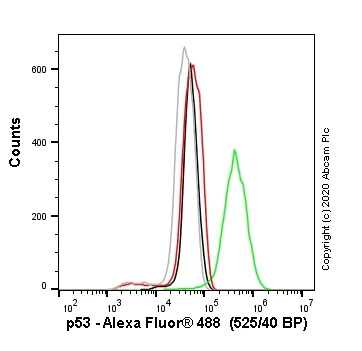
Flow Cytometry (Intracellular) - Anti-p53 antibody [SP161] (AB227655)
Flow cytometry overlay histogram showing wild-type HAP1 (green line) and TP53 knockout HAP1 cells stained with ab227655 (red line). The cells were fixed with 4% formaldehyde (10 min) and then permeabilized with 0.1% PBS-Triton X-100 for 15 min. The cells were then incubated in 1x PBS containing 10% normal goat serum to block non-specific protein-protein interaction followed by the antibody (ab227655) (1x10⁶ in 100 μl at 0.008 μg/ml) for 30 min at 22°C.
The secondary antibody Goat anti-Rabbit IgG H&L (Alexa Fluor® 488, pre-adsorbed) (ab150081) was used at 1/2000 for 30 min at 22°C.
Isotype control antibody was Rabbit IgG (monoclonal) (ab172730) used at the same concentration and conditions as the primary antibody (wild-type HAP1 - black line TP53 knockout HAP1 - grey line). Unlabelled sample was also used as a control (this line is not shown for the purpose of simplicity).
Acquisition of >5000 events were collected using a 50 mW Blue laser (488nm) and 525/40 bandpass filter.
This antibody gave a positive signal in TP53 HAP1 knockout cells fixed with 80% methanol (5 min) / permeabilized with 0.1% PBS-Triton X-100 for 15 min used under the same conditions.
- IHC-P
Lab
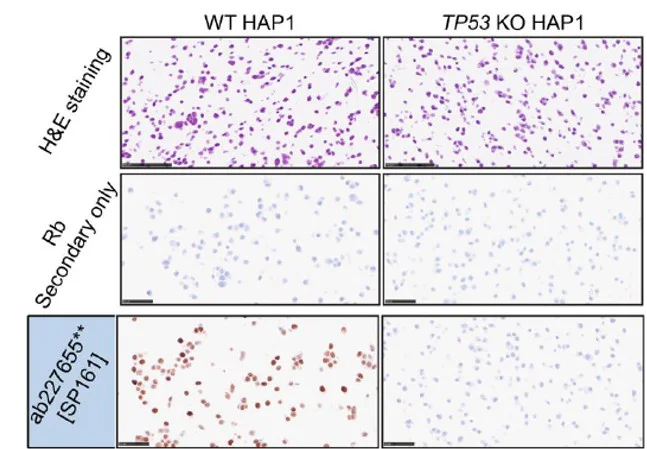
Immunohistochemistry (Formalin/PFA-fixed paraffin-embedded sections) - Anti-p53 antibody [SP161] (AB227655)
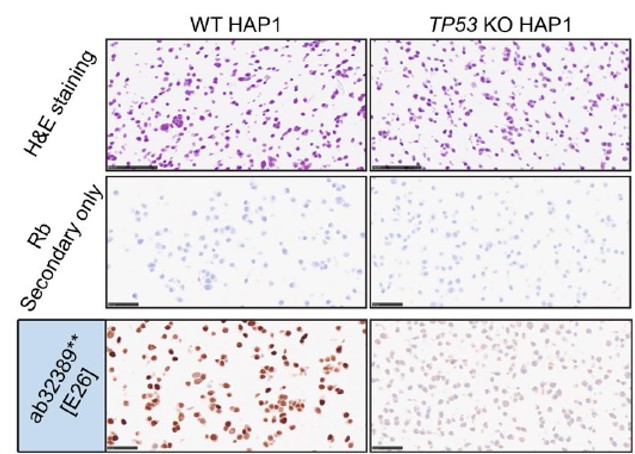
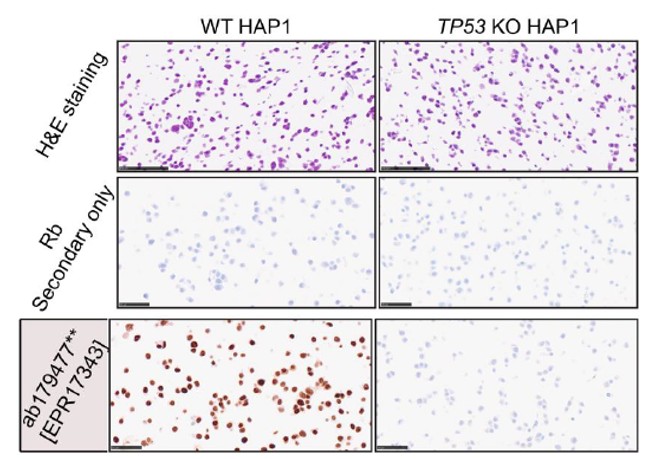
ab227655 was shown to react with TP53 in wild-type HAP1 cells in immunohistochemistry with loss of signal observed in a TP53 knockout cell line. HAP1 WT and TP53 KO cells were fixed and paraffin embedded. Sections were mounted onto slides and stained with ab227655 and the corresponding multimer HRP secondary. Chromogen image acquisition was performed, and representative images of each section are shown. Scale bar = 50 µm.
This data was provided by YCharOS Inc., an open science company with the mission of characterizing commercially available antibody reagents for all human proteins. Abcam and YCharOS are working together to help address the reproducibility crisis by enabling the life science community to better evaluate commercially available antibodies.
- IHC-P
Supplier Data
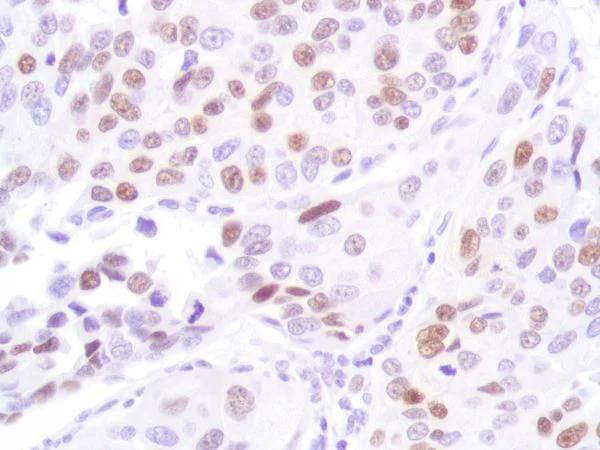
Immunohistochemistry (Formalin/PFA-fixed paraffin-embedded sections) - Anti-p53 antibody [SP161] (AB227655)
Formalin-fixed paraffin-embedded human bladder transitional cell carcinoma tissue stained for p53 using ab227655 at 1/100 dilution in immunohistochemical analysis.
- ICC/IF
Unknown
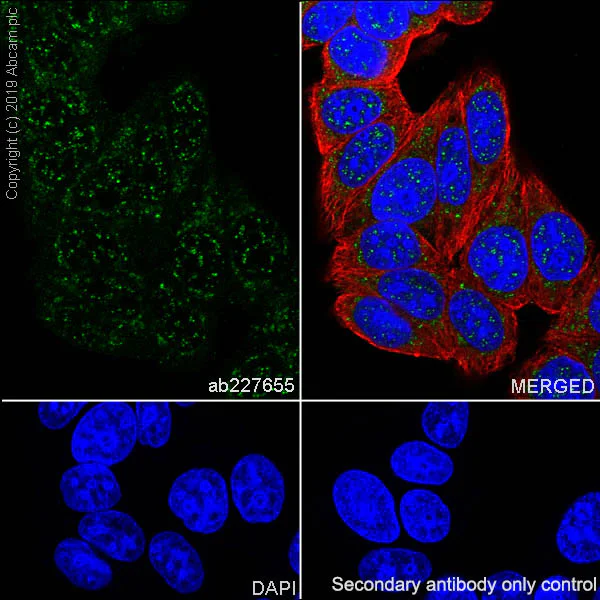
Immunocytochemistry/ Immunofluorescence - Anti-p53 antibody [SP161] (AB227655)
Immunocytochemistry/ Immunofluorescence analysis of MCF7 (human breast adenocarcinoma epithelial cell) cells labeling p53 with purified ab227655 at 1/20 (7.25μg/ml). Cells were fixed in 100% Methanol and permeabilized with None. Cells were counterstained with ab195889 Anti-alpha Tubulin antibody [DM1A] - Microtubule Marker (Alexa Fluor® 594) 1/200 (2.5 μg/ml). Goat anti rabbit IgG (Alexa Fluor® 488, ab150077) was used as the secondary antibody at 1/1000 (2 μg/ml) dilution. DAPI (blue) was used as nuclear counterstain. PBS instead of the primary antibody was used as the secondary antibody only control.
- IHC-P
Unknown
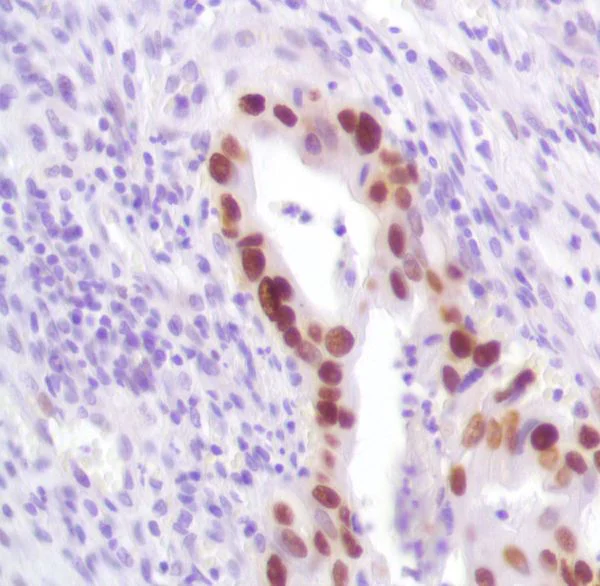
Immunohistochemistry (Formalin/PFA-fixed paraffin-embedded sections) - Anti-p53 antibody [SP161] (AB227655)
Formalin-fixed, paraffin-embedded human colon adenocarcinoma tissue stained for p53 using ab227655 at 1/100 dilution in immunohistochemical analysis.
- Flow Cyt (Intra)
Unknown
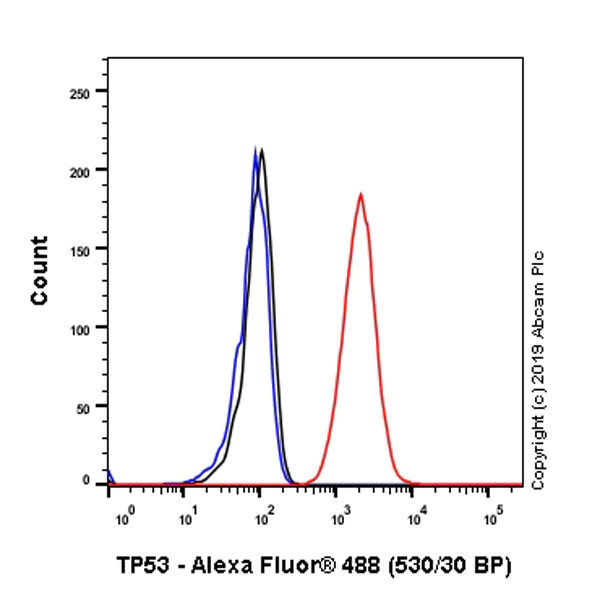
Flow Cytometry (Intracellular) - Anti-p53 antibody [SP161] (AB227655)
Flow Cytometry analysis of MCF7 (human breast adenocarcinoma epithelial cell) cells labeling p53 with purified ab227655 at 1/20 dilution (7.5 μg/ml) (red). Cells were fixed with 4% paraformaldehyde and permeabilised with 90% methanol. A Goat anti rabbit IgG (Alexa Fluor® 488, ab150077) secondary antibody was used at 1/2000 dilution. Isotype control - Rabbit monoclonal IgG (ab172730) / Black. Unlabeled control - Unlabelled cells / blue.
- IHC-P
Unknown
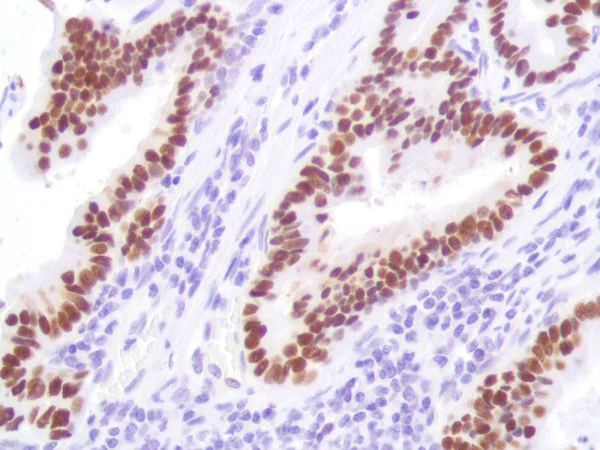
Immunohistochemistry (Formalin/PFA-fixed paraffin-embedded sections) - Anti-p53 antibody [SP161] (AB227655)
Formalin-fixed, paraffin-embedded human stomach adenocarcinoma tissue stained for p53 using ab227655 at 1/100 dilution in immunohistochemical analysis.
- IHC-P
Supplier Data
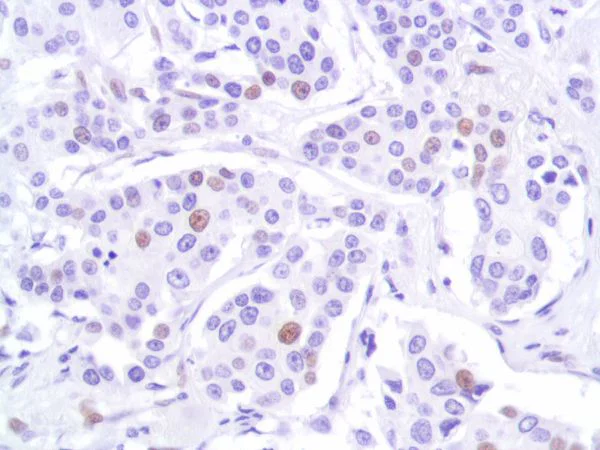
Immunohistochemistry (Formalin/PFA-fixed paraffin-embedded sections) - Anti-p53 antibody [SP161] (AB227655)
Formalin-fixed paraffin-embedded human breast ductal carcinoma tissue stained for p53 using ab227655 at 1/100 dilution in immunohistochemical analysis.
- IHC-P
Supplier Data
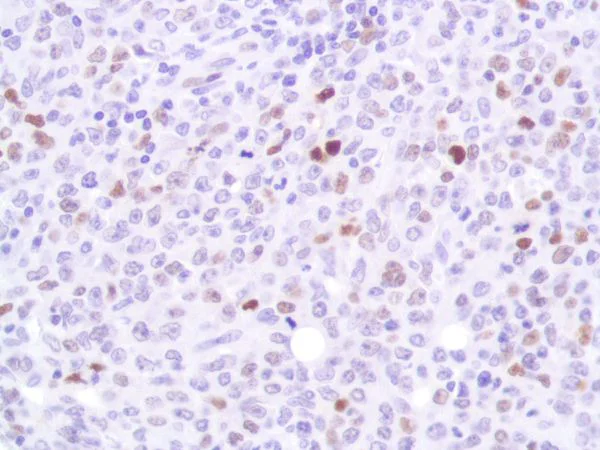
Immunohistochemistry (Formalin/PFA-fixed paraffin-embedded sections) - Anti-p53 antibody [SP161] (AB227655)
Formalin-fixed, paraffin-embedded human B-cell lymphoma tissue stained for p53 using ab227655 at 1/100 dilution in immunohistochemical analysis.
- IHC-P
Supplier Data
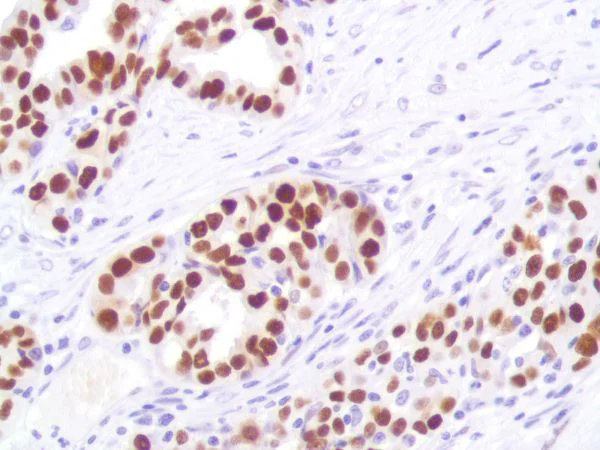
Immunohistochemistry (Formalin/PFA-fixed paraffin-embedded sections) - Anti-p53 antibody [SP161] (AB227655)
Formalin-fixed paraffin-embedded human ovarian adenocarcinoma tissue stained for p53 using ab227655 at 1/100 dilution in immunohistochemical analysis.

- IHC-P
Supplier Data
Immunohistochemistry (Formalin/PFA-fixed paraffin-embedded sections) - Anti-p53 antibody [SP161] (AB227655)
Formalin-fixed paraffin-embedded human lung squamous cell carcinoma tissue stained for p53 using ab227655 at 1/100 dilution in immunohistochemical analysis.
- WB
Supplier Data
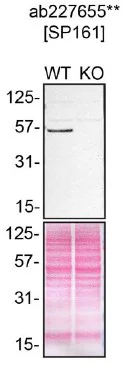
Western blot - Anti-p53 antibody [SP161] (AB227655)
ab227655 was shown to react with TP53 in wild-type HAP1 cells in Western blot with loss of signal observed in a TP53 knockout cell line. Wild-type HAP1 and TP53 knockout cell lysates were subjected to SDS-PAGE. Membranes were blocked in 5% milk in TBST for 1 hr before incubation with ab227655 overnight at 4 °C at a 1/500 dilution. Blots were incubated with secondary antibodies at 0.2 µg/mL before imaging.
This data was provided by YCharOS Inc., an open science company with the mission of characterizing commercially available antibody reagents for all human proteins. Abcam and YCharOS are working together to help address the reproducibility crisis by enabling the life science community to better evaluate commercially available antibodies.
All lanes:
Western blot - Anti-p53 antibody [SP161] (ab227655) at 1/500 dilution
Lane 1:
Wild-type HAP1 lysate at 20 µg at 20 µg
Lane 2:
TP53 knock-out HAP1 lysate at 20 µg
false
관련 conjugated 항체와 다양한 조성의 항체 (3)
-
Anti-p53 antibody [SP161] - BSA and Azide free
-
519 Alexa Fluor® 488
Alexa Fluor® 488 Anti-p53 antibody [SP161]
-
665 Alexa Fluor® 647
Alexa Fluor® 647 Anti-p53 antibody [SP161]
대체품
Primary Antibodies
AB183544
Anti-p53 (acetyl K370) antibody [EPR17496]
RabMAb|Recombinant|Lab Essentials|20ul selling size

- 4
- 1
Primary Antibodies
AB32389
BOND RX™ Validated|RabMAb|Recombinant|KO Validated|Lab Essentials|20ul selling size|Advanced Validation
- 0
- 0
Primary Antibodies
AB75754
Anti-p53 (acetyl K382) antibody [EPR358(2)]
RabMAb|Recombinant|Lab Essentials|20ul selling size

- 5
- 4
Primary Antibodies
AB33889
Anti-p53 (phospho S392) antibody [EP155Y]
RabMAb|Lab Essentials|20ul selling size|Recombinant

- 3
- 1
Primary Antibodies
AB76242
Anti-p53 (phospho S46) antibody [EP42Y]
RabMAb|Recombinant|Lab Essentials|20ul selling size

- 0
- 0
Primary Antibodies
AB179477
RabMAb|Recombinant|KO Validated|Lab Essentials|20ul selling size
- 3
- 2
Primary Antibodies
AB223868
Anti-p53 (phospho S15) antibody [EPR64(N)] - ChIP Grade
RabMAb|Recombinant|Lab Essentials|20ul selling size|Advanced Validation

- 4
- 1
보완 제품

Primary Antibodies
AB109520
RabMAb|Recombinant|KO Validated|Lab Essentials|20ul selling size

- 5
- 17
Primary Antibodies
AB16662
Anti-ErbB2 / HER2 antibody [SP3]
BOND RX™ Validated|RabMAb|Recombinant|20ul selling size

- 5
- 2
Primary Antibodies
AB16667
BOND RX™ Validated|KO Validated|RabMAb|Advanced Validation|Recombinant|20ul selling size

- 5
- 133
Primary Antibodies
AB16660
Anti-Estrogen Receptor alpha antibody [SP1]
BOND RX™ Validated|RabMAb|Recombinant|Lab Essentials|Advanced Validation|20ul selling size

- 4
- 7
Reactivity 정보
제품 세부 정보
What are the advantages of a recombinant monoclonal antibody?
This product is a recombinant monoclonal antibody, which offers several advantages including:
- - High batch-to-batch consistency and reproducibility
- - Improved sensitivity and specificity
- - Long-term security of supply
- - Animal-free batch production
For more information, read more on recombinant antibodies.
특성 및 보관 정보
제형
Purification 테크닉
Purification 관련 사항
보관 버퍼
배송 시 보관 조건
적절한 단기 보관 기간
적절한 단기 보관 조건
적절한 장기 보관 조건
분주 정보
보관 정보
추가 정보
This supplementary information is collated from multiple sources and compiled automatically.
Biological function summary
P53 functions to control cell division and apoptosis serving as a guardian of the genome by preventing mutation accumulation. It does not form part of a larger complex under normal conditions but interacts with various other molecules to execute its functions. p53 can activate or suppress the transcription of numerous genes involved in cell cycle arrest DNA repair and programmed cell death allowing it to halt the progression of damaged cells and trigger repair mechanisms or eliminate those that cannot be repaired.
Pathways
P53 acts within several key biological pathways such as the p53 signaling pathway and the intrinsic apoptotic pathway. Its activity involves interaction with proteins like MDM2 which regulates p53 through ubiquitin-mediated degradation and ATM kinase which phosphorylates p53 in response to DNA damage. These interactions ensure appropriate cellular responses during stress and are vital for maintaining homeostasis.
제품 프로토콜
- Visit the General protocols
- Visit the Troubleshooting
타겟 정보
대체 명칭 보기
제품이 사용된 논문 (9)
Recent publications for all applications. Explore the 전체 목록and refine your search
Cell biochemistry and function 43:e70116 PubMed40864431
2025
Applications
Unspecified application
Species
Unspecified reactive species
Cell reports. Medicine 6:101918 PubMed39809263
2025
Applications
Unspecified application
Species
Unspecified reactive species
Respiratory research 25:396 PubMed39487426
2024
Applications
Unspecified application
Species
Unspecified reactive species
Heliyon 10:e38081 PubMed39386846
2024
Applications
Unspecified application
Species
Unspecified reactive species
JCI insight 9: PubMed39171528
2024
Applications
Unspecified application
Species
Unspecified reactive species
Cancer medicine 13:e7017 PubMed38457205
2024
Applications
Unspecified application
Species
Unspecified reactive species
Drug design, development and therapy 16:769-787 PubMed35355655
2022
Applications
Unspecified application
Species
Unspecified reactive species
Regenerative therapy 18:430-440 PubMed34754888
2021
Applications
Unspecified application
Species
Unspecified reactive species
Molecular reproduction and development 88:55-66 PubMed33241626
2020
Applications
Unspecified application
Species
Unspecified reactive species
Product promise
Please note: All products are 'FOR RESEARCH USE ONLY. NOT FOR USE IN DIAGNOSTIC OR THERAPEUTIC PROCEDURES'.
For licensing inquiries, please contact partnerships@abcam.com