Rabbit Polyclonal Paxillin phospho Y88 antibody. Suitable for WB, ICC/IF and reacts with Human samples. Cited in 1 publication. Immunogen corresponding to Synthetic Peptide within Human PXN pY88 conjugated to Keyhole Limpet Haemocyanin.
대체 명칭 보기
Paxillin, PXN
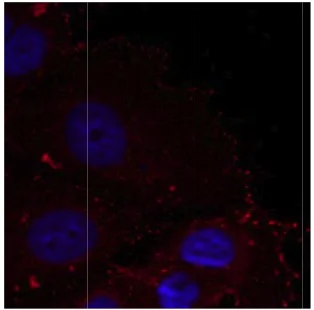
- ICC/IF
Unknown
Immunocytochemistry/ Immunofluorescence - Anti-Paxillin (phospho Y88) antibody (AB131446)
Immunofluorescent analysis of methanol-fixed HeLa cells labelling Paxillin (phospho Y88) with ab131446 at 1/100 dilution.
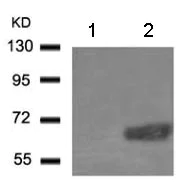
- WB
Unknown
Western blot - Anti-Paxillin (phospho Y88) antibody (AB131446)
All lanes:
Western blot - Anti-Paxillin (phospho Y88) antibody (ab131446) at 1/500 dilution
Lane 1:
HT29 cell extract, untreated
Lane 2:
HT29 cell extract, treated with EGF
Predicted band size: 65 kDa
false
대체품


Primary Antibodies
AB32115
20ul selling size|RabMAb|Recombinant|KO Validated

- 0
- 0
Primary Antibodies
AB216652
Anti-Paxillin antibody [Y113] - BSA and Azide free
BOND RX™ Validated|RabMAb|Recombinant|KO Validated
- 0
- 0
Primary Antibodies
AB238950
Anti-Paxillin antibody [E228] - BSA and Azide free
RabMAb|Recombinant|KO Validated

- 0
- 0
Primary Antibodies
AB32084
BOND RX™ Validated|RabMAb|Recombinant|KO Validated|20ul selling size

- 5
- 21
보완 제품


Reactivity 정보
특성 및 보관 정보
제형
Purification 테크닉
Purification 관련 사항
보관 버퍼
배송 시 보관 조건
적절한 단기 보관 조건
적절한 장기 보관 조건
보관 정보
추가 정보
This supplementary information is collated from multiple sources and compiled automatically.
Biological function summary
Paxillin serves key functions in cellular processes such as migration proliferation and survival. It interacts with different proteins including vinculin and talin forming part of a complex at the focal adhesion sites. The phosphorylation state of Paxillin can modulate its interactions and in this way influence the assembly of signaling complexes that control dynamic cellular processes.
Pathways
Paxillin participates in the integrin signaling and MAPK pathways. It operates by linking integrin receptors to the actin cytoskeleton facilitating signal transduction. Paxillin phosphorylation is an important regulatory mechanism within these pathways. In particular its interaction with focal adhesion kinase (FAK) and Src family kinases signifies its role in transmitting signals from the extracellular matrix to the cellular interior which impacts cell behavior and response.
제품 프로토콜
- Visit the General protocols
- Visit the Troubleshooting
타겟 정보
제품이 사용된 논문 (1)
Recent publications for all applications. Explore the 전체 목록 and refine your search
Thoracic cancer 14:1543-1555 PubMed37073425
2023
Applications
Unspecified application
Species
Unspecified reactive species
Product promise
Please note: All products are 'FOR RESEARCH USE ONLY. NOT FOR USE IN DIAGNOSTIC OR THERAPEUTIC PROCEDURES'.
For licensing inquiries, please contact partnerships@abcam.com