Anti-PCSK9 antibody [EPR17827-117]
Anti-PCSK9 항체 [EPR17827-117]
- RabMAb
- Recombinant
- 20ul selling size
- 각 태그의 뜻
Be the first to review this product! 리뷰 제출
|
(16 제품이 사용된 논문 )
- Biophysical QC for unrivalled batch-batch consistency
- ICC/IF
Unknown
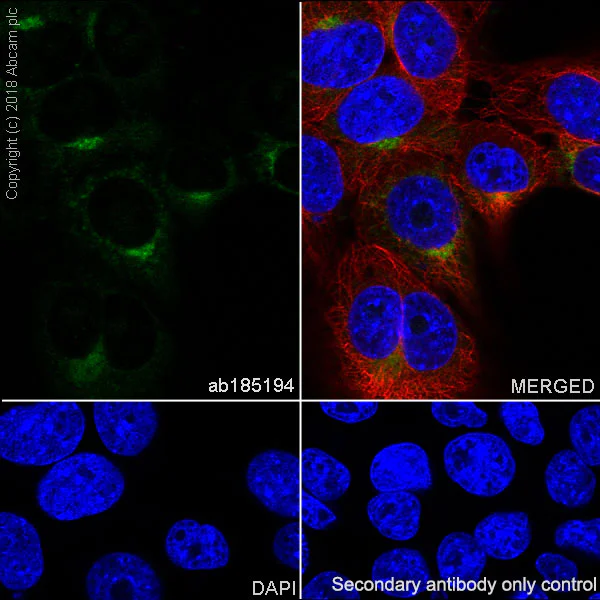
Immunocytochemistry/ Immunofluorescence - Anti-PCSK9 antibody [EPR17827-117] (AB185194)
Immunofluorescent analysis of 4% paraformaldehyde-fixed, 0.1% Triton X-100 permeabilized Hepa1-6 (mouse hepatoma epithelial cell line) cells labeling PCSK9 with ab185194 at 1/100 dilution, followed by Goat Anti-Rabbit IgG H&L (Alexa Fluor® 488) (ab150077) secondary antibody at 1/1000 dilution (green). Confocal image showing cytoplasmic staining in Hepa1-6 cell line is observed.
The nuclear counter stain is DAPI (blue). Tubulin is detected with Anti-alpha Tubulin antibody [DM1A] - Microtubule Marker (Alexa Fluor® 594) (ab195889) (red) at 1/200 dilution.
Secondary antibody only control : Used PBS instead of primary antibody, secondary antibody is an Goat Anti-Rabbit IgG H&L (Alexa Fluor® 488) (ab150077) secondary antibody at 1/1000 dilution.
- Flow Cyt (Intra)
Unknown
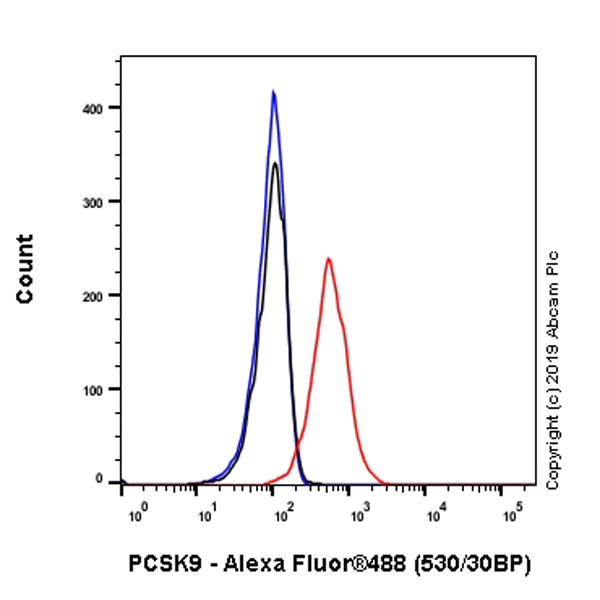
Flow Cytometry (Intracellular) - Anti-PCSK9 antibody [EPR17827-117] (AB185194)
Intracellular flow cytometric analysis of 4% paraformaldehyde-fixed, 90% methanol permeabilized Hepa1-6 (mouse hepatoma epithelial cell line) cell line labeling PCSK9 with ab185194 at 1/500 dilution (red) compared with aRabbit IgG, monoclonal [EPR25A] - Isotype Control (ab172730) (black) and an unlabeled control (cells without incubation with primary antibody and secondary antibody) (blue). Goat Anti-Rabbit IgG H&L (Alexa Fluor® 488) (ab150077) at 1/2000 dilution was used as the secondary antibody.
- IP
Unknown
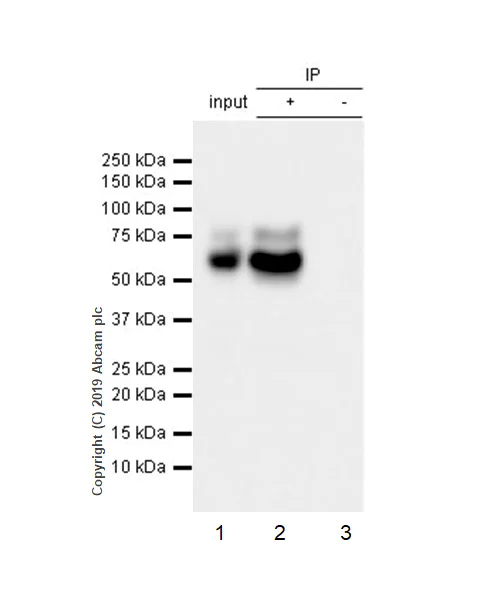
Immunoprecipitation - Anti-PCSK9 antibody [EPR17827-117] (AB185194)
PCSK9 was immunoprecipitated from 0.35 mg Hepa1-6 (mouse hepatoma epithelial cell line) whole cell lysate with ab185194 at 1/30 dilution. Western blot was performed from the immunoprecipitate using ab185194 at 1/1000 dilution. VeriBlot for IP Detection Reagent (HRP) (ab131366) was used for detection at 1/5000 dilution.
Lane 1 : Hepa1-6 whole cell lysate 10 μg (input).
Lane 2 : ab185194 IP in Hepa1-6 whole cell lysate (+).
Lane 3 : Rabbit monoclonal IgG in Hepa1-6 whole cell lsyate (-).
Blocking and dilution buffer and concentration : 5% NFDM/TBST.
Exposure time : 5 seconds.
78-kDa band represents proPCSK9 (PMID : 25210046).
All lanes:
Immunoprecipitation - Anti-PCSK9 antibody [EPR17827-117] (ab185194)
Predicted band size: 74 kDa
false
- WB
Unknown
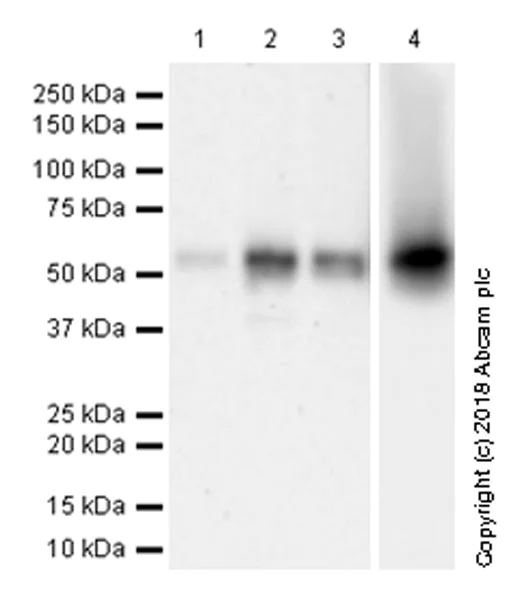
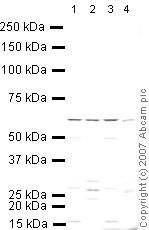
Western blot - Anti-PCSK9 antibody [EPR17827-117] (AB185194)
Exposure time : Lanes 1-3 : 3 minutes; Lane 4 : 6 seconds.
Blocking/diluting buffer and concentration : 5% NFDM/TBST
The expression profile/ molecular weight observed is consistent with what has been described in the literature (PMID : 26092101).
All lanes:
Western blot - Anti-PCSK9 antibody [EPR17827-117] (ab185194) at 1/1000 dilution
Lane 1:
Mouse kidney tissue lysate at 20 µg
Lane 2:
Mouse liver tissue lysate at 20 µg
Lane 3:
Mouse placenta tissue lysate at 20 µg
Lane 4:
Hepa1-6 (mouse hepatoma epithelial cell line) whole cell lysate at 20 µg
Secondary
All lanes:
Western blot - Goat Anti-Rabbit IgG H&L (HRP) (<a href='/ko/products/secondary-antibodies/goat-rabbit-igg-h-l-hrp-ab97051'>ab97051</a>) at 1/100000 dilution
Predicted band size: 74 kDa
Observed band size: 60 kDa
false
관련 conjugated 항체와 다양한 조성의 항체 (4)
-
Anti-PCSK9 antibody [EPR17827-117] - BSA and Azide free (Detector)
-
Anti-PCSK9 antibody [EPR17827-117] - BSA and Azide free
-
519 Alexa Fluor® 488
Alexa Fluor® 488 Anti-PCSK9 antibody [EPR17827-117]
-
665 Alexa Fluor® 647
Alexa Fluor® 647 Anti-PCSK9 antibody [EPR17827-117]
대체품
Primary Antibodies
AB181142
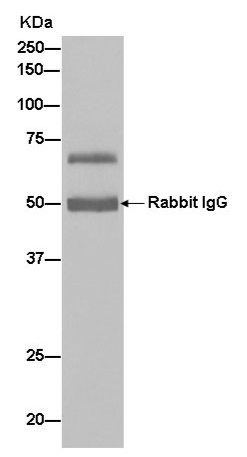
Anti-PCSK9 antibody [EPR7627(2)]
20ul selling size|RabMAb|Recombinant
- 0
- 0
Primary Antibodies
AB238995
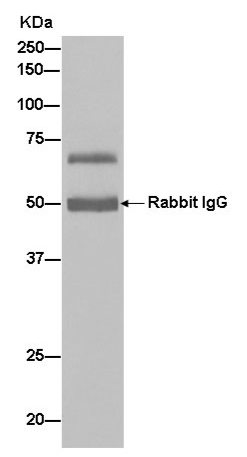
Anti-PCSK9 antibody [EPR7627(2)] - BSA and Azide free
RabMAb|Recombinant
- 0
- 0
보완 제품
Primary Antibodies
AB52818
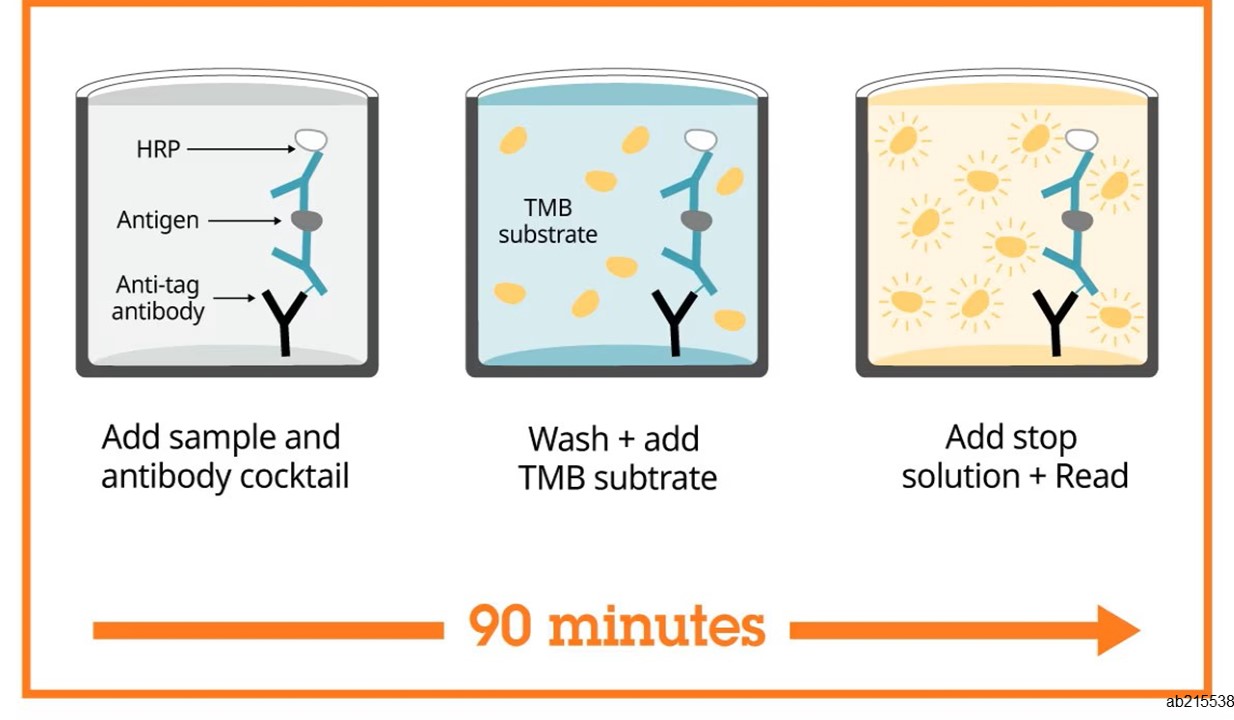
Anti-LDL Receptor antibody [EP1553Y]
20ul selling size|RabMAb|KO Validated|Recombinant
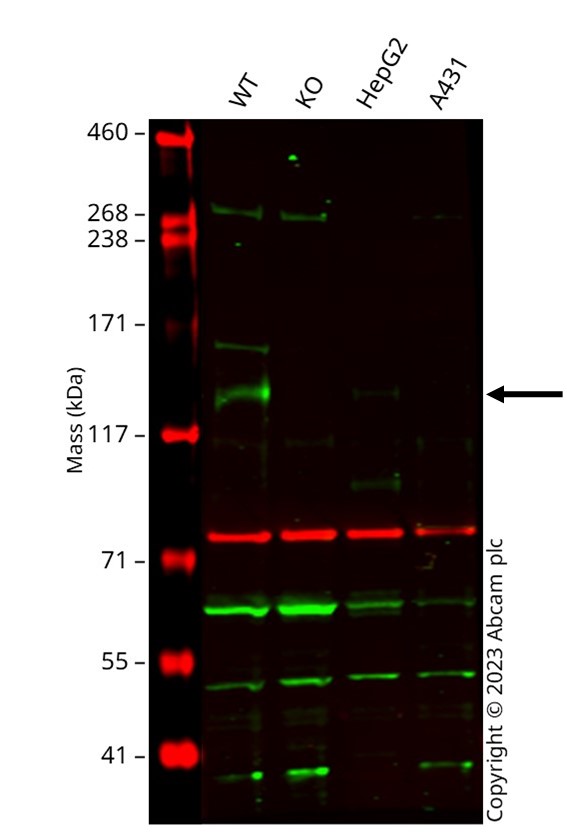
- 4
- 16
Primary Antibodies
AB32536
Anti-NF-kB p65 antibody [E379]
BOND RX™ Validated|20ul selling size|RabMAb|Recombinant|KO Validated

- 4
- 15
Primary Antibodies
AB115777
Anti-beta Actin antibody [SP124] - Cytoskeleton Marker
20ul selling size|RabMAb|Lab Essentials|Recombinant
- 4
- 1
Reactivity 정보
제품 세부 정보
What is this antibody validated in?
Anti-PCSK9 antibody [EPR17827-117] (ab185194) is a rabbit recombinant monoclonal antibody and is validated for use in Western Blot (WB), Flow Cytometry (Intra), Immunoprecipitation (IP), Immunocytochemistry/immunofluorescence (ICC/IF) in Mouse samples.
What is the molecular weight of PCSK9?
Anti-PCSK9 [EPR17827-117] (ab185194) specifically detects a band for PCSK9 (UniProt: Q80W65) at a molecular weight of 74kDa.
Other related products
We have a range of other formats of antibody clone [EPR17827-117] also available for your convenience: ab185194, Carrier free - ab242847, Carrier free - ab246322, Alexa Fluor® 488 - ab319077, Alexa Fluor® 647 - ab322020
Patented technology
Our RabMAb® technology is a patented hybridoma-based technology for making rabbit monoclonal antibodies. For details on our patents, please refer to RabMAb® patents.
What are the advantages of a recombinant monoclonal antibody?
This product is a recombinant monoclonal antibody, which offers several advantages including:
- - High batch-to-batch consistency and reproducibility
- - Improved sensitivity and specificity
- - Long-term security of supply
- - Animal-free batch production
For more information, read more on recombinant antibodies.
Trial sizes available!
Test your antibody or perform pre-screening before committing to a larger quantity. Sold in 20µl. Discover our selection of trial-size antibodies.
특성 및 보관 정보
제형
Purification 테크닉
보관 버퍼
배송 시 보관 조건
적절한 단기 보관 기간
적절한 단기 보관 조건
적절한 장기 보관 조건
분주 정보
보관 정보
추가 정보
This supplementary information is collated from multiple sources and compiled automatically.
Biological function summary
PCSK9 influences cholesterol homeostasis by its important role in degrading LDL receptors. It functions independently rather than as part of larger protein complexes. PCSK9 gains particular interest in therapeutic contexts where its inhibition can lead to increased LDLR levels and enhanced clearance of LDL cholesterol. Biotinylated PCSK9 and mouse PCSK9 variants provide significant tools for experimental study. Kits such as the PCSK9 ELISA kit enable detailed measurement of PCSK9 levels in blood samples providing insights into cholesterol metabolism dynamics.
Pathways
PCSK9 operates within the lipid metabolism pathway and the cholesterol biosynthesis pathway. The protein's activity affects the fate of LDL cholesterol within these pathways. It interacts with proteins such as apolipoprotein B (ApoB) which plays a central role in the structural component of LDL particles. The modulation of these pathways by PCSK9 highlights the significance of its function in maintaining cardiovascular health and managing cholesterol levels.
제품 프로토콜
- Visit the General protocols
- Visit the Troubleshooting
타겟 정보
대체 명칭 보기
제품이 사용된 논문 (16)
Recent publications for all applications. Explore the 전체 목록and refine your search
iScience 28:112661 PubMed40502707
2025
Applications
Unspecified application
Species
Unspecified reactive species
Nature biotechnology : PubMed40335752
2025
Applications
Unspecified application
Species
Unspecified reactive species
Experimental and therapeutic medicine 29:46 PubMed39885913
2025
Applications
Unspecified application
Species
Unspecified reactive species
Journal of biochemical and molecular toxicology 38:e70011 PubMed39400940
2024
Applications
Unspecified application
Species
Unspecified reactive species
Advanced science (Weinheim, Baden-Wurttemberg, Germany) 11:e2400469 PubMed39076074
2024
Applications
Unspecified application
Species
Unspecified reactive species
Nature communications 14:6885 PubMed37898598
2023
Applications
Unspecified application
Species
Unspecified reactive species
Cellular and molecular gastroenterology and hepatology 17:149-169 PubMed37717824
2023
Applications
Unspecified application
Species
Unspecified reactive species
Cellular & molecular biology letters 28:66 PubMed37587410
2023
Applications
Unspecified application
Species
Unspecified reactive species
iScience 26:106916 PubMed37305703
2023
Applications
Unspecified application
Species
Unspecified reactive species
Journal of microbiology and biotechnology 32:1406-1415 PubMed36330745
2022
Applications
Unspecified application
Species
Unspecified reactive species
Product promise
Please note: All products are 'FOR RESEARCH USE ONLY. NOT FOR USE IN DIAGNOSTIC OR THERAPEUTIC PROCEDURES'.
For licensing inquiries, please contact partnerships@abcam.com