JavaScript is disabled in your browser. Please enable JavaScript to view this website.
AB285067

Anti-SQSTM1 / p62 antibody [EPR24468-43] - BSA and Azide free (Detector)

Be the first to review this product! 리뷰 제출

|

(0 출판물)

Rabbit Recombinant Monoclonal SQSTM1 / p62 antibody. Carrier free. Suitable for sELISA and reacts with Human samples.
1 이미지
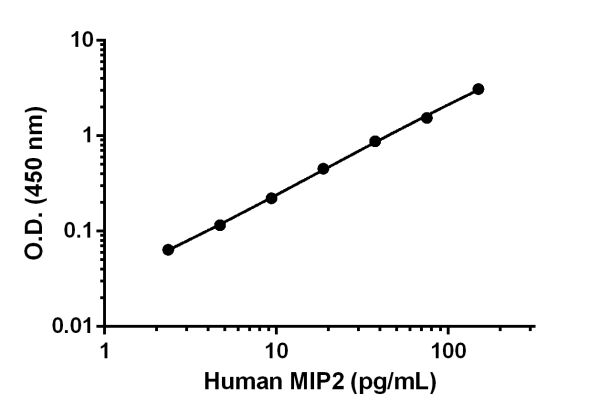
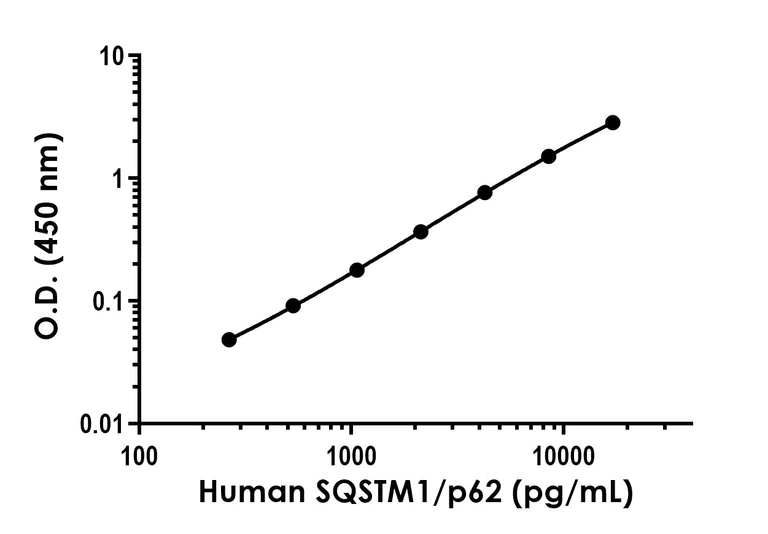
Sandwich ELISA - Anti-SQSTM1 / p62 antibody [EPR24468-43] - BSA and Azide free (Detector) (AB285067)
  • sELISA

Supplier Data

Sandwich ELISA - Anti-SQSTM1 / p62 antibody [EPR24468-43] - BSA and Azide free (Detector) (AB285067)

Example of Human SQSTM1/p62 standard curve. Background-subtracted data values (mean +/- SD) are graphed.

주요 정보

Host species

Rabbit

Clonality

Monoclonal

Clone number

EPR24468-43

Isotype

IgG

Carrier free

Yes

Reacts with

Human

Applications

sELISA

applications

Immunogen

The exact immunogen used to generate this antibody is proprietary information.

Reactivity 정보

{ "title": "Reactivity Data", "filters": { "stats": ["", "Species", "Dilution Info", "Notes"], "tabs": { "all-applications": {"fullname" : "All Applications", "shortname": "All Applications"}, "sELISA" : {"fullname" : "Sandwich ELISA", "shortname":"sELISA"} }, "product-promise": { "all": "all", "testedAndGuaranteed": "tested", "guaranteed": "expected", "predicted": "predicted", "notRecommended": "not-recommended" } }, "values": { "Human": { "sELISA-species-checked": "guaranteed", "sELISA-species-dilution-info": "", "sELISA-species-notes": "<p></p>" } } }

제품 세부 정보

ab285067 is a BSA and Azide Free antibody supplied in an unconjugated format and it is suitable for sandwich ELISAs to quantify Human SQSTM1/p62. The recommended pair for sandwich ELISA is:
Capture: ab284961, Human SQSTM1/p62 Capture Antibody (unconjugated)
Detector: ab285067, Human SQSTM1/p62 Detector Antibody (unconjugated)
The reference range value is 0.156 - 10 ng/mL.

Patented technology
Our RabMAb® technology is a patented hybridoma-based technology for making rabbit monoclonal antibodies. For details on our patents, please refer to RabMAb® patents.

What are the advantages of a recombinant monoclonal antibody?
This product is a recombinant monoclonal antibody, which offers several advantages including:

  • - High batch-to-batch consistency and reproducibility
  • - Improved sensitivity and specificity
  • - Long-term security of supply
  • - Animal-free batch production

For more information, read more on recombinant antibodies.

Conjugation ready
Our carrier-free antibodies are typically supplied in a PBS-only formulation, purified and free of BSA, sodium azide and glycerol. This conjugation-ready format is designed for use with fluorochromes, metal isotopes, oligonucleotides, and enzymes, which makes them ideal for antibody labelling, functional and cell-based assays, flow-based assays (e.g. mass cytometry) and Multiplex Imaging applications.

Use our conjugation kits for antibody conjugates that are ready-to-use in as little as 20 minutes with 1 minute hands-on-time and 100% antibody recovery: available for fluorescent dyes, HRP, biotin and gold.

Sandwich ELISA
The recommended antibody orientation is based on internal optimization for ELISA-based assays. Antibody orientation is assay dependent and needs to be optimized for each assay type. Please note that the range provided for this antibody is only an estimation based on the performance of the product using the recommended antibody pair. Performance of the antibody pair will depend on the specific characteristics of your assay. We guarantee the product works in sandwich ELISA, but we do not guarantee the sensitivity or dynamic range of the antibody in your assay.

특성 및 보관 정보

제형
Liquid
Purification 테크닉
Affinity purification Protein A
보관 버퍼
Constituents: PBS
배송 시 보관 조건
Blue Ice
적절한 단기 보관 조건
+4°C
적절한 장기 보관 조건
+4°C

제품 프로토콜

For this product, it's our understanding that no specific protocols are required. You can visit:

타겟 정보

Molecular adapter required for selective macroautophagy (aggrephagy) by acting as a bridge between polyubiquitinated proteins and autophagosomes (PubMed : 15340068, PubMed : 15953362, PubMed : 16286508, PubMed : 17580304, PubMed : 20168092, PubMed : 22017874, PubMed : 22622177, PubMed : 24128730, PubMed : 28404643, PubMed : 29343546, PubMed : 29507397, PubMed : 31857589, PubMed : 33509017, PubMed : 34471133, PubMed : 34893540, PubMed : 35831301, PubMed : 37306101, PubMed : 37802024). Promotes the recruitment of ubiquitinated cargo proteins to autophagosomes via multiple domains that bridge proteins and organelles in different steps (PubMed : 16286508, PubMed : 20168092, PubMed : 22622177, PubMed : 24128730, PubMed : 28404643, PubMed : 29343546, PubMed : 29507397, PubMed : 34893540, PubMed : 37802024). SQSTM1 first mediates the assembly and removal of ubiquitinated proteins by undergoing liquid-liquid phase separation upon binding to ubiquitinated proteins via its UBA domain, leading to the formation of insoluble cytoplasmic inclusions, known as p62 bodies (PubMed : 15911346, PubMed : 20168092, PubMed : 22017874, PubMed : 24128730, PubMed : 29343546, PubMed : 29507397, PubMed : 31857589, PubMed : 37802024). SQSTM1 then interacts with ATG8 family proteins on autophagosomes via its LIR motif, leading to p62 body recruitment to autophagosomes, followed by autophagic clearance of ubiquitinated proteins (PubMed : 16286508, PubMed : 17580304, PubMed : 20168092, PubMed : 22622177, PubMed : 24128730, PubMed : 28404643, PubMed : 37802024). SQSTM1 is itself degraded along with its ubiquitinated cargos (PubMed : 16286508, PubMed : 17580304, PubMed : 37802024). Also required to recruit ubiquitinated proteins to PML bodies in the nucleus (PubMed : 20168092). Also involved in autophagy of peroxisomes (pexophagy) in response to reactive oxygen species (ROS) by acting as a bridge between ubiquitinated PEX5 receptor and autophagosomes (PubMed : 26344566). Acts as an activator of the NFE2L2/NRF2 pathway via interaction with KEAP1 : interaction inactivates the BCR(KEAP1) complex by sequestering the complex in inclusion bodies, promoting nuclear accumulation of NFE2L2/NRF2 and subsequent expression of cytoprotective genes (PubMed : 20452972, PubMed : 28380357, PubMed : 33393215, PubMed : 37306101). Promotes relocalization of 'Lys-63'-linked ubiquitinated STING1 to autophagosomes (PubMed : 29496741). Involved in endosome organization by retaining vesicles in the perinuclear cloud : following ubiquitination by RNF26, attracts specific vesicle-associated adapters, forming a molecular bridge that restrains cognate vesicles in the perinuclear region and organizes the endosomal pathway for efficient cargo transport (PubMed : 27368102, PubMed : 33472082). Sequesters tensin TNS2 into cytoplasmic puncta, promoting TNS2 ubiquitination and proteasomal degradation (PubMed : 25101860). May regulate the activation of NFKB1 by TNF, nerve growth factor (NGF) and interleukin-1 (PubMed : 10356400, PubMed : 10747026, PubMed : 11244088, PubMed : 12471037, PubMed : 16079148, PubMed : 19931284). May play a role in titin/TTN downstream signaling in muscle cells (PubMed : 15802564). Adapter that mediates the interaction between TRAF6 and CYLD (By similarity).
See full target information SQSTM1

대체 명칭 보기

ORCA, OSIL, SQSTM1, Sequestosome-1, EBI3-associated protein of 60 kDa, Phosphotyrosine-independent ligand for the Lck SH2 domain of 62 kDa, Ubiquitin-binding protein p62, EBIAP, p60, p62

Product promise

저희는 고품질 시약으로 고객님의 연구를 서포트하고자 최선을 다하고 있으며, 모든 단계에서 함께 하겠습니다. 만약 제품이 기대한 성능을 보이지 않을 경우에도 Product Promise로 보호받으실 수 있습니다.
자세한 내용은 이용 약관을 확인해 주세요.

Please note: All products are 'FOR RESEARCH USE ONLY. NOT FOR USE IN DIAGNOSTIC OR THERAPEUTIC PROCEDURES'.

For licensing inquiries, please contact partnerships@abcam.com